• Quick note - the problem with Youtube videos not embedding on the forum appears to have been fixed, thanks to ZiprHead. If you do still see problems let me know.

Cont: Electric Vehicles II

Hell, most EVs could cross Austria on a single charge.....
In summer, yes. My Renault Scenic E-TECH can go 650 km on 100%, but that was in summer. Now that the temperatures are at 10˚C it can only go 400 km. The range drops for every degree it gets colder, and the curve is steeper when we get below the freezing point.

And it is not just that charging stations exist. They must also be close to where you live (neither I nor any of the Austrian relatives have their own house). Charging times are important. Most chargers that I have seen in Austria are slow chargers where you have to leave the car for several hours to charge. And they need to be free. You don't want to wait for the charger, particularly not for a slow charger.

In Copenhagen all of this is not a problem. Every street have tons of charging stations, and there are always free stations at hand. Here the main problem is that you are only allowed to leave the car for three hours (except at night), so you have to move when it is charged. So the main problem is finding parking space without a charging station — but that is another problem, and one that is shared with fossil cars.

Charging stations are being built all over Austria, and I believe that in a few years, the situation is like in Denmark now, and you'll see more EVs also outside Vienna (where they are quite ubiquitous).
 
In summer, yes. My Renault Scenic E-TECH can go 650 km on 100%, but that was in summer. Now that the temperatures are at 10˚C it can only go 400 km. The range drops for every degree it gets colder, and the curve is steeper when we get below the freezing point.

And it is not just that charging stations exist. They must also be close to where you live (neither I nor any of the Austrian relatives have their own house). Charging times are important. Most chargers that I have seen in Austria are slow chargers where you have to leave the car for several hours to charge. And they need to be free. You don't want to wait for the charger, particularly not for a slow charger.

In Copenhagen all of this is not a problem. Every street have tons of charging stations, and there are always free stations at hand. Here the main problem is that you are only allowed to leave the car for three hours (except at night), so you have to move when it is charged. So the main problem is finding parking space without a charging station — but that is another problem, and one that is shared with fossil cars.

Charging stations are being built all over Austria, and I believe that in a few years, the situation is like in Denmark now, and you'll see more EVs also outside Vienna (where they are quite ubiquitous).
Fair enough. Every situation is unique. I would definitely hesitate to rent an EV when I was traveling. That time is precious. You don't want to spend hours charging an EV. Especially if there aren't services close to the chargers. Which is too often the case in some areas.
 
Fair enough. Every situation is unique. I would definitely hesitate to rent an EV when I was traveling. That time is precious. You don't want to spend hours charging an EV. Especially if there aren't services close to the chargers. Which is too often the case in some areas.
Well unless you are 'two-upping' on the drivers there literally is zero difference already between EV and ICE really- both will run a single driver into the ground and exhaustion without an issue....

And given that in many places, quick chargers are already common and easy to find (there's a LOT more around than many people realise- my mum when I told her I was looking at an EV was - oh you'll have to drive the Merc down on the holidays then- hell no!!!! unless I got a paying load, I'm not driving an 8 tonne truck around lol- I'll be bringing the Atto of course- doing the 'start a 100% from home, run to 20%, recharge for 20 mins back up to 80% after 3 1/12 hours of driving, back down to 20%, another 20 min stop back up to 80%, repeat until I am exhausted and have to go to sleep lol
The car will already 'outdrive' the driver without issue- only ignorance makes people 'think' they haven't got the range already (and thats in one of the cheapest EVs on the market in Australia lol)
Places that won't build adequate facilities- well they are likely paces most people wouldn't want to live anyway, some backward hellhole undoubtedly...
:p

Its actually quite funny- in that Steenkh has a surplus of slow chargers streetside, with fast chargers being the 'hard to find ones' when thats the exact opposite many 'ICErs' think will be the issue (the 'I can't charge at home and you can't charge on the street, so I'll HAVE to charge weekly at a fast charger- oh noes.... an EV wouldn't work for ME...'
 
The last two days I’ve done Geneva to Grenoble and back and can report that the range of my TM3 was about two-thirds of what it is in the summer, thanks to it being seriously cold out and about. But it’s charging again overnight and I’ll be heading to the UK in confident mood.
 
No, the biggest factor affecting EV adoption is the availability of charging stations. It is a hen/egg situation: charging stations aren't set up when there are few EV's, and people are not buying EV's when they can't get their EV charged easily. I have an EV and I chose it because it was cheap(ish), and because everywhere I go there are charging stations. My family in Austria wants to buy EV's but wait until enough charging stations are dotting the land. Soon I am going to Austria for a month, and I have rented a fossil car for the same reason as my family.
This from the sustainable fuel thread.
Demand will drive supply. Just as it did for ICE cars and filling stations.

Purpose built stations weren’t built until 1905 some 20 years after automobiles were available (Benz 1886). Up until then, pharmacies, grocery stores and hardware stores etc had a sideline in selling petrol, which was considered a waste by-product of their main sales of kerosene. When ford made (generally) affordable cars, demand for filling stations grew in the US.
We’re already beyond the purpose built station stage for adoption of these “new” vehicles.
 
Every February, my wife and I drive from our Nevada home to Daytona for the stock car race. To reduce the snow risk, we typically take the southern route through El Paso. This trip is about 2,400 miles, or 3,850 kilometers.

We typically make this trip in three easy days.

How long would it take in an EV? Would the days pass as effortlessly?
 
Every February, my wife and I drive from our Nevada home to Daytona for the stock car race. To reduce the snow risk, we typically take the southern route through El Paso. This trip is about 2,400 miles, or 3,850 kilometers.

We typically make this trip in three easy days.

How long would it take in an EV? Would the days pass as effortlessly?
You do know that EVs aren't slower than ICE cars, right?
 
Every February, my wife and I drive from our Nevada home to Daytona for the stock car race. To reduce the snow risk, we typically take the southern route through El Paso. This trip is about 2,400 miles, or 3,850 kilometers.

We typically make this trip in three easy days.

How long would it take in an EV? Would the days pass as effortlessly?

As I mentioned before....
doing the 'start a 100% from home, run to 20%, recharge for 20 mins back up to 80% after 3 1/12 hours of driving, back down to 20%, another 20 min stop back up to 80%, repeat until I am exhausted and have to go to sleep lol
The car will already 'outdrive' the driver without issue- only ignorance makes people 'think' they haven't got the range already (and thats in one of the cheapest EVs on the market in Australia lol)
I got to drive one of the locals Atto3's for a 'test drive' - lol, pulled up at the supermarket next to him, and he was walking back as I was peering in the windows and looking underneath - lucky this is a country town or he likely would have called the cops lol... After telling him I was looking at getting one (the Atto as it has a up to 1200kg towing capacity in Australia- important as I run a small hire company and trailer pulling is a must) he offered me a test drive...
Thinking 'just a quick spin around the block' right???
Um no- he wanted a $7 cupboard hinge from Bunnings- thats over an hours drive and over 120km away...

So my 'quick spin around the block' was a two and a half hour drive at 110kph, overtaking roadtrains etc, and I must say- compared to the old Hilux or the Corolla- it had a LOT less squeaks and rattles, and definitely handled a lot better than the Corolla- and massacred the Hilux in the handling and acceleration stakes lol overtaking a set of triples (roadtrain) in the Lux is a 20-30 seconds on the wrong side of the road affair- the Atto was a rocketship in comparison, it was even faster than the Corolla....

Not even 'half a tank' used, on a trip that in the Hilux would have used $25 worth of diesel for a $7 hinge???
Hell no
He was 'meh, offgrid so its free' lol

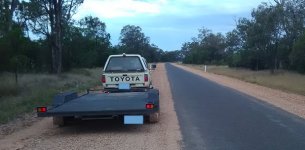
The Atto I test drove did a trip to Melbourne and came back back towing a 'camping trailer' like this

1766670238706.png


Weighs in about 1100kg, and he was getting 380-390km per charge (down to 20% left was his 'time to refuel' limit) on the trip back towing the trailer at 100kmh the whole way (not allowed to tow at 110kph on the freeways lol) he was still getting 330-350km before dropping to that same 20% left...- so yes of course its range drops (just like an ICEr lol) but not by a HUGE amount and he had no issues at all on the return trip, racking up around 3000km total for the round trip (1900 miles)
It took him 3 days in total for the trip down and back- the Atto actually 'outlasting' him, with only one driver, he started off at 100%, ran down to 20%, and recharged back to 80% (20 mins approx) drive another 350km back down to 20%, recharge, rinse and repeat until he had to stop and sleep at a motel on the way down, as he was too exhausted to drive any more- had he had a second driver and taken turns driving and sleeping in the passengers seat, he could have kept that up almost indefinitely!!!
(the trick on long trips in an EV I have been told by all the locals is forget the 100%- that last 20% takes as long as the previous 60% charge does!!!! So do the charge up to 80% from 20% (350km range on the Atto) takes about 22 mins, to get that last 20% in takes you to 45 mins (ie literally doubling the charging time to get that extra 60km in lol)
A 20 minute rest break every 3 1/2 hr or so isn't a bad idea anyway (I know at my age, I NEED a lot less than that between 'rest stops' lol)

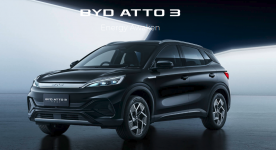
And thats in one of the cheapest Chinese mid sized SUV style BEVs.... the (now rather elderly) Atto 3- which is getting very dated in comparison to its newer siblings, its basically the same car as it was when released- that was back in early 2022!!! its fast charging is slower and its range isnt quite as much as some of the newer ones...
1766732030631.png
To give you a comparison, the Atto3 starts at $39,990 to $44,990Au for the LR version (thats $26,820.81 to $30,174.24US), a base model Tesla Model Y mid sized SUV(which is almost identical in size and features) starts at $58,900Au for the RWD version, while the LR variant is priced from $68,900Au.

 
Every February, my wife and I drive from our Nevada home to Daytona for the stock car race. To reduce the snow risk, we typically take the southern route through El Paso. This trip is about 2,400 miles, or 3,850 kilometers.

We typically make this trip in three easy days.

How long would it take in an EV? Would the days pass as effortlessly?

I'll leave it to the people who know the area to comment on charger availability. But two points come to mind. EVs are much less tiring to drive than ICE cars, so in that respect the days would pass more effortlessly. And if there was the slightest risk of being caught in snow, I'd take an EV every time. Being able to sit in the car with the heating and entertainment on is priceless.
 
Every February, my wife and I drive from our Nevada home to Daytona for the stock car race. To reduce the snow risk, we typically take the southern route through El Paso. This trip is about 2,400 miles, or 3,850 kilometers.

We typically make this trip in three easy days.

How long would it take in an EV? Would the days pass as effortlessly?
I would say yes. But it depends on a lot of variables. Much easier today in a newer EV. Their range is better and more chargers keep getting added.

To get an informed idea watch this YouTube channel. It's all about traveling in an EV in the US.

 
Norway is apparently the country where EVs have been adopted the fastest. Right now, EV sales far outpace fossil cars. But public charging stations have not been constructed at a similar pace. A Norwegian friend told me that her family has a cabin in Northern Norway, and she can only barely reach it with a single charge of her EV. There are apparently no public charging stations on her way from Bergen, and it is always a gamble if she is left in the cold a few kilometres from her destination, but it has never failed.

She said that there are so few inhabitants in the area, and everybody has a private charging station, so it is unlikely that public charging stations will be built.
 
I would say yes. But it depends on a lot of variables. Much easier today in a newer EV. Their range is better and more chargers keep getting added.

To get an informed idea watch this YouTube channel. It's all about traveling in an EV in the US.

If you want to see a MG4 BEV driving across Australia towing a trailer full of his belongings, see Around the Block with Moulin Rouge on FB...
1766737360567.png
Not even the long range version- just the cheapest base model version!!!!

Mind you its not their first time- they have used both a Tesla and the MG4 to do the 'Big Lap' aka driving right around Australia (about 16000km/10000 miles in total) (and are far from the first to do so- in fact their Tesla is officially the 45th they know of to do so!!!)
The Big Lap
1766738485259.png
Its interesting reading on their travel blogs- as they do a lot of recording the actual usage figures etc ie km traveled, cost of each charge, total travel times, charging times kwh per km used and weather conditions and the like- these aren't 'manufacturers figures' but the actual real life usage figures.... lots of data

Another Aussie is in the middle of the Nullabor desert lol, has a EV channel on youtube at https://www.youtube.com/@downunderevadventures39461/videos he has a lot of other EV test drives, as well as his own Atto3....
1766739255005.png
 
Last edited:
Norway is apparently the country where EVs have been adopted the fastest. Right now, EV sales far outpace fossil cars. But public charging stations have not been constructed at a similar pace. A Norwegian friend told me that her family has a cabin in Northern Norway, and she can only barely reach it with a single charge of her EV. There are apparently no public charging stations on her way from Bergen, and it is always a gamble if she is left in the cold a few kilometres from her destination, but it has never failed.

She said that there are so few inhabitants in the area, and everybody has a private charging station, so it is unlikely that public charging stations will be built.

You can see her problem. Bergen ringed in a crappy circle
North of Bergen.png

The darker the pin the faster the charging available at that public charging station
 
Norway is apparently the country where EVs have been adopted the fastest. Right now, EV sales far outpace fossil cars. But public charging stations have not been constructed at a similar pace. A Norwegian friend told me that her family has a cabin in Northern Norway, and she can only barely reach it with a single charge of her EV. There are apparently no public charging stations on her way from Bergen, and it is always a gamble if she is left in the cold a few kilometres from her destination, but it has never failed.

She said that there are so few inhabitants in the area, and everybody has a private charging station, so it is unlikely that public charging stations will be built.
IF chargers are rare in some areas- EV charger owners with their own charger can use apps like this in Australia...
https://www.parkhound.com.au/ev-charging/chargehound
1766739958842.png
Win/win- you can rent out your homes EV charger (through their app) which charges the customer through the app, and does all the billing etc and pays the owner of the charger for its use- quite popular, and with many home owners here having the 3 phase 22kw home chargers like the 3 phase Zappi, you can put in a lot of power quite quickly (on the Atto 3 for example, a 22kw home charger will do 20-80% in under two hours, 10% to 100% in 4 hours...)

They usually make about double the electricity costs (even more if you you have a larger solar array as well) so there is a lot of incentive for home owners to join up- its very customisable ('open hours' for example can be set, including/excluding specific days/times etc etc) and its not reliant on 'the government doing it'- its home owners joining in together to make charging easier (and make a bit of extra cash on the side lol)

Basically the charger owner does nothing but set up how they want people to be able to use it when they arent there- and the app itself does all the rest.... they just get a payment (weekly, fortnightly or monthly- however they want it) thats literally all the charger owner has to do...

The app user that wants to charge- its like any other charging network app- look for a available charger near you, book in and drive there, start charging and pay at the end for the amount of power used- the app operators make a bit, the charger owner makes a bit, and the EV owners get more chargers available to them- winning all round....
 
Norway is apparently the country where EVs have been adopted the fastest. Right now, EV sales far outpace fossil cars. But public charging stations have not been constructed at a similar pace. A Norwegian friend told me that her family has a cabin in Northern Norway, and she can only barely reach it with a single charge of her EV. There are apparently no public charging stations on her way from Bergen, and it is always a gamble if she is left in the cold a few kilometres from her destination, but it has never failed.

She said that there are so few inhabitants in the area, and everybody has a private charging station, so it is unlikely that public charging stations will be built.

She seems to be very unlucky. I was watching Bjorn Nyland's YouTube channel a couple of years ago, and he was driving various EVs all over Norway, pointing out the numerous charging stations he was driving right past because he didn't yet need a charge.

I particularly liked the video where he drove an MG4 to the arctic circle, as it was a valuable how-to guide for camping in the MG4.
 
If you want to see a MG4 BEV driving across Australia towing a trailer full of his belongings, see Around the Block with Moulin Rouge on FB...
View attachment 67425
Not even the long range version- just the cheapest base model version!!!!

Mind you its not their first time- they have used both a Tesla and the MG4 to do the 'Big Lap' aka driving right around Australia (about 16000km/10000 miles in total) (and are far from the first to do so- in fact their Tesla is officially the 45th they know of to do so!!!)
The Big Lap
View attachment 67426
Its interesting reading on their travel blogs- as they do a lot of recording the actual usage figures etc ie km traveled, cost of each charge, total travel times, charging times kwh per km used and weather conditions and the like- these aren't 'manufacturers figures' but the actual real life usage figures.... lots of data

Another Aussie is in the middle of the Nullabor desert lol, has a EV channel on youtube at https://www.youtube.com/@downunderevadventures39461/videos he has a lot of other EV test drives, as well as his own Atto3....
View attachment 67428

That's my car! Except mine is in blue. As someone says in the comments, most people wouldn't choose the 51 kwh model for that job, but if that's what you've got, it can do it.
 
I would say yes.
I just don't see it. We typically travel three hours between stops, covering 250 or so miles (unless my wife's tiny bladder shortens the leg). From the time we put on the directional to exit the freeway, to the time we put the car back in cruise (with a greasy burger in my hand), is less than 15 minutes. This includes refueling, potty break, and the drive through for fast food.

250 miles is a good distance between stops as the car never gets below half a tank. In some places in this country, e.g. West Texas, it can be more than a hundred miles between exits so running your car to empty can be risky.

We only select stops with gas and fast food visible from the freeway.

How much longer would a typical stop take if we had to find a charging station and wait for the car to charge?
 
doing the 'start a 100% from home, run to 20%, recharge for 20 mins back up to 80% after 3 1/12 hours of driving, back down to 20%, another 20 min stop back up to 80%, repeat until I am exhausted and have to go to sleep lol
This raises a few questions for me.

How long does your 20 minute stop really take, including exiting the freeway, finding the charger, charging, and getting back on the freeway?

How fast are you driving? We drive 5 mph over the posted speed limit which means there are long stretches with the cruise set to 90 mph. Would these speeds impact your range?

Is it advisable to drain the batteries to 20% in an unknown area? In many parts of western USA the towns are more than 100 miles apart.

I am reminded of the guy that blew up a Tesla Truck at the Trump Hotel in Las Vegas. He rented the truck in Colorado (Boulder, IIRC), and it took him three days to make the drive. The direct route is 750 miles, an easy day's drive. To keep the truck charged, he took the long way through Albuquerque, 1050 miles. Did it take him three days because he was a slacker?
 
I just don't see it. We typically travel three hours between stops, covering 250 or so miles (unless my wife's tiny bladder shortens the leg). From the time we put on the directional to exit the freeway, to the time we put the car back in cruise (with a greasy burger in my hand), is less than 15 minutes. This includes refueling, potty break, and the drive through for fast food.

250 miles is a good distance between stops as the car never gets below half a tank. In some places in this country, e.g. West Texas, it can be more than a hundred miles between exits so running your car to empty can be risky.

We only select stops with gas and fast food visible from the freeway.

How much longer would a typical stop take if we had to find a charging station and wait for the car to charge?
Maybe it's not for you. It will no doubt add a little time to your trip. The trick is to make a few more stops, but never topping off. EVs charge pretty quickly up to 80% full, but take a lot longer to go to 100% So you charge from say 10% to 80% and then drive again. There are EVs that have as much as a 450 mile range out there. (But aren't usually cheap)
Also, a little planning goes a long way. And the computers on board can help you with that. I really don't think it would be necessarily cumbersome on that particular trip. But it depends on you. What EV you purchased etc. But no question, this is a drawback. You have to view an EV purchase holistically. 90% of your driving is not likely to involve stopping to charge your car. But all of your driving with an internal combustion engine will require stops to fill up. Just plug your car in every night an you probably never have to stop except on long trips. Keep in mind there is time involved there too.

Given your handle, you remind me of a bit like my friend. He used to purchase a new Corvette every two years. He owns a home, actually two homes in the Seattle area and owns a hair styling salon in Bellevue Washington. He later opened up a second salon in Bend Oregon and built another home in Sunriver Oregon. He and his wife used to travel about twice a month between Bellevue and Sunriver. This is about 360 miles. He use to do it in the Vette. Sometimes he stopped along the way. He bought a Tesla Model S about 4 years ago. And he loves it. He makes 1 stop for about 20 minutes each way and that is it. He loves it.
 
How fast are you driving? We drive 5 mph over the posted speed limit which means there are long stretches with the cruise set to 90 mph. Would these speeds impact your range?
That is dangerously illegal in this country. Top speed permitted on Australian freeways is 110kph, which I think is about 65mph. If you're going 145kph, you're going to be pulled over and you'll get a VERY big fine and probably your license will be revoked.

I believe there's still one short stretch of outback SA where there's no posted speed limit, but apart from that you're done, son.
 
Given your handle, you remind me of a bit like my friend. He used to purchase a new Corvette every two years.
Our daily driver is a Lincoln Nautilus hybrid. The Cobra will beat you to death in a hundred miles.

We find ourselves driving to the east coast at least twice a year. For example, this year we have the Daytona 500 in February and the NASCAR championships in Homestead, FL, in November. We are also considering a trip to visit my sister in North Virginia in May.

We have the Lincoln, a Cobra, and a 1930 Model A Fordor. We have looked at EVs, but we just don't think they would be practical for us.
 
This raises a few questions for me.

How long does your 20 minute stop really take, including exiting the freeway, finding the charger, charging, and getting back on the freeway?

How fast are you driving? We drive 5 mph over the posted speed limit which means there are long stretches with the cruise set to 90 mph. Would these speeds impact your range?

Is it advisable to drain the batteries to 20% in an unknown area? In many parts of western USA the towns are more than 100 miles apart.

I am reminded of the guy that blew up a Tesla Truck at the Trump Hotel in Las Vegas. He rented the truck in Colorado (Boulder, IIRC), and it took him three days to make the drive. The direct route is 750 miles, an easy day's drive. To keep the truck charged, he took the long way through Albuquerque, 1050 miles. Did it take him three days because he was a slacker?
The guy is an idiot. If you really want to know check out that YouTube link. https://youtube.com/@outofspecmotoring?si=XBP7vwXFwNYfTX_N

That channel and its associated channels is all about real world EV motoring. And they don't sugarcoat it. They hold regular long distance EV races involving different brands and models. Not really races as they limit speeds. It's more about the range of the car models and speed of charging. Which I'm afraid is all over the map.

Alternatively, rent one and find out for yourself.
 
That is dangerously illegal in this country. Top speed permitted on Australian freeways is 110kph, which I think is about 65mph. If you're going 145kph, you're going to be pulled over and you'll get a VERY big fine and probably your license will be revoked.
Most of the freeways west of the Mississippi river and east of California are posted at 80 mph, except in major cities.

We never thought of 85 mph as dangerous. Judging by the rate that some people pass us, apparently others don't think it is dangerous, either.
 
Most of the freeways west of the Mississippi river and east of California are posted at 80 mph, except in major cities.

We never thought of 85 mph as dangerous. Judging by the rate that some people pass us, apparently others don't think it is dangerous, either.
The faster you drive, the higher the probability of an accident being fatal. You will not survive a collision at that speed. How much do you trust other drivers?
 
Our daily driver is a Lincoln Nautilus hybrid. The Cobra will beat you to death in a hundred miles.
Yea, but you very well could die in the Cobra. That's a hell of a powerful machine that is a handful to drive.

We find ourselves driving to the east coast at least twice a year. For example, this year we have the Daytona 500 in February and the NASCAR championships in Homestead, FL, in November. We are also considering a trip to visit my sister in North Virginia in May.
Totally Cool. My friend is also a pilot and he drives annually to the Air Races in Reno as well as to family in San Diego.
We have the Lincoln, a Cobra, and a 1930 Model A Fordor. We have looked at EVs, but we just don't think they would be practical for us.
I bet you would absolutely love it. Get yourself a Model S Plaid. It will blow the doors off even your Cobra. And it is safer. But it might not fit your long distance travel desires.
 
This raises a few questions for me.

How long does your 20 minute stop really take, including exiting the freeway, finding the charger, charging, and getting back on the freeway?

How fast are you driving? We drive 5 mph over the posted speed limit which means there are long stretches with the cruise set to 90 mph. Would these speeds impact your range?

Is it advisable to drain the batteries to 20% in an unknown area? In many parts of western USA the towns are more than 100 miles apart.

I am reminded of the guy that blew up a Tesla Truck at the Trump Hotel in Las Vegas. He rented the truck in Colorado (Boulder, IIRC), and it took him three days to make the drive. The direct route is 750 miles, an easy day's drive. To keep the truck charged, he took the long way through Albuquerque, 1050 miles. Did it take him three days because he was a slacker?
Sighs- you seem determined that EVs are 'far too hard' when the opposite is true- chargers are readily found (in most countries) simply by looking up the nearest on your app on the phone or on the EVs dash screen.... it even gives you directions and distance lol- almost all EVs these days will warn you on the dash display if you are 'short of power' and helpfully tell you where the nearest charger on your route is even...

20% is what most use as the 'time to recharge point' there's nothing sacred about it lol- some prefer to use 25% or even 30% as their recharge point instead...

We KNOW yanks like to speed- they tell us regularly that they hate our 'nanny state' has speed cameras- which is why the US has the highest death rate per mileage pretty much in the world... and a third higher than the Australian death rate per 100000km driven...
Here the speed limit throughout most of the country is 110kmh/68mph although many rural roads are only 100kph/62mph- exceed the speed limit by less than 10kph/6mph and each time you do it, its 1 demerit point and a $287 fine... exceed it by more than 10kmh but less than 20kph and its $483 and 3 demerit points...if you exceed the speed limit by more than 20 km/h but not more than 30 km/h, the fine is $725 and you will get 4 demerit points. If you exceed the limit by more than 40 km/h, the fine increases to $1,780, and you will get 8 demerit points along with a automatic six-month licence suspension.
If you get more than 12 demerit points in three years, you again lose your licence- mandatory 3 months minimum, park the car and start walking lol (and DON'T think about driving unlicenced- a first time 'no/suspended licence' is a fine of up to $4400 or jail for up to one year for a first-time offender. If you are already disqualified/suspended and keep driving, its even worse, with fines reaching up to $6000 or 18 months in jail....)

It sounds more like the US simply can't get its ◊◊◊◊ together and has done its usual half assed job of doing anything.... Australia is almost exactly the same size as the US, and yet EV sales here are skyrocketing year by year, chargers are readily available so much so that people can drive right around Australia towing caravans in EVs and driving halfway across the country in one is 'just jump in and drive- and let the charge apps take care of your charging needs'
 
Sighs- you seem determined that EVs are 'far too hard' when the opposite is true- chargers are readily found (in most countries) simply by looking up the nearest on your app on the phone or on the EVs dash screen.... it even gives you directions and distance lol- almost all EVs these days will warn you on the dash display if you are 'short of power' and helpfully tell you where the nearest charger on your route is even...

20% is what most use as the 'time to recharge point' there's nothing sacred about it lol- some prefer to use 25% or even 30% as their recharge point instead...

We KNOW yanks like to speed- they tell us regularly that they hate our 'nanny state' has speed cameras- which is why the US has the highest death rate per mileage pretty much in the world... and a third higher than the Australian death rate per 100000km driven...
Here the speed limit throughout most of the country is 110kmh/68mph although many rural roads are only 100kph/62mph- exceed the speed limit by less than 10kph/6mph and each time you do it, its 1 demerit point and a $287 fine... exceed it by more than 10kmh but less than 20kph and its $483 and 3 demerit points...if you exceed the speed limit by more than 20 km/h but not more than 30 km/h, the fine is $725 and you will get 4 demerit points. If you exceed the limit by more than 40 km/h, the fine increases to $1,780, and you will get 8 demerit points along with a automatic six-month licence suspension.
If you get more than 12 demerit points in three years, you again lose your licence- mandatory 3 months minimum, park the car and start walking lol (and DON'T think about driving unlicenced- a first time 'no/suspended licence' is a fine of up to $4400 or jail for up to one year for a first-time offender. If you are already disqualified/suspended and keep driving, its even worse, with fines reaching up to $6000 or 18 months in jail....)

It sounds more like the US simply can't get its ◊◊◊◊ together and has done its usual half assed job of doing anything.... Australia is almost exactly the same size as the US, and yet EV sales here are skyrocketing year by year, chargers are readily available so much so that people can drive right around Australia towing caravans in EVs and driving halfway across the country in one is 'just jump in and drive- and let the charge apps take care of your charging needs'
Most of the Interstate Highways in the western part of the US have 70 or 80 mph limits. Except in the big cities where they might lower it to 65 or 60mph. Some of those highways used to be like the autobahn in Germany with no speed limit at all. In the 1970s the gas shortage caused the government to implement a 55 mile mph nationwide speed limit. Thus the famous song by Sammy Hagar. But even if you got a ticket in Montana for driving say 90 mph. It wouldn't be for speeding. It would be a $25 ticket for failing to conserve. And it wouldn't affect your insurance at all.
They dumped the nationwide limit about 30 years ago.
 
Last edited:
Most of the Interstate Highways in the western part of the US have 70 or 80 mph limits. Except in the big cities where they might lower it to 65 or 60mph. Some of those highways used to be like the autobahn in Germany with no speed limit at all. In the 1970s the gas shortage caused the government to implement a 55 mile mph nationwide speed limit. Thus the famous song by Sammy Hagar. But even if you got a ticket in Montana for driving say 90 mph. It wouldn't be for speeding. It would be a $25 ticket for failing to conserve. And it wouldn't affect your insurance at all.
They dumped the nationwide limit about 30 years ago.
90mph is 144kph- on a 110kph road, thats 34kph over...
Exceeding the speed limit by more than 30 km/h but not more than 40 km/h results in a fine of approximately $1,161 and incurs 6 demerit points
Do that on a 'double demerits' holiday period, and thats your licence suspended on the spot if caught by a cop in person, or within the week you will be notified if caught by camera...
No driving for you for the next three months...
1766801731682.png

If you were caught doing it on a 100kph road, thats 44 over...
If you exceed the speed limit by more than 40 km/h, the fine increases to about $1,780, and you face an automatic 6-month license suspension.
 
Frankly, most roads in australia aren't compatible with 140km+ speeds, whereas a number of EU countries and the USA do have roads that support such driving. It is really not a big deal when you are driving there. Maybe a little daunting to some that are not used to it, but otherwise "safe". In fact it is safer to go with the flow that to drive "sensibly". Do anything else and you are likely the one to cause an accident with another car.
Obs the car needs to be capable/safe as well.

(Oh, also, driven similar speeds legally in NT/SA and Japan.)
 
Last edited:
90mph is 144kph- on a 110kph road, thats 34kph over...

Do that on a 'double demerits' holiday period, and thats your licence suspended on the spot if caught by a cop in person, or within the week you will be notified if caught by camera...
No driving for you for the next three months...
View attachment 67455

If you were caught doing it on a 100kph road, thats 44 over...
I don't know what the roads are like in Australia. But most of those roads with 70 and 80 mph limits in the US are multi-lane divided highways with limited access. They're a lot safer to drive than you realize. The places where there are a lot more fatalities are roads with oncoming traffic. Where a two foot mistake is a head on collision.

I have been driving for 50 years. I have never been in an accident. I have received 1 speeding ticket for driving 35 in a 25 when I was 18. Still think it was a Mickey Mouse ticket. I don't know where your traffic stats come from. But traffic fatalities are on average around 30 percent of what they were in the 1960s.

There are definitely crazy things about the US. This is the least of them.

Ninja'd by E Hocking.
 
Last edited:
Most of the suburban areas are likewise 2,3,4 or more multilane divided freeways- usually 100 or 110kph... with about 80% of the Australian public driving on one like that daily....
This for example is just a couple of kilometres from me atm (I'm at my sisters for chrissy)
1766803766915.png
Only in the more remote rural roads do you get the non divided 110kph roads (this ones not far from where I live for example- well relatively- its an hours drive to get to it lol)

1766804296464.png
This one on the other hand is the main road past my place into town- still 100kph, and not even two lanes wide.... (and you are sharing it with doubles and triples roadtrains...)
1766804068467.jpeg
 
Last edited:
We KNOW yanks like to speed- they tell us regularly that they hate our 'nanny state' has speed cameras- which is why the US has the highest death rate per mileage pretty much in the world... and a third higher than the Australian death rate per 100000km driven...
Gee, you wouldn't like US 95 which is frequently cited as one of the most dangerous roads in America. Between Las Vegas and Carson City, much of the road is two lanes with a 70 MPH speed limit - and no barrier between the lanes. The road is also straight, flat, and boring. Most feel driving 70 MPH on US 95 is dangerous - you are likely to be run over from behind by someone that is really moving.

Coincidentally, Route 95 also has some of the longest wait times for emergency services, with some sections averaging over 20 minutes AFTER the accident is first reported.
 
Gee, you wouldn't like US 95 which is frequently cited as one of the most dangerous roads in America. Between Las Vegas and Carson City, much of the road is two lanes with a 70 MPH speed limit - and no barrier between the lanes. The road is also straight, flat, and boring. Most feel driving 70 MPH on US 95 is dangerous - you are likely to be run over from behind by someone that is really moving.

Coincidentally, Route 95 also has some of the longest wait times for emergency services, with some sections averaging over 20 minutes AFTER the accident is first reported.
Look at the post I made just before yours- the 110kph/68mph nondivided is one I drive a couple of times a week usually, the 'single lane wide' is 100kph/62mph and if you meet oncoming traffic you both drop the lhs wheels into the dirt... oh and you are likely to meet a 'double' or 'triple' train coming at you on that road with a closing speed of 200kph (124mph) between you!!!!

Thats one of these...(doubles have two trailers, triples have three obviously)
1766804885773.jpeg
 
Sighs- you seem determined that EVs are 'far too hard' when the opposite is true- chargers are readily found (in most countries) simply by looking up the nearest on your app on the phone or on the EVs dash screen.... it even gives you directions and distance lol- almost all EVs these days will warn you on the dash display if you are 'short of power' and helpfully tell you where the nearest charger on your route is even...
No, my concern is that an EV would appreciably impact the duration of a long trip. I have yet to have anyone provide sound data on how much longer I should budget for a trip from Las Vegas to Daytona Beach, via EV.

In some of the references that have been provided, someone mentioned that it typically takes 20% longer to travel long distances by EV. This 20% seems to be consistent with the "race" videos that have been posted.

At this time I can't see spending another day on a cross country trip, just to own an EV.
 
Most of the suburban areas are likewise 2,3,4 or more multilane divided freeways- usually 100 or 110kph... with about 80% of the Australian public driving on one like that daily....
This for example is just a couple of kilometres from me atm (I'm at my sisters for chrissy)
View attachment 67456
Only in the more remote rural roads do you get the non divided 110kph roads (this ones not far from where I live for example- well relatively- its an hours drive to get to it lol)
The Interstate Highways are all like this image. To qualify for the Interstate designation. They have to be two lanes in each direction, limited access, and with a median and/or barrier. These are some of the safest roads to drive regardless of the mistake.

The ones to worry about are like roads Cobra mentioned. Some of those old lonely highways in the middle of nowhere that are flat, straight and featureless. Easy to get bored and make a mistake. And if you do get in an accident, you're dead or close to it before emergency services get to you.
 
It sounds more like the US simply can't get its ◊◊◊◊ together and has done its usual half assed job of doing anything.... Australia is almost exactly the same size as the US, and yet EV sales here are skyrocketing year by year, chargers are readily available so much so that people can drive right around Australia towing caravans in EVs and driving halfway across the country in one is 'just jump in and drive- and let the charge apps take care of your charging needs'
My understanding is that most Australians (over 90%) live within 50 miles of the coast. Hence, Australia does not have a large freeway network much beyond the coast.

In the USA, we have large cities in most states, and interstates that connect them. When I go to my ancestral home in the People's Republic of Massachusetts, I can take several (more than three) routes that are 100% divided highway and are all about 2,700 miles in length.

How much longer would it take me to drive the 2,700 miles in an EV?
 
Get yourself a Model S Plaid. It will blow the doors off even your Cobra.
I find that hard to believe. It is powered by a 427 aluminum FE engine that made 538 BHP on the dyno, with over 500 ft lbs of torque from 2,000 to red line. After the dyno pull we replaced the dual quads with fuel injectors so it should be making a little more horsepower, but may have lost some torque below 3,000 rpms.

Due in part to the aluminum block, the car weighs just over 2,400 lbs with gas in the tank.

From a dead start, all we would learn is that I have to find a new Jaguar rear axle to replace the remaining pieces. However, numerous Cobras set up for drag racing, with similar engines, are running in the 9's.

From a rolling start, I suspect the Model S Plaid would be in for a fight. And, on a road, course, it would be no competition.

I can't resist, here is the FE with EFI:

1766806326170.png
 
No, my concern is that an EV would appreciably impact the duration of a long trip. I have yet to have anyone provide sound data on how much longer I should budget for a trip from Las Vegas to Daytona Beach, via EV.

In some of the references that have been provided, someone mentioned that it typically takes 20% longer to travel long distances by EV. This 20% seems to be consistent with the "race" videos that have been posted.

At this time I can't see spending another day on a cross country trip, just to own an EV.
And I've shown that in Australia at least, there is practically no difference at all....
Unless you plan on driving in a nappy and ◊◊◊◊◊◊◊◊ and peeing in your car- the difference is practically negligible- one slow truck/caravan would be more of a factor in delaying you that 'oh nos its an EV!!!!!!!'

The times quoted by the local I test drove the Atto in (and remembering this is one of the older designs and the second cheapest BYD EV available in Australia) had to stop for a whole 20 mins every 3 1/2 hours- the car could keep that up indefinitely- as it turns out, longer than the driver could keep doing it!!!! (the newer ones can do that same 20-80% in under 14 minutes now!!!)
After a ridiculous 18hr driving day (which could see you with a fatigued driving fine here) thats 4 charging stops doing 1800km, with an added 80 minutes for charging, meaning your ICE driver would (if they were driving that van from the Cannonball Run that was just one big fuel tank and didnt stop once) would arrive 1 hr 20 mins before you- but sitting in a dirty diaper lol
https://www.msn.com/en-us/news/us/a...unhinged-road-trip-across-america/ar-AA1Fl36p
Your average ICE vehicle with a 500-600km range before needing to stop and refuel, would have made 3 refueling stops, each averaging at least 3-5 mins so would still be on the road as well, and still be 20-25km behind the diaper wearer... and only 100km ahead of the EV...
1766806367801.png
So yes theres a small delay, but its not a HUGE delay- certainly not 'days behind' as many antiEV people like to claim- after driving for 18 hours, using an EV would add an extra hour...
 
Last edited:
No, my concern is that an EV would appreciably impact the duration of a long trip. I have yet to have anyone provide sound data on how much longer I should budget for a trip from Las Vegas to Daytona Beach, via EV.

In some of the references that have been provided, someone mentioned that it typically takes 20% longer to travel long distances by EV. This 20% seems to be consistent with the "race" videos that have been posted.

At this time I can't see spending another day on a cross country trip, just to own an EV.
. This was from 6 years ago.

Tesla Model X from NC to LA. Two years ago.

Ioniiq 5. Coast to Coast. One year ago.

But seriously, go to Out of Spec Motoring. They are fanatics about traveling long distances in an EV.
Watch a video, ask questions in the comments sections or contact them with your questions.
 

Back
Top Bottom