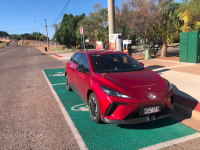
• Quick note - the problem with Youtube videos not embedding on the forum appears to have been fixed, thanks to ZiprHead. If you do still see problems let me know.

Cont: Electric Vehicles II

Hell, most EVs could cross Austria on a single charge.....
In summer, yes. My Renault Scenic E-TECH can go 650 km on 100%, but that was in summer. Now that the temperatures are at 10˚C it can only go 400 km. The range drops for every degree it gets colder, and the curve is steeper when we get below the freezing point.

And it is not just that charging stations exist. They must also be close to where you live (neither I nor any of the Austrian relatives have their own house). Charging times are important. Most chargers that I have seen in Austria are slow chargers where you have to leave the car for several hours to charge. And they need to be free. You don't want to wait for the charger, particularly not for a slow charger.

In Copenhagen all of this is not a problem. Every street have tons of charging stations, and there are always free stations at hand. Here the main problem is that you are only allowed to leave the car for three hours (except at night), so you have to move when it is charged. So the main problem is finding parking space without a charging station — but that is another problem, and one that is shared with fossil cars.

Charging stations are being built all over Austria, and I believe that in a few years, the situation is like in Denmark now, and you'll see more EVs also outside Vienna (where they are quite ubiquitous).
 
In summer, yes. My Renault Scenic E-TECH can go 650 km on 100%, but that was in summer. Now that the temperatures are at 10˚C it can only go 400 km. The range drops for every degree it gets colder, and the curve is steeper when we get below the freezing point.

And it is not just that charging stations exist. They must also be close to where you live (neither I nor any of the Austrian relatives have their own house). Charging times are important. Most chargers that I have seen in Austria are slow chargers where you have to leave the car for several hours to charge. And they need to be free. You don't want to wait for the charger, particularly not for a slow charger.

In Copenhagen all of this is not a problem. Every street have tons of charging stations, and there are always free stations at hand. Here the main problem is that you are only allowed to leave the car for three hours (except at night), so you have to move when it is charged. So the main problem is finding parking space without a charging station — but that is another problem, and one that is shared with fossil cars.

Charging stations are being built all over Austria, and I believe that in a few years, the situation is like in Denmark now, and you'll see more EVs also outside Vienna (where they are quite ubiquitous).
Fair enough. Every situation is unique. I would definitely hesitate to rent an EV when I was traveling. That time is precious. You don't want to spend hours charging an EV. Especially if there aren't services close to the chargers. Which is too often the case in some areas.
 
Fair enough. Every situation is unique. I would definitely hesitate to rent an EV when I was traveling. That time is precious. You don't want to spend hours charging an EV. Especially if there aren't services close to the chargers. Which is too often the case in some areas.
Well unless you are 'two-upping' on the drivers there literally is zero difference already between EV and ICE really- both will run a single driver into the ground and exhaustion without an issue....

And given that in many places, quick chargers are already common and easy to find (there's a LOT more around than many people realise- my mum when I told her I was looking at an EV was - oh you'll have to drive the Merc down on the holidays then- hell no!!!! unless I got a paying load, I'm not driving an 8 tonne truck around lol- I'll be bringing the Atto of course- doing the 'start a 100% from home, run to 20%, recharge for 20 mins back up to 80% after 3 1/12 hours of driving, back down to 20%, another 20 min stop back up to 80%, repeat until I am exhausted and have to go to sleep lol
The car will already 'outdrive' the driver without issue- only ignorance makes people 'think' they haven't got the range already (and thats in one of the cheapest EVs on the market in Australia lol)
Places that won't build adequate facilities- well they are likely paces most people wouldn't want to live anyway, some backward hellhole undoubtedly...
:p

Its actually quite funny- in that Steenkh has a surplus of slow chargers streetside, with fast chargers being the 'hard to find ones' when thats the exact opposite many 'ICErs' think will be the issue (the 'I can't charge at home and you can't charge on the street, so I'll HAVE to charge weekly at a fast charger- oh noes.... an EV wouldn't work for ME...'
 
The last two days I’ve done Geneva to Grenoble and back and can report that the range of my TM3 was about two-thirds of what it is in the summer, thanks to it being seriously cold out and about. But it’s charging again overnight and I’ll be heading to the UK in confident mood.
 
No, the biggest factor affecting EV adoption is the availability of charging stations. It is a hen/egg situation: charging stations aren't set up when there are few EV's, and people are not buying EV's when they can't get their EV charged easily. I have an EV and I chose it because it was cheap(ish), and because everywhere I go there are charging stations. My family in Austria wants to buy EV's but wait until enough charging stations are dotting the land. Soon I am going to Austria for a month, and I have rented a fossil car for the same reason as my family.
This from the sustainable fuel thread.
Demand will drive supply. Just as it did for ICE cars and filling stations.

Purpose built stations weren’t built until 1905 some 20 years after automobiles were available (Benz 1886). Up until then, pharmacies, grocery stores and hardware stores etc had a sideline in selling petrol, which was considered a waste by-product of their main sales of kerosene. When ford made (generally) affordable cars, demand for filling stations grew in the US.
We’re already beyond the purpose built station stage for adoption of these “new” vehicles.
 
Every February, my wife and I drive from our Nevada home to Daytona for the stock car race. To reduce the snow risk, we typically take the southern route through El Paso. This trip is about 2,400 miles, or 3,850 kilometers.

We typically make this trip in three easy days.

How long would it take in an EV? Would the days pass as effortlessly?
 
Every February, my wife and I drive from our Nevada home to Daytona for the stock car race. To reduce the snow risk, we typically take the southern route through El Paso. This trip is about 2,400 miles, or 3,850 kilometers.

We typically make this trip in three easy days.

How long would it take in an EV? Would the days pass as effortlessly?
You do know that EVs aren't slower than ICE cars, right?
 
Every February, my wife and I drive from our Nevada home to Daytona for the stock car race. To reduce the snow risk, we typically take the southern route through El Paso. This trip is about 2,400 miles, or 3,850 kilometers.

We typically make this trip in three easy days.

How long would it take in an EV? Would the days pass as effortlessly?

As I mentioned before....
doing the 'start a 100% from home, run to 20%, recharge for 20 mins back up to 80% after 3 1/12 hours of driving, back down to 20%, another 20 min stop back up to 80%, repeat until I am exhausted and have to go to sleep lol
The car will already 'outdrive' the driver without issue- only ignorance makes people 'think' they haven't got the range already (and thats in one of the cheapest EVs on the market in Australia lol)
I got to drive one of the locals Atto3's for a 'test drive' - lol, pulled up at the supermarket next to him, and he was walking back as I was peering in the windows and looking underneath - lucky this is a country town or he likely would have called the cops lol... After telling him I was looking at getting one (the Atto as it has a up to 1200kg towing capacity in Australia- important as I run a small hire company and trailer pulling is a must) he offered me a test drive...
Thinking 'just a quick spin around the block' right???
Um no- he wanted a $7 cupboard hinge from Bunnings- thats over an hours drive and over 120km away...

So my 'quick spin around the block' was a two and a half hour drive at 110kph, overtaking roadtrains etc, and I must say- compared to the old Hilux or the Corolla- it had a LOT less squeaks and rattles, and definitely handled a lot better than the Corolla- and massacred the Hilux in the handling and acceleration stakes lol overtaking a set of triples (roadtrain) in the Lux is a 20-30 seconds on the wrong side of the road affair- the Atto was a rocketship in comparison, it was even faster than the Corolla....

Not even 'half a tank' used, on a trip that in the Hilux would have used $25 worth of diesel for a $7 hinge???
Hell no
He was 'meh, offgrid so its free' lol

The Atto I test drove did a trip to Melbourne and came back back towing a 'camping trailer' like this

1766670238706.png


Weighs in about 1100kg, and he was getting 380-390km per charge (down to 20% left was his 'time to refuel' limit) on the trip back towing the trailer at 100kmh the whole way (not allowed to tow at 110kph on the freeways lol) he was still getting 330-350km before dropping to that same 20% left...- so yes of course its range drops (just like an ICEr lol) but not by a HUGE amount and he had no issues at all on the return trip, racking up around 3000km total for the round trip (1900 miles)
It took him 3 days in total for the trip down and back- the Atto actually 'outlasting' him, with only one driver, he started off at 100%, ran down to 20%, and recharged back to 80% (20 mins approx) drive another 350km back down to 20%, recharge, rinse and repeat until he had to stop and sleep at a motel on the way down, as he was too exhausted to drive any more- had he had a second driver and taken turns driving and sleeping in the passengers seat, he could have kept that up almost indefinitely!!!
(the trick on long trips in an EV I have been told by all the locals is forget the 100%- that last 20% takes as long as the previous 60% charge does!!!! So do the charge up to 80% from 20% (350km range on the Atto) takes about 22 mins, to get that last 20% in takes you to 45 mins (ie literally doubling the charging time to get that extra 60km in lol)
A 20 minute rest break every 3 1/2 hr or so isn't a bad idea anyway (I know at my age, I NEED a lot less than that between 'rest stops' lol)

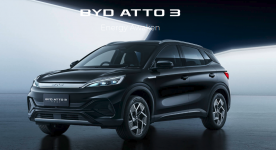
And thats in one of the cheapest Chinese mid sized SUV style BEVs.... the (now rather elderly) Atto 3- which is getting very dated in comparison to its newer siblings, its basically the same car as it was when released- that was back in early 2022!!! its fast charging is slower and its range isnt quite as much as some of the newer ones...
1766732030631.png
To give you a comparison, the Atto3 starts at $39,990 to $44,990Au for the LR version (thats $26,820.81 to $30,174.24US), a base model Tesla Model Y mid sized SUV(which is almost identical in size and features) starts at $58,900Au for the RWD version, while the LR variant is priced from $68,900Au.

 
Every February, my wife and I drive from our Nevada home to Daytona for the stock car race. To reduce the snow risk, we typically take the southern route through El Paso. This trip is about 2,400 miles, or 3,850 kilometers.

We typically make this trip in three easy days.

How long would it take in an EV? Would the days pass as effortlessly?

I'll leave it to the people who know the area to comment on charger availability. But two points come to mind. EVs are much less tiring to drive than ICE cars, so in that respect the days would pass more effortlessly. And if there was the slightest risk of being caught in snow, I'd take an EV every time. Being able to sit in the car with the heating and entertainment on is priceless.
 
Every February, my wife and I drive from our Nevada home to Daytona for the stock car race. To reduce the snow risk, we typically take the southern route through El Paso. This trip is about 2,400 miles, or 3,850 kilometers.

We typically make this trip in three easy days.

How long would it take in an EV? Would the days pass as effortlessly?
I would say yes. But it depends on a lot of variables. Much easier today in a newer EV. Their range is better and more chargers keep getting added.

To get an informed idea watch this YouTube channel. It's all about traveling in an EV in the US.

 
Norway is apparently the country where EVs have been adopted the fastest. Right now, EV sales far outpace fossil cars. But public charging stations have not been constructed at a similar pace. A Norwegian friend told me that her family has a cabin in Northern Norway, and she can only barely reach it with a single charge of her EV. There are apparently no public charging stations on her way from Bergen, and it is always a gamble if she is left in the cold a few kilometres from her destination, but it has never failed.

She said that there are so few inhabitants in the area, and everybody has a private charging station, so it is unlikely that public charging stations will be built.
 
I would say yes. But it depends on a lot of variables. Much easier today in a newer EV. Their range is better and more chargers keep getting added.

To get an informed idea watch this YouTube channel. It's all about traveling in an EV in the US.

If you want to see a MG4 BEV driving across Australia towing a trailer full of his belongings, see Around the Block with Moulin Rouge on FB...
1766737360567.png
Not even the long range version- just the cheapest base model version!!!!

Mind you its not their first time- they have used both a Tesla and the MG4 to do the 'Big Lap' aka driving right around Australia (about 16000km/10000 miles in total) (and are far from the first to do so- in fact their Tesla is officially the 45th they know of to do so!!!)
The Big Lap
1766738485259.png
Its interesting reading on their travel blogs- as they do a lot of recording the actual usage figures etc ie km traveled, cost of each charge, total travel times, charging times kwh per km used and weather conditions and the like- these aren't 'manufacturers figures' but the actual real life usage figures.... lots of data

Another Aussie is in the middle of the Nullabor desert lol, has a EV channel on youtube at https://www.youtube.com/@downunderevadventures39461/videos he has a lot of other EV test drives, as well as his own Atto3....
1766739255005.png
 
Last edited:
Norway is apparently the country where EVs have been adopted the fastest. Right now, EV sales far outpace fossil cars. But public charging stations have not been constructed at a similar pace. A Norwegian friend told me that her family has a cabin in Northern Norway, and she can only barely reach it with a single charge of her EV. There are apparently no public charging stations on her way from Bergen, and it is always a gamble if she is left in the cold a few kilometres from her destination, but it has never failed.

She said that there are so few inhabitants in the area, and everybody has a private charging station, so it is unlikely that public charging stations will be built.

You can see her problem. Bergen ringed in a crappy circle
North of Bergen.png

The darker the pin the faster the charging available at that public charging station
 
Norway is apparently the country where EVs have been adopted the fastest. Right now, EV sales far outpace fossil cars. But public charging stations have not been constructed at a similar pace. A Norwegian friend told me that her family has a cabin in Northern Norway, and she can only barely reach it with a single charge of her EV. There are apparently no public charging stations on her way from Bergen, and it is always a gamble if she is left in the cold a few kilometres from her destination, but it has never failed.

She said that there are so few inhabitants in the area, and everybody has a private charging station, so it is unlikely that public charging stations will be built.
IF chargers are rare in some areas- EV charger owners with their own charger can use apps like this in Australia...
https://www.parkhound.com.au/ev-charging/chargehound
1766739958842.png
Win/win- you can rent out your homes EV charger (through their app) which charges the customer through the app, and does all the billing etc and pays the owner of the charger for its use- quite popular, and with many home owners here having the 3 phase 22kw home chargers like the 3 phase Zappi, you can put in a lot of power quite quickly (on the Atto 3 for example, a 22kw home charger will do 20-80% in under two hours, 10% to 100% in 4 hours...)

They usually make about double the electricity costs (even more if you you have a larger solar array as well) so there is a lot of incentive for home owners to join up- its very customisable ('open hours' for example can be set, including/excluding specific days/times etc etc) and its not reliant on 'the government doing it'- its home owners joining in together to make charging easier (and make a bit of extra cash on the side lol)

Basically the charger owner does nothing but set up how they want people to be able to use it when they arent there- and the app itself does all the rest.... they just get a payment (weekly, fortnightly or monthly- however they want it) thats literally all the charger owner has to do...

The app user that wants to charge- its like any other charging network app- look for a available charger near you, book in and drive there, start charging and pay at the end for the amount of power used- the app operators make a bit, the charger owner makes a bit, and the EV owners get more chargers available to them- winning all round....
 
Norway is apparently the country where EVs have been adopted the fastest. Right now, EV sales far outpace fossil cars. But public charging stations have not been constructed at a similar pace. A Norwegian friend told me that her family has a cabin in Northern Norway, and she can only barely reach it with a single charge of her EV. There are apparently no public charging stations on her way from Bergen, and it is always a gamble if she is left in the cold a few kilometres from her destination, but it has never failed.

She said that there are so few inhabitants in the area, and everybody has a private charging station, so it is unlikely that public charging stations will be built.

She seems to be very unlucky. I was watching Bjorn Nyland's YouTube channel a couple of years ago, and he was driving various EVs all over Norway, pointing out the numerous charging stations he was driving right past because he didn't yet need a charge.

I particularly liked the video where he drove an MG4 to the arctic circle, as it was a valuable how-to guide for camping in the MG4.
 
If you want to see a MG4 BEV driving across Australia towing a trailer full of his belongings, see Around the Block with Moulin Rouge on FB...
View attachment 67425
Not even the long range version- just the cheapest base model version!!!!

Mind you its not their first time- they have used both a Tesla and the MG4 to do the 'Big Lap' aka driving right around Australia (about 16000km/10000 miles in total) (and are far from the first to do so- in fact their Tesla is officially the 45th they know of to do so!!!)
The Big Lap
View attachment 67426
Its interesting reading on their travel blogs- as they do a lot of recording the actual usage figures etc ie km traveled, cost of each charge, total travel times, charging times kwh per km used and weather conditions and the like- these aren't 'manufacturers figures' but the actual real life usage figures.... lots of data

Another Aussie is in the middle of the Nullabor desert lol, has a EV channel on youtube at https://www.youtube.com/@downunderevadventures39461/videos he has a lot of other EV test drives, as well as his own Atto3....
View attachment 67428

That's my car! Except mine is in blue. As someone says in the comments, most people wouldn't choose the 51 kwh model for that job, but if that's what you've got, it can do it.
 
I would say yes.
I just don't see it. We typically travel three hours between stops, covering 250 or so miles (unless my wife's tiny bladder shortens the leg). From the time we put on the directional to exit the freeway, to the time we put the car back in cruise (with a greasy burger in my hand), is less than 15 minutes. This includes refueling, potty break, and the drive through for fast food.

250 miles is a good distance between stops as the car never gets below half a tank. In some places in this country, e.g. West Texas, it can be more than a hundred miles between exits so running your car to empty can be risky.

We only select stops with gas and fast food visible from the freeway.

How much longer would a typical stop take if we had to find a charging station and wait for the car to charge?
 
doing the 'start a 100% from home, run to 20%, recharge for 20 mins back up to 80% after 3 1/12 hours of driving, back down to 20%, another 20 min stop back up to 80%, repeat until I am exhausted and have to go to sleep lol
This raises a few questions for me.

How long does your 20 minute stop really take, including exiting the freeway, finding the charger, charging, and getting back on the freeway?

How fast are you driving? We drive 5 mph over the posted speed limit which means there are long stretches with the cruise set to 90 mph. Would these speeds impact your range?

Is it advisable to drain the batteries to 20% in an unknown area? In many parts of western USA the towns are more than 100 miles apart.

I am reminded of the guy that blew up a Tesla Truck at the Trump Hotel in Las Vegas. He rented the truck in Colorado (Boulder, IIRC), and it took him three days to make the drive. The direct route is 750 miles, an easy day's drive. To keep the truck charged, he took the long way through Albuquerque, 1050 miles. Did it take him three days because he was a slacker?
 
I just don't see it. We typically travel three hours between stops, covering 250 or so miles (unless my wife's tiny bladder shortens the leg). From the time we put on the directional to exit the freeway, to the time we put the car back in cruise (with a greasy burger in my hand), is less than 15 minutes. This includes refueling, potty break, and the drive through for fast food.

250 miles is a good distance between stops as the car never gets below half a tank. In some places in this country, e.g. West Texas, it can be more than a hundred miles between exits so running your car to empty can be risky.

We only select stops with gas and fast food visible from the freeway.

How much longer would a typical stop take if we had to find a charging station and wait for the car to charge?
Maybe it's not for you. It will no doubt add a little time to your trip. The trick is to make a few more stops, but never topping off. EVs charge pretty quickly up to 80% full, but take a lot longer to go to 100% So you charge from say 10% to 80% and then drive again. There are EVs that have as much as a 450 mile range out there. (But aren't usually cheap)
Also, a little planning goes a long way. And the computers on board can help you with that. I really don't think it would be necessarily cumbersome on that particular trip. But it depends on you. What EV you purchased etc. But no question, this is a drawback. You have to view an EV purchase holistically. 90% of your driving is not likely to involve stopping to charge your car. But all of your driving with an internal combustion engine will require stops to fill up. Just plug your car in every night an you probably never have to stop except on long trips. Keep in mind there is time involved there too.

Given your handle, you remind me of a bit like my friend. He used to purchase a new Corvette every two years. He owns a home, actually two homes in the Seattle area and owns a hair styling salon in Bellevue Washington. He later opened up a second salon in Bend Oregon and built another home in Sunriver Oregon. He and his wife used to travel about twice a month between Bellevue and Sunriver. This is about 360 miles. He use to do it in the Vette. Sometimes he stopped along the way. He bought a Tesla Model S about 4 years ago. And he loves it. He makes 1 stop for about 20 minutes each way and that is it. He loves it.
 

Back
Top Bottom