JayUtah
Penultimate Amazing

"-ooey" or bust.* smiles at the thought of English speakers trying to reproduce the sound represented by ‘-ouille’ *

"-ooey" or bust.* smiles at the thought of English speakers trying to reproduce the sound represented by ‘-ouille’ *
This simple fact really escapes a lot of people. Folks will just talk the way they talk, and it's up to orthography to try to keep up. Linguistics is an option. Communication is a necessity.Of course not, why would it? You do understand that linguistics is descriptive, not prescriptive?

Looks a lot easier than the Kiwi's....Aw fooey. Has anybody here ever heard a native-speaking Cheyenne
boy of 12 expressing his anger? One kid I remember with awe ended his tirade
with the particle xux, a frequent flyer in Cheyenne. He said
"Xxxxxxxxxxxxxxxxxxxhuxxxxxxxxxxxxxxxxxxxxxxx! X!"
His grandpa tried to calm him, but he stormed off. Hey, any virtuoso
performance requires a good exit.
Ain't a lot of privacy in a summer teepee camp at Sheridan Rodeo.
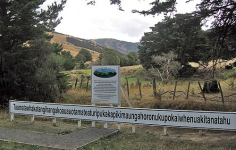
WikipediaThe name Taumatawhakatangihangakoauauotamateaturipukakapikimaungahoronukupokaiwhenuakitanatahu translates roughly as "the summit where Tamatea, the man with the big knees, the slider, climber of mountains, the land-swallower who travelled about, played his kōauau (flute) to his loved one"
FTFY.Awfooeyfouille.
FTFY.

I agree. He clearly knows too much...Ban this man. Pronto. Vite. Schnell. Xxxxxxxxxuxxxxxxxx,
goddammit!

And he imparts his knowledge to others.I agree. He clearly knows too much...
Famously the thorne went away with type set and instead of a single letter for the th sound, we have th and a bunch of ye olde cheese shops.It's not that rare with names around here. When type was introduced it didn't have a letter for the Scots "yoch", denoting a sort of "yuh" sound, so the printsetters used a lower-case z which (as it was at the time) was the closest "looks-like" they had for the yoch - assuming people would read what they saw and understand what was meant. Now we have all these names with a z in the spelling that isn't pronounced. Then people start pronouncing it...
* smiles at the thought of English speakers trying to reproduce the sound represented by ‘-ouille’ *

That's easy for you to say...Looks a lot easier than the Kiwi's....
Taumatawhakatangihangakoauauotamateaturipukakapikimaungahoronukupokaiwhenuakitanatahu
View attachment 66978
Wikipedia
And they have the nerve to say our Aussie town names are too hard lol

...And I've had a David Watts earworm for days now thanks to junkshop's self deprecatory posts.
 .
.
Listen very carefully, I shall say this only once.... looks like they are trying to say allo, alloOr -euil/-euille, which, according to people in my French conversation group, is proof that French is actively trying to kill them.

I'm gonna crown the first girl that I meet.
The glovebox of my daddy's Thunderbird, a white rad ride ('66, '67) so glam, it's absurd, obviously.View attachment 66991
O...k.... where ya getting the crown though????

And if they’ve done that.
The Dutch sounds for ‘ei’, ‘ij’, ‘ou’, ‘au’.
And to finish. Let them correctly pronounce the words ‘gauw’, or ‘Scheveningen’.
Famously the thorne went away with type set and instead of a single letter for the th sound, we have th and a bunch of ye olde cheese shops.

Gauw, means quickly in English.Scheveningen is easy. My mother taught me that one just before I went there on holiday. No idea about gauw, don't think I ever heard the word.
Now do Stronachlachar.
I hadn't realised it was typesetting that did for that one too. Icelandic seems to have managed to keep it.

