Helen
Implicitly explicit

You are of course correct (and I was just joking).It's Hawaiian. It means, basically, "scout" or "first distant messenger". From 'ou "reach out for" and mua "first", the latter reduplicated for emphasis.

You are of course correct (and I was just joking).It's Hawaiian. It means, basically, "scout" or "first distant messenger". From 'ou "reach out for" and mua "first", the latter reduplicated for emphasis.


I was wondering.Good to have it out there anyway. Just in case anyone was wondering.



I utterly lost respect for Kaku as a serious scientist when he fell for the UFO claptrap. He was basically hyping it up on Joe Rogan.Earlier in this thread I compared Loeb to Michio Kaku. I hereby apologize to Dr. Kaku. He's got some wacky ideas but is not ◊◊◊◊◊◊◊ insane.
Hmm. Makes me wonder. Is the Moon hollow and was it built by aliens?Kaku, I guess is a physicist, I wouldn't even say he's a futurist as much as just an entertainer. Of course, I was first exposed to Kaku by Art Bell, so I'm biased. Regardless, Loeb is much more of a crank. There's nothing that comes near to earth that he doesn't think is evidence of alien civilization.
 hub.papersowl.com
So you say. However, he trades on being thought of by the general public as a scientist.Kaku is famous for being a futurist, not for being a scientist.

Like Loeb, he occupies a professorship at a College, albeit one not quite as prestigious as Loeb.Michio Kaku (/ˈmiːtʃioʊ ˈkɑːkuː/; Japanese: カク ミチオ, 加來 道雄; born January 24, 1947) is an American theoretical physicist, science communicator, futurologist, and writer of popular science. He is a professor of theoretical physics at the City College of New York and the CUNY Graduate Center. Kaku is the author of several books about physics and related topics and has made frequent appearances on radio, television, and film. He is also a regular contributor to his own blog, as well as other popular media outlets. For his efforts to bridge science and science fiction, he is a 2021 Sir Arthur Clarke Lifetime Achievement Awardee.
I won't argue with that. Most people don't know what a "scientist" does, and will use that word to label anyone who's science-adjacent. Carl Sagan first and foremost was a science communicator, but he's remembered as a scientist as well.So you say. However, he trades on being thought of by the general public as a scientist.


Yes doomed! Not from this object but from the ever growing presence of lunatics on this planet.Other nutters chime in. We are doomed I tell you. DOOMED!
Only 24 hours to go.
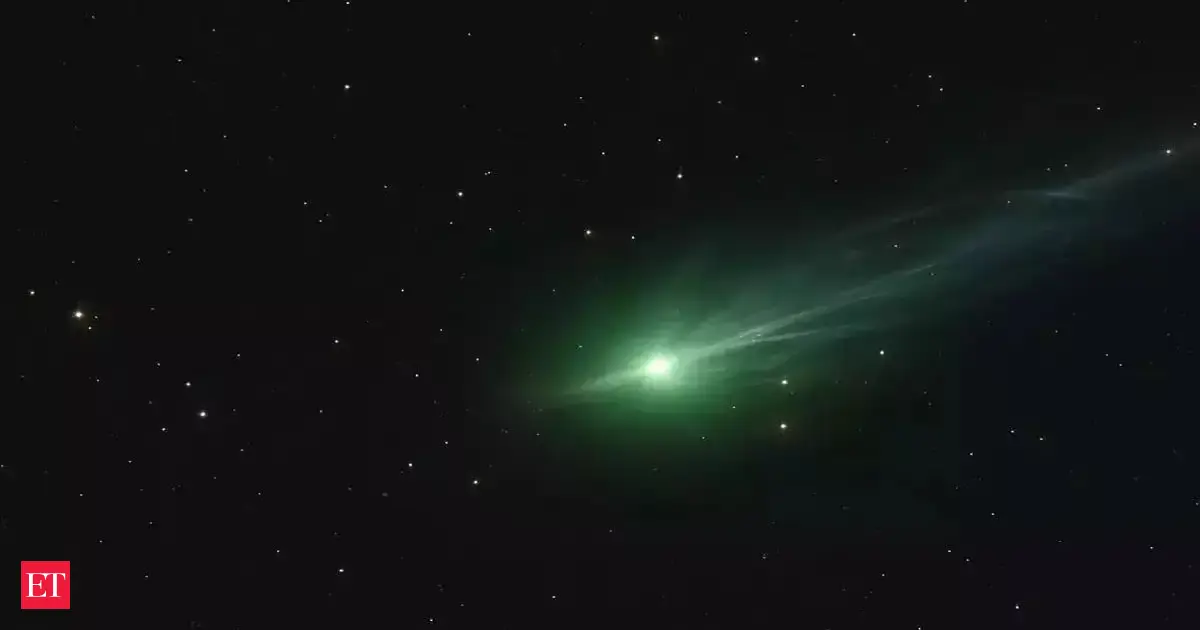
Hard to know who to believe these days, what with the mentally ill scooping all the headlines.Avi's latest pivot: The comet is "ignoring" us, because frankly, we're just too primitive and backward for these highly advanced aliens to take any interest.
He also quotes Putin for some reason. (Who says it's a comet after making a joke about it being a secret space weapon.)
Because NASA and the CIA are different agencies with different agendas and missions. Besides, this is NASA's area of expertise, not the CIA's. The CIA also is not always reality based (they are also susceptible to woo-woo from time to time). Infamously, Uri Geller fooled the CIA into believing that he possessed paranormal abilities. Whatever some people at the CIA believe about the comet, frankly it's unlikely that they have any information that isn't known to professional astronomers.That this information is treated as sensitive enough to be classified by the CIA is surprising, given that NASA officials stated decisively at a press conference on November 19, 2025 (posted here), that 3I/ATLAS is definitely a comet of natural origin. If this conclusion was clear all along to everyone within government and academia — as NASA officials presented the case, then why would the CIA treat the possible existence of records dealing with a natural comet as sensitive enough to be classified?
Exactly. If you answer every query with "we can neither confirm nor deny" then it reveals less information if people eventually ask you something relevant. If you pick and choose, then it reveals something when you do give that answer.Oi, vey! Who the hell thought to even ask the CIA about it? A. we all know their cameras are all pointed down. B. Aren't there some things they could just deny. I'm sure neither confirm nor deny is reflex are they worried that at some point in the future they will be spying on a Chinese moonbase and someone will ask them and the past denial that they look at space will be a problem?


