lobosrul5
Philosopher

Not sure what you mean, a submarine type?We already have an ultra-specialized, ultra-stealthy ASW class.

Not sure what you mean, a submarine type?We already have an ultra-specialized, ultra-stealthy ASW class.
Anti submarine escorts are a waste of tonnage, fuel, personnel etc. if all they can do is screen for subs. Single-role surface combatants have been obsolete since the advent of the aircraft carrier.
I guess that you are thinking of the attack submarines.We already have an ultra-specialized, ultra-stealthy ASW class.
And whilst they are specialists in ASW, that doesn't mean that ASW frigates are only capable of the ASW mission.That is, on the face of it, not true. Frigates and corvettes*** only appeared after the advent of aircraft carriers, during or just before WW2. These were vessels that had almost completely only one role: seek and destroy submarines, with surface guns really only good enough to outclass a surfaced sub. The USN called our frigates destroyer escorts, and the RN had a class of ships (Hunt-Class) they termed escort-destroyer designed before WW2, that was roughly the same concept.
*** in the steam ship era, the class types names being borrowed from the age of sail
Anti submarine escorts are a waste of tonnage, fuel, personnel etc. if all they can do is screen for subs. Single-role surface combatants have been obsolete since the advent of the aircraft carrier.

The US Destroyer Escorts were originally designed for the RN. We got about 90 of them as rhe Captain Class.That is, on the face of it, not true. Frigates and corvettes*** only appeared after the advent of aircraft carriers, during or just before WW2. These were vessels that had almost completely only one role: seek and destroy submarines, with surface guns really only good enough to outclass a surfaced sub. The USN called our frigates destroyer escorts, and the RN had a class of ships (Hunt-Class) they termed escort-destroyer designed before WW2, that was roughly the same concept.
*** in the steam ship era, the class types names being borrowed from the age of sail
Attack subs are OK until an AS escort sinks them.I guess that you are thinking of the attack submarines.
They are obviously very capable, but although I am no expert, I can envision situations where you would want a surface escort.
Aircraft are good at air defence, so I guess that following your reasoning, the ideal carrier battle group would consist of a carrier, tenders, maybe minesweepers and a few attack submarines.
Again, I am a complete layperson, but I guess that it would be difficult to coordinate between surface units and submarines whilst keeping emissions low. And frigates can range away from the carrier, and carry their own helicopter, so would be able to cover a larger area.
Very much so Even AS Frigates can engage surface and air threats.8
The highlighted is a bit of a strawman.

That was WW2, the era of the day fighter, the night fighter, the light tank, the heavy tank, and the cruiser tank. Advancing technology has consolidated lots of roles into single multi-role platforms. A frigate that can't conduct its own air defense activities, or engage in surface combat, isn't a complete warship. And we already have super-stealthy, highly-specialized anti-submarine escorts.That is, on the face of it, not true. Frigates and corvettes*** only appeared after the advent of aircraft carriers, during or just before WW2. These were vessels that had almost completely only one role: seek and destroy submarines, with surface guns really only good enough to outclass a surfaced sub. The USN called our frigates destroyer escorts, and the RN had a class of ships (Hunt-Class) they termed escort-destroyer designed before WW2, that was roughly the same concept.
*** in the steam ship era, the class types names being borrowed from the age of sail
Even a Constellation class is cheap compared to a Virginia class. Let alone another highly-capable design like the Type-26. And there is going to be a far smaller pool of sailors who are suitable for service on a submarine compared to a surface vessel .Plus, how many subs do you have?
Except that nobody is proposing a frigate that cannot do those things. - well except for the utterly dumb* idea of the LCS with an ASW module. Although the US replacement for the Constellation class looks as though it will be very limited in many aspects, and possibly would be less capable than some larger corvettes. A converted Coast Guard cutter with no VLS cells seems specified for failure.That was WW2, the era of the day fighter, the night fighter, the light tank, the heavy tank, and the cruiser tank. Advancing technology has consolidated lots of roles into single multi-role platforms. A frigate that can't conduct its own air defense activities, or engage in surface combat, isn't a complete warship. And we already have super-stealthy, highly-specialized anti-submarine escorts.

Superglue?Cauterization used to be a good way to stop bleeding. At least it was the best available. We don't have a better solution to date.

I haule two of my cousins to an ER once. One cut his hand and the other sloshed on some superglue and then applied pressure to the wound.Superglue?
I carry something similar, liquid bandage, in my fishing/boating first aid kit. It is really only useful for minor lacerations or abrasions.
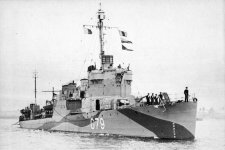
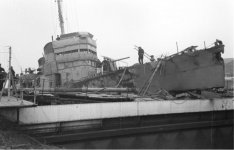
Which Destroyers?My bad. Should have said "destroyers." As "escorting" is one of the primary jobs I sometimes cut to the chase.

They certainly had brought the troops to try it.The occupation was never considered practical, too deep in "Indian Country" for the IJN. They hail mary'd the invasion on the basis of "let's see what happens." (I base that on reading I did while doing my Master's at Purdue. Fairly certain the pertinent tomes are still on the shelves there, not having moved since they were reshelved after that paper was done.)
Plus the combat-qual'd gooneys would have objected.They certainly had brought the troops to try it.
Thing is many 'alternative historians' have assumed that if Japan had defeated the US Fleet than the occupation was a fait accompli. In reality any such invasion would have faced an almost impossible challenge where limited approach areas and inadequate landing craft would mean Japanese "marines" would have to wade through chest-high water for almost 1000 yards, and the air raids had done a very poor job of damaging any coastal defense equipment.
Drachinifel just covered some of this in his last Q&AThey certainly had brought the troops to try it.
Thing is many 'alternative historians' have assumed that if Japan had defeated the US Fleet than the occupation was a fait accompli. In reality any such invasion would have faced an almost impossible challenge where limited approach areas and inadequate landing craft would mean Japanese "marines" would have to wade through chest-high water for almost 1000 yards, and the air raids had done a very poor job of damaging any coastal defense equipment.

I remember reading someone's story of the Falklands conflict (SAS so possibly Andy McNab) saying how some officers were suggesting the SAS do a HALO drop onto South Georgia (IIRC). Fine to suggest such when you're not doing it.Plus the combat-qual'd gooneys would have objected.


