• Quick note - the problem with Youtube videos not embedding on the forum appears to have been fixed, thanks to ZiprHead. If you do still see problems let me know.

What book is everyone reading at the moment? Part 2.

Heart-Shaped Box, by Joe Hill

One thing I like about Joe Hill's novels (so far) is that he gets into it right away. A lot of horror writers start with a few chapters of mundane world-building, before bringing the horror elements into the story. Stephen King is a good example of this. He often goes to great lengths to establish just how normal and pleasant the people are, the town is, so that it hits harder when something arrives to destroy all that.

Joe Hill just gets started on the destruction. Chapter one, here's a character, and here's a messed-up thing that's happening to them. We get to know the characters and the world as we go along, but we just keep going along. It's the difference between getting to know your fellow passengers while waiting for the train, and getting to know them while the train is in motion. "Now you know these people, let's take a trip with them" versus "you're on a trip with these people, here's what you need to know".

This has been my experience with Hill so far. I quite like it.

Yes, I know Joe Hill is Stephen King's son. He's tried very hard to establish himself as a distinct person and writer, and I try to respect that.
I've never read Joe Hill, but I've always thought Ligotti was taking a bit of a dig at Stephen King in his meta-horror story "Notes on the Writing of Horror" (or at least at King's brand of horror):
Nathan is a normal and real character, or at least one very close to being so. Perhaps he’s not as normal and real as he would like to be, but he does have his sights set on just this goal. He might even be a little too intent on it, though without passing beyond the limits of the normal and the real.
[...]

Nathan’s search for the aforesaid qualities in his life may be somewhat uncommon, but certainly not abnormal, not unreal. (And to make him a bit more real, one could supply his overcoat, his grandfather’s wristwatch, and his car with specific brand names, perhaps autobiographically borrowed from one’s own closet, wrist, and garage.)
[...]

Okay. Now Lorna McFickel represents all the virtues of normalcy and reality. She could be played up in the realistic version of the story as much more normal and real than Nathan. Maybe Nathan is after all quite the neurotic; maybe he needs normal and real things too much, I don’t know. (If I did, maybe I could have written the story.)[...]
And so on and so forth. You get the idea.
 
Last edited:
Heart-Shaped Box, by Joe Hill

One thing I like about Joe Hill's novels (so far) is that he gets into it right away. A lot of horror writers start with a few chapters of mundane world-building, before bringing the horror elements into the story. Stephen King is a good example of this. He often goes to great lengths to establish just how normal and pleasant the people are, the town is, so that it hits harder when something arrives to destroy all that.

Joe Hill just gets started on the destruction. Chapter one, here's a character, and here's a messed-up thing that's happening to them. We get to know the characters and the world as we go along, but we just keep going along. It's the difference between getting to know your fellow passengers while waiting for the train, and getting to know them while the train is in motion. "Now you know these people, let's take a trip with them" versus "you're on a trip with these people, here's what you need to know".

This has been my experience with Hill so far. I quite like it.

Yes, I know Joe Hill is Stephen King's son. He's tried very hard to establish himself as a distinct person and writer, and I try to respect that.


You'd probably like Bentley Little.
 
I've gotten started on What the Hell Did I Just Read by David Wong aka Jason Pargin. Uhm, it's living up to its name. An incredibly tense read about missing children, a one-armed concrete snowman, and nebulous supernatural forces that mess with peoples' perception and even memories. The plot twists are pretty jolting, too. It's difficult book to talk too much about the story without spoiling anything, but if you want another book that reads like Stephen King and Douglas Adams sat down to write horror books together, with a generous dose of Pargin's trademark skepticism, satire, and reflections, I can't recommend it enough. Only problem is I'm reading it at way too fast a rate, I'll have swallowed the whole book in a day or two at this rate.

Edit: Oh, and in a way, it ties neatly into our reality where facts and objective reality matter less and less. I think that's part of what makes it such an uncomfortable read.
 
Last edited:
So, I finished the book. It hope this isn't a spoiler, but it does that Fight Club thing where it reveals something near the end that recontextualizes everything that happened in the story, so now I have to read it again and I've been told the second read is like reading a whole new book. Should be great.

Oh, and again, the way you never know what's real and what isn't, especially after that last twist, is really unsettling.
 
Desperados, Elaine Shannon*

This is a riveting book that made me read it slowly. Elaine Shannon, an investigative journalist for both Time and Newsweek, details the history of “Latin drug lores, U.S. Lawmen, and the war American can’t win” in meticulous fashion, with an average of two or three endnotes on each page. Some are brief citations of sources, but others elaborate on the situations and personalities.

She covers an amazing number of individuals, from Ronald Reagan and George H.W. Bush to DEA personnel, Customs officials, CIA agents, FBI agents, Mexican, Colombian, Bolivian, Peruvian, and Panamanian law-enforcement people and, my God, a rogue’s gallery of cartel crime bosses, smugglers, thugs, and murderers, so many that the book begins with a cast list of characters. Shannon hangs the account on the kidnapping and brutal torture and murder of Kiki Camarena, an American DEA agent, in 1985.

The complex history unfolds in a disheartening manner. The War on Drugs declared by Richard Nixon became a worse debacle than Viet Nam. The drug lords grew rich beyond avarice, able to bribe their way out of legal problems and to buy the loyalty of the police and political leaders who nominally fought them. American banks and businesses involved in massive money-laundering shielded the cartels. When a major Mexican drug lord was taken into custody, instead of bent sent to prison he was put under home arrest, lived as he always hand, continued to run his organization, and even dined with the president of his country.

Meanwhile, the DEA doggedly sought to solve the problem of Camerena’s murder, struggling against a Mexican police system riddled with individuals working for the cartels. They discovered immense fields of marijuana in the Sinaloa desert; their superiors in Washington said, “Nobody could grow pot there.” They asked the government to reduce the demand for weed, heroin, and cocaine, and the most tangible result was Nancy Reagan’s announcing the “Just Say No” initiative. The next year the Reagan administration slashed the DEA’s budget.

But the vital problem was the incredible rivalry and infighting among the FBI, CIA, DEA, and Customs. Almost always at cross purposes, they did not share intelligence or even simple information. At the top, Reagan boasted that the cartels were being decimated while they were growing and flourishing. Later, Bush said he didn’t recognize the names of the main cartel bosses, surprising given his CIA background.

Shannon’s book was published in 2015. Nine years after that and thirty-nine years after Camarena’s murder, a group of cartel higher-ups—those who had survived—were extradited to the U.S.A. and indicted in early January 2025. Justice runs late, and the war on drugs continues.
-----------------
*Elaine Shannon is from my hometown and is the daughter of my first dentist. The book makes me wish I knew her better.
 
Miss Pickerell Goes to Mars, Ellen MacGregor

I saw this children’s science-fiction book from the 1950s on Amazon and remembered reading it a few years ago. Okay, when I was in first grade. Our school library had a whole shelf of Miss Pickerell books, of which this was the first. MacGregor wrote half a dozen or so, and after her passing other writers continued the series. Never read most of them, but this one stuck in my memory because my first-grade teacher thought it was beyond my reading level (it was rated as for readers 12 and older) and my teacher even made me stay in for one recess reading it aloud and explaining the plot to prove I could deal with it.

It's not a difficult read. I finished it in half an hour. Miss Pickerell is an elderly lady who values two things in life: her rock collection and her cow. In this book, for reasons never explained, while she is spending a month visiting her seven nieces and nephews (the cow is in tow), the government or somebody constructs a spaceship on her farm in order to launch an expedition to Mars. Miss Pickerell inadvertently stows away, taking the place of the astrogator, who misses the flight but winds up staying on the farm and taking care of the cow. Over about a month, the spaceship flies to Mars, the crew and Miss Pickerell explore for about a week, and they come back.

Wait, you want to know how they did it all so fast? Why, you poor simpleton, the answer is obvious: it’s an atomic rocket. Very atomic! Miss Pickerell does the navigation herself by the intricate system of “point the rocket where you want to go, then turn it around before you land.”

Frankly, none of the book’s explanations of science make much sense, but there’s a light-heartedness that still has a lingering appeal for me, and Miss Pickerell is such a grumpy-grump (though kind at heart) that she brings a smile to my face. Quite outdated, and I doubt that first-graders today would care for it, but I found it fun to revisit.
 
Miss Pickerell Goes to Mars, Ellen MacGregor
I remember reading one book with that character several times, perhaps in second grade. I don't think I was ever aware that it was part of a series. I would probably have liked to see the other books. Our library (school and local) did have several series that I visited often -- Danny Dunn (boy scientist), the Limerick series (boy with mysterious chemistry set), the Tucker series (of which I only knew about one book, the one I owned), and a few others. But those stick in my mind the most.
Ah, if only we'd had the internet back then, I could have found out more about those other volumes!
 
When HARLIE Was One (1971, since revised)
One of the earliest A.I. books. A really well-built computer begins to transcend its programming. Not nearly as good as Colossus: The Forbin Project (imo), or many of the other genre stories I've read, but still a fast read. Lots and lots of it is Philosophy 101 back-and-forth between the programmer and the machine. There were only a couple times I lost interest.
My biggest problem with this book on Kindle was all the typos and bad formatting/spacing. Now, I thought the minimal mistakes in HARLIE's responses were going to turn out to be subtle clues that something was wrong with him. (Kind of like with H.A.L in 2001). Even when I saw typos in the narrative I thought it might turn out to be a meta-narrative. But no, they were just typos. And I hate that in a professionally produced book. This one's over 50 years old, ffs. (Granted, the errors may have only been made in this latest edition.)
 
When HARLIE Was One (1971, since revised)
One of the earliest A.I. books. A really well-built computer begins to transcend its programming. Not nearly as good as Colossus: The Forbin Project (imo), or many of the other genre stories I've read, but still a fast read. Lots and lots of it is Philosophy 101 back-and-forth between the programmer and the machine. There were only a couple times I lost interest.
My biggest problem with this book on Kindle was all the typos and bad formatting/spacing. Now, I thought the minimal mistakes in HARLIE's responses were going to turn out to be subtle clues that something was wrong with him. (Kind of like with H.A.L in 2001). Even when I saw typos in the narrative I thought it might turn out to be a meta-narrative. But no, they were just typos. And I hate that in a professionally produced book. This one's over 50 years old, ffs. (Granted, the errors may have only been made in this latest edition.)
My hypothesis is that older books are simply scanned and run through an optical character recognition (OCR) process. So all the typos are just scanning artifacts imperfectly recognized by the OCR. Maybe even printing artifacts that appeared as ignorable spots of ink in the original work, but which the OCR is programmed to try to turn into characters.

I'm reading Dick Francis's first novel as an ebook, and I'm seeing a lot of what I assume are scanning/OCR artifacts. I doubt the publisher is spending money on a whole new edition with fresh typos in it.

Really, you should look into the economics of scanning old books versus printing new editions with typos in them. How would that even work? Is your publisher hiring people to retype the text, and then not proofreading it?
 
My hypothesis is that older books are simply scanned and run through an optical character recognition (OCR) process. So all the typos are just scanning artifacts imperfectly recognized by the OCR. Maybe even printing artifacts that appeared as ignorable spots of ink in the original work, but which the OCR is programmed to try to turn into characters.

Yup, that happened frequently when I worked for this company that did discovery work for lawyers.
 
Last edited:
My hypothesis is that older books are simply scanned and run through an optical character recognition (OCR) process. So all the typos are just scanning artifacts imperfectly recognized by the OCR. Maybe even printing artifacts that appeared as ignorable spots of ink in the original work, but which the OCR is programmed to try to turn into characters.
Interesting take. I would think that they'd at least run it through a spell-checker because there were some quite egregious errors there.
That's why it really bugs me when a presentation (book, movie) that deals with altered reality has issues with the presentation itself. I remember watching Fight Club and while there were some subliminal frames inserted intentionally, my DVD had problems so I couldn't tell if certain momentary freeze-frames were part of the narrative or not. I'm still not sure, having only seen it once.
 
In my experience (which isn't particularly extensive) the ebooks that you download for free off less-than-reputable sharing sites are full of OCR errors, whereas ones you officially purchase from Amazon are generally pretty good.
 
Interesting take. I would think that they'd at least run it through a spell-checker because there were some quite egregious errors there.
That's why it really bugs me when a presentation (book, movie) that deals with altered reality has issues with the presentation itself. I remember watching Fight Club and while there were some subliminal frames inserted intentionally, my DVD had problems so I couldn't tell if certain momentary freeze-frames were part of the narrative or not. I'm still not sure, having only seen it once.

I agree, but spell check can only do so much. When an OCR program changes "wait" to "wall", there's not much it can do about it.

I know there are a lot better OCR programs today, but back at the turn of the century (I've always wanted to use that phrase), they weren't as good.

The best bet all around is have someone "living" read them.

I've also heard that some e-books were hand typed and quickly put out with very little checking.

For example, some of the Perry Mason novels that were turned into e-books, that came out at the same time as the series on Max, are loaded with errors, but most aren't.
 
In my experience (which isn't particularly extensive) the ebooks that you download for free off less-than-reputable sharing sites are full of OCR errors, whereas ones you officially purchase from Amazon are generally pretty good.


I purchased most of my Perry Mason e-books from Amazon, but you have to realize, they don't proofread the books, they merely sell them for the publisher.

I know because I sell my books through them.

I've got a ton of free books from a free e-book site (all are in the public domain) from Gutenberg.org (almost every Sherlock Holmes and Dicken's story), and I rarely found any errors.

I've been spending the last few years editing my novels to the point where I edit everything I read subconsciously, and just about every novel (not e-books but real ones) I've read (from Stephen King to David Baldacci) has at least one error in it.

Most of the time, it's when the author decides to place a word in front of another instead of after it (and vice versa) and forgets to delete the second one.

Hell, even after I edit my books, I still find errors.
 
I purchased most of my Perry Mason e-books from Amazon, but you have to realize, they don't proofread the books, they merely sell them for the publisher.

I know because I sell my books through them.

I've got a ton of free books from a free e-book site (all are in the public domain) from Gutenberg.org (almost every Sherlock Holmes and Dicken's story), and I rarely found any errors.

I've been spending the last few years editing my novels to the point where I edit everything I read subconsciously, and just about every novel (not e-books but real ones) I've read (from Stephen King to David Baldacci) has at least one error in it.

Most of the time, it's when the author decides to place a word in front of another instead of after it (and vice versa) and forgets to delete the second one.

Hell, even after I edit my books, I still find errors.
Noted in a previous post where I revised and published my book I've gone over a hundred times. Then one second after pushing the Publish button I found a typo on the back cover.
 
Noted in a previous post where I revised and published my book I've gone over a hundred times. Then one second after pushing the Publish button I found a typo on the back cover.


I know what you mean. Everything looks fine until I actually make it public or publish it, and then some mysterious something happens in my head, and the blinders fall off (probably the ones I use while I'm writing, thinking I'm such a genius) and holy smokes, the typos and grammatical errors almost jump off the page.

Alot of them have to do with there, their, they're, your, and you're.

And I'm sometimes typing so fast, I skip words, and while reading them back, I miss them again, until I publish or make them public.

I've lost count on how many times I've done that here.
 
Last edited:
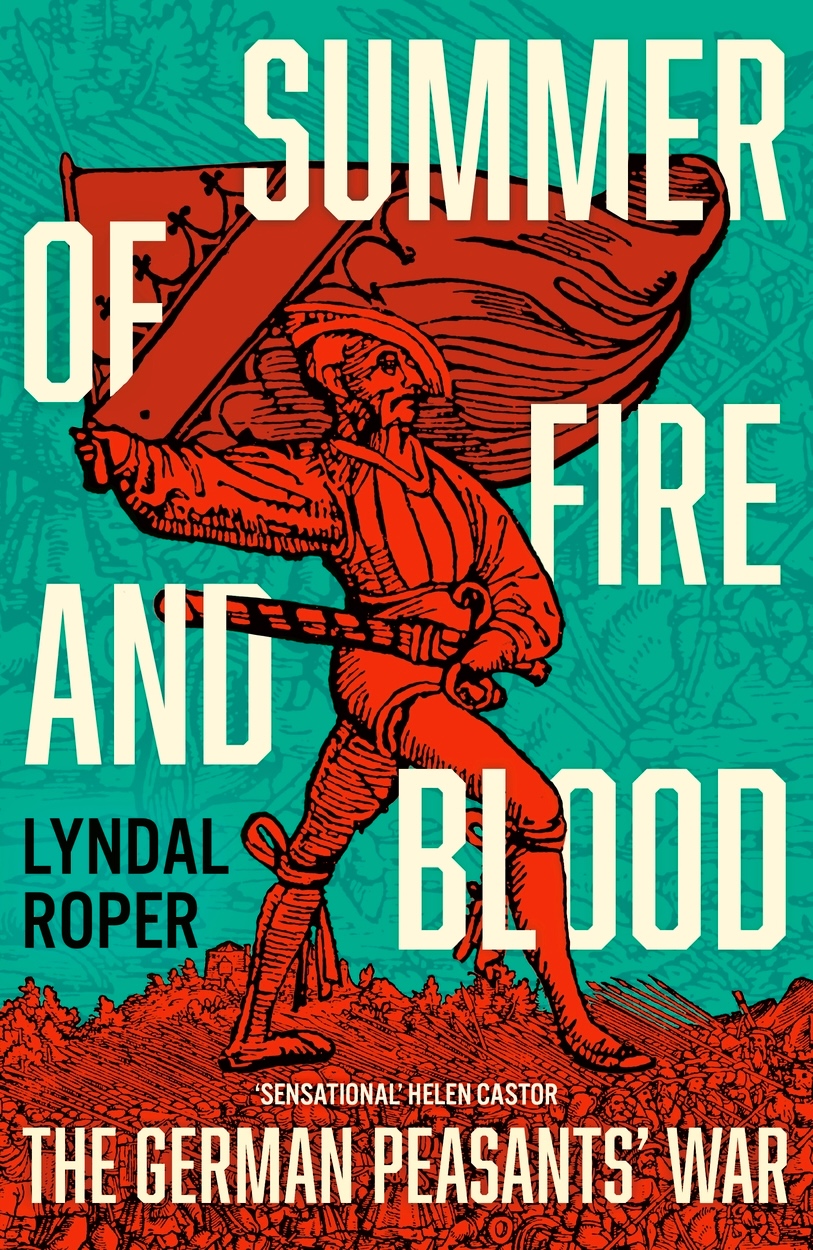
Summer of Fire and Blood: The German Peasants' War
by Lyndal Roper (Regius Professor of Modern History at the University of Oxford)


A shamefully under explored part of European History given the attention it deserves. Massive overlap with the Reformation. (She wrote a rather famous book about Luther earlier).
 
Re: typos. Ebooks published by Amazon include a reporting feature. Highlight the offending text and look for the "report" bottom that will appear above the word or phrase, that takes you to an editing pop-up which lets you identify the trouble (bad formatting, typo, factual error) and propose a fix and submit the correction. Eventually someone does make the change.
 
Re: typos. Ebooks published by Amazon include a reporting feature. Highlight the offending text and look for the "report" bottom that will appear above the word or phrase, that takes you to an editing pop-up which lets you identify the trouble (bad formatting, typo, factual error) and propose a fix and submit the correction. Eventually someone does make the change.

Thank you, but which e-books are actually published by Amazon?

I know mine aren't (it's why it's called self-publishing), nor were the Perry Mason novels, or the ones by David Baldacci, or the ones by Dean Koonz, or Stephen King etc...
 
I know what you mean. Everything looks fine until I actually make it public or publish it, and then some mysterious something happens in my head, and the blinders fall off (probably the ones I use while I'm writing, thinking I'm such a genius) and holy smokes, the typos and grammatical errors almost jump off the page.

Alot of them have to do with there, their, they're, your, and you're.

And I'm sometimes typing so fast, I skip words, and while reading them back, I miss them again, until I publish or make them public.

I've lost count on how many times I've done that here.
I guess it's like an artist turning their in-progress painting upside-down to catch composition problems. Or (back in the day) having someone else Verify the punch cards you made. (There was a Verify feature on advanced models where one would submit a previously punched card, and re-type in the same data. The keyboard would freeze if there was a difference. You could then correct it and continue, then slide in a new card and it would punch a new, corrected one.) If you just Verified the cards yourself, often you'd make the same typo, which is why you had someone else do it -- sometimes it was their only job.


Thank you, but which e-books are actually published by Amazon?
Mine is self-published on Amazon -- I'll have to check out that feature.
 
I have four books self-published using Kindle Direct Publishing, and so far I've been notified of one formatting error and two or three typos. the formatting thing was a whole short paragraph center-justified . Don't know how three different beta readers and I all missed that.

Amazon does ask if I want to accept or reject the corrections. Accepted them all so far.
 
Last edited:
I have four books self-published using Kindle Direct Publishing, and so far I've been notified of one formatting error and two or three typos. the formatting thing was a whole short paragraph center-justified . Don't know how three different beta readers and I all missed that.

Amazon does ask if I want to accept or reject the corrections. Accepted them all so far.


If people actually bought my books, I'd probably get a whole lot of those too, although, most of the grammatical spelling errors in my books are intentional, like they were in the book Flowers for Algernon.

The Criminal is a crappy writer, and since he's the one dictating (and editing) all the AmyStrange novels in the first person, it isn't until the fourth book that he finally gets it right.
 
Last edited:
Currently reading a swedish novel called Ödet och Hoppet by Niklas Natt och Dag. It tells the story about the swedish nobelman Engelbrekt Engelbrektsson who led an rebellion against the swedish king during 1434-1436. But Engelbrekt was murdered by Måns Bengtsson (Natt och Dag) with an axe and the rebellion failed. The author Niklas Natt och Dag is a relative to Måns Bengtsson (15th-generation) and tells the story of his murderous ancestor in this book.

Natt och Dag (translates to Night and Day) is a Swedish noble family with origins in the thirteenth century.
 
The Skeptical Botanist, 2025, By John Entwisle.

Debunking the myths about plants and gardening. The author is the former head of the Sydney and Melbourne Botanic Gardens, and also held a senior role at Kew Gardens. This is a collection of writings from the past 30 years, updated, and some new pieces.

I'm a quarter of the way through and enjoying it so far.
 
Gone Forever, Diane Fanning
Just before the Thanksgiving holiday in 2002, Sue McFarland vanished from her home in Texas. Not until the week following Thanksgiving was she reported missing. From the outset, police suspected her husband, Rick, was behind the disappearance, which left him in the family home with the couple’s three young sons.

Edgar-winning true crime writer Fanning gives us a straightforward, dispassionate explication of the entire case, which became a murder investigation in January 2003 with the discovery of Sue’s barbarically charred body in a rusty open trailer miles from her home. In the end, the first suspicions proved correct.

Rick McFarland was an improbable husband for the hard-working Sue. He swiped his kids’ ADHD medication and took it himself. He compulsively shopped, buying multiples of weirdly assorted merchandise and got himself banned from Target and other stores for sending in proof-of-purchase packaging to manufacturers and getting rebates, then returning the items for cash refunds. He preached a form of Evangelical Christianity that focused on the family. The father was the ultimate authority, and the wife and children were under his sole authority. When Sue had a glass of wine at a celebration, Rick spread the word that she was an alcoholic. His caretaking of their sons was spotty at best. His wife left home for work early in the morning, and Rick was responsible for taking the boys to school. Time after time the school called Sue asking where the kids were – at eleven o’clock or later. She’d call Rick and he’d say, “We’re on our way, what’s the problem?” When their mother was missing at Thanksgiving, Rick wouldn’t let them go to friends or relatives but ordered a couple of pizzas.

And in the end, despite assiduous efforts to hide blood in the home, in his car, and on his clothing, despite his attempt to destroy any chance of identifying the corpse, Rick wound up charged for murder. Knowing that now he’s spent half of his sentence in prison (from which he conducts a ministry) and is currently eligible to apply for parole is . . . disturbing.


Miss Pickerell and the Geiger Counter, Ellen MacGregor
After she went to Mars in the first book of this children’s series, Miss Pickerell sets out with two of her nephews (and her cow) for the state capital, where a great circus is entertaining ladies, gentlemen, and kids of all ages (and presumably cows).

The drama begins when the steamboat captain discovers that the cow is aboard and insists on putting her and Miss Pickerell ashore. Outraged at this discrimination, Miss Pickerell buys railway tickets to the capital for herself and her bovine companion. Since the cow is ten, she gets a children’s ticket. Until the stationmaster realizes her species, and then he bans the cow from railway travel.

A disgruntled Miss Pickerell goes to the local sheriff for justice, only to discover that he is down with measles and never wanted to be a sheriff, anyway. He wanted to be an atomic scientist, and he even has a Geiger counter. Rockhound Miss Pickerell assures him the river valley cannot possibly have any uranium in it. The disappointed sheriff says he won’t be paid until he discovers fissionable material, and being bedridden, he deputizes Miss Pickerell to do the prospecting.

And this is only the first couple of chapters! A mystery develops, a character gets abducted, flies with radioactive feet somehow feature, and of course Miss Pickerell has to provide for her nephews to be taken care of in the state capital. Mild fun, again with some outdated science (though the book does a respectable job of explaining the concept of radioactive half-lives). If this one had a tighter plot, it would be more enjoyable, but you take what you can get, and since I got four Miss Pickerell books for ninety-nine cents, I can’t really complain. It’s at least worth a quarter.
 
I just finished DCeased - War of the Undead Gods (the collection). (from Amazon Comixology Unlimited for Kindle)
Now, I've been reading comics for 60+ years, and this rockets to one of the top four or five I've ever read. Great art, epic story, high stakes (Batman, Nightwing, and Robin-Damian are already dead, killed by Alfred out of self-defense.) There are several other issues in the line, but this is the collection of the conclusion. Man, I wish DC would make this into a movie, but it would probably cost a billion dollars.
 
I'm a great fan of those. The two great scenes for me are the debauched sloth and Audrey's crew doffing hats when he stands in the pillory.
The Ionian Mission has the scene where Aubrey goes into battle with a French ship without drawing and reloading from his gunnery exercise using fireworks powder that makes different colored fire and smoke. The French think it’s a secret weapon and retire.
 
Book on owls by jennifer Ackermann. This one has been slow going. I am rushing through some chapters so I can give it to my brother in law when he come by Friday. Then on to a few books on medieval everyday life. On translated from German.
 
Miss Pickerell Goes to Mars, Ellen MacGregor

I saw this children’s science-fiction book from the 1950s on Amazon and remembered reading it a few years ago. Okay, when I was in first grade. Our school library had a whole shelf of Miss Pickerell books, of which this was the first. MacGregor wrote half a dozen or so, and after her passing other writers continued the series. Never read most of them, but this one stuck in my memory because my first-grade teacher thought it was beyond my reading level (it was rated as for readers 12 and older) and my teacher even made me stay in for one recess reading it aloud and explaining the plot to prove I could deal with it.

It's not a difficult read. I finished it in half an hour. Miss Pickerell is an elderly lady who values two things in life: her rock collection and her cow. In this book, for reasons never explained, while she is spending a month visiting her seven nieces and nephews (the cow is in tow), the government or somebody constructs a spaceship on her farm in order to launch an expedition to Mars. Miss Pickerell inadvertently stows away, taking the place of the astrogator, who misses the flight but winds up staying on the farm and taking care of the cow. Over about a month, the spaceship flies to Mars, the crew and Miss Pickerell explore for about a week, and they come back.

Wait, you want to know how they did it all so fast? Why, you poor simpleton, the answer is obvious: it’s an atomic rocket. Very atomic! Miss Pickerell does the navigation herself by the intricate system of “point the rocket where you want to go, then turn it around before you land.”

Frankly, none of the book’s explanations of science make much sense, but there’s a light-heartedness that still has a lingering appeal for me, and Miss Pickerell is such a grumpy-grump (though kind at heart) that she brings a smile to my face. Quite outdated, and I doubt that first-graders today would care for it, but I found it fun to revisit.
I saw an NBC Children's Theater Episode based on this in 1972, when I was seven. Until now, I'd never known that it was adapted from a book series. I remember assuming that, because they were showing stock footage of the moon landings, that the expedition must have been to the moon, but I also remember Miss Pickerell's saying something about how one of the astronauts brought her "red rocks for my collection," which obviously implies Mars.
 
Circumnavigating Patrick O'Brien's Aubrey-Maturin series again, currently finishing up The Ionian Mission.
I read all the Hornblower books when I was in college (the first time) and really enjoyed them. I read Master and Commander about 15 years ago and liked it even better, but my local library's copy of Post Captain (the second book in the series, for those unfamiliar) had gone missing, so I didn't continue the series. I really need to see if they've replaced it, or, if they haven't, acquire one myself.
 
I saw an NBC Children's Theater Episode based on this in 1972, when I was seven. Until now, I'd never known that it was adapted from a book series.
From the description it seems that the program adapted three of the books.

Shot in the dark, but does anyone remember an old SF children's novel about some British kids who stow away on a rocket to Mars? I remember only a few details:
1 it is narrated in third person, but the narrator hints that he/she was one of the stowaways - "I was a child amang ye takin' notes;"
2 an adult character is a master mimic, impersonating the voice and appearance of famous people, including Winston Churchill;
3 when the rocket lands on Mars, the professor who invented it realizes they need to test the atmosphere and does it by throwing the hatch open, taking a deep breath, and announcing, "Ah! The purest ozone!"
4 the Martians have devolved into big wrinkly bags of heads with a beak and squirming tentacles;
5 the kids call the leader of the Martian leader "Old Jellybags";
6 much less sure of this, but I think the title included "Red Planet."

This has been bugging me for years.
 
Last edited:
A Game in Yellow, Hailey Piper

A kinky couple is sliding into a dead bedroom situation. It is recommended they read the notorious play, to open up new avenues of communion and pleasure. Is this a good idea? I guess we'll find out.

Skip it if you dislike smut in your horror-romance.
 
Pre-ordered A Short History of Nearly Everything 2.0 in paperback by Bill Bryson, out on Oct 28.

I was wanting to re-read the original, but couldn't find my copy, then discovered this revised edition is out soon. Thrilled!
 
Alexis Wright (Australia), Praiseworthy. Incredible, read her Carpentaria, but this is even better - it's not easy reading, but well worth the effort; it took her ten years to write, so it should take time to read as well. It's complex and poetic, a serious book about poverty, climate change, very political at times, even if subtly so, but also funny, almost farcical from time to time. It reminds me of the magical realism of Marquez. Her use of language is fascinating, it almost has me talking to the book, or to the author. Or maybe to Queensland.
 
I read all the Hornblower books when I was in college (the first time) and really enjoyed them. I read Master and Commander about 15 years ago and liked it even better, but my local library's copy of Post Captain (the second book in the series, for those unfamiliar) had gone missing, so I didn't continue the series. I really need to see if they've replaced it, or, if they haven't, acquire one myself.
I keep forgetting that I can borrow books from the local library on my Kindle. But my Prime membership often gets me access to the (older) ones I want anyway. And I find it odd that the library often has a waiting list for a digital copy of a book.
 
I hadn't been planning to mention the two books I recently finished reading, because I didn't think they'd be of sufficiently general interest, but seeing what others have posted has made me reconsider.

The first is Nimitz, by E. B. Potter. This is the definitive biography of Admiral Chester W. Nimitz, supreme commander of American naval forces in the Pacific in World War II. It was written by a long-time professor of naval history at the US Naval Academy, who had personally known the admiral, and had collaborated with him on revising the Academy's standard naval history text.

The book is extremely well written, and, naval history nut that I am, I really should have read it a long time ago. It has a lot of insight into Nimitz's struggle to pursue his strategy for defeating the Japanese as he saw fit while dealing both with meddling from his superiors in Washington and turf wars with General MacArthur.

It was also scary to learn how many times, for various reasons, the Navy came very close to being deprived of Nimitz's services. Although I'd been aware of most of these incidents before reading the book, having all the details fleshed out really brought home how lucky the US was that he survived to become, and remain, Commander in Chief, Pacific.

Finally, there was one detail of Nimitz's career that I found particularly fascinating. It's mentioned in most histories of the Pacific War that when he was tapped to take over as COMINCHPAC, Nimitz was serving as head of the Bureau of Navigation (now known as the Bureau of Naval Personnel). But I learned that his previous assignment had been as Commander, Battleship Division 1, with the Arizona as his flagship. Further, his flag captain was Isaac C. Kidd, who, as Nimitz's indirect successor in command of the division, would die aboard the Arizona on the morning of December 7, 1941. I'm rather surprised that I'd never read about that before.

Pointless tangent: At my high school commencement, they read out the name of a guy I knew slightly, and I learned that he has two middle names: William Nimitz. I never saw him again until our 25th class reunion (the only one he's been to so far), when we sat at the same table. I asked him if he's related to the admiral, and he said they're first cousins twice removed. He told me that his mother had a picture of Nimitz signing the surrender documents aboard the Missouri, autographed by Nimitz.
 
Circumnavigating Patrick O'Brien's Aubrey-Maturin series again, currently finishing up The Ionian Mission.
Always worth it. I have completed 4 circumnavigations, and many short voyages, and they never fail to please. A recent trip to the Historic Dockyards in Portsmouth brought it all very much to life for me.

1759468677021.png
 

Back
Top Bottom