• Quick note - the problem with Youtube videos not embedding on the forum appears to have been fixed, thanks to ZiprHead. If you do still see problems let me know.

Trump's Second Term

You are referring to what is know in British Commonwealth parliaments as the Prime or First Minister. So how does the position of the US Speaker of the House of Representatives compare? That position requires the support of a majority of the legislature, is accountable to Congress, and steers Congress. Essentially the same, yes?
No. The head of government in the U. S. is not the Speaker.
 
In our parliamentary system, the "head of government" is the King of England, not the Prime Minister. The king's representative in-country is our Governor General. The King holds a similar position in the government that the US president does. Although their powers and duties are significantly different, of course. Generally, the British monarch doesn't give a fig about Australia and doesn't get involved at all, and the local government is left to run stuff. Also, the monarch is not a member of any political party.

While they are elected by the people, the name "Prime Minister" designates that office as being a minister to the monarch, to whom they make the oath of office (unlike the USA, where the oath is to uphold the constitution). The PM is the notional leader of the government of the day and is afforded considerable authority, privilege, and levers of power to get things done. So much so that they have often considered themselves unassailably "head of government" and behave as such.

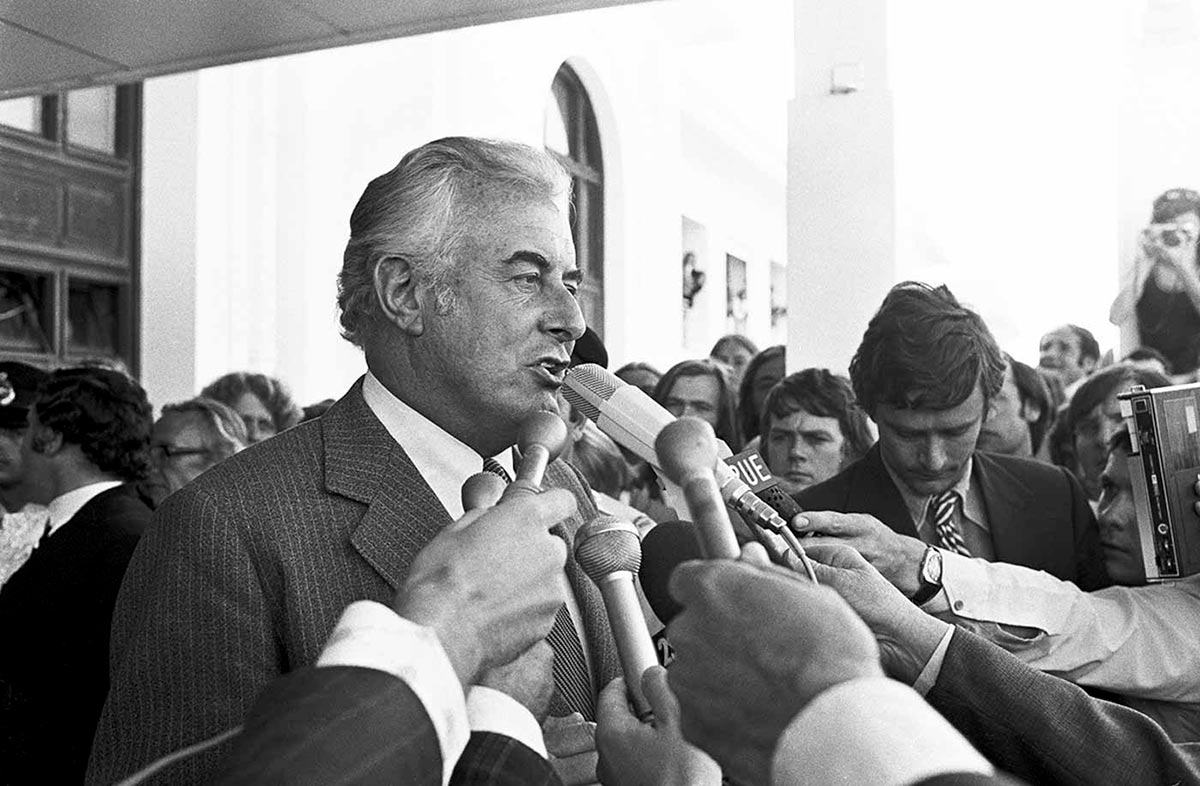
But while they are generally left alone to run and represent the country, any ministers including the PM can still be directly dismissed by the monarch at any time (they "serve at His/Her Majesty's pleasure"). This happened for us in November 1975, suddenly highlighting this hierarchy of power. Rude wake-up call.

Granted, this is a complicated colonialist hangover, and a patently ridiculous arrangement. I'm one of those Australian Republicans who would prefer an Australian Head of State and much better government design.

None of that makes the U.S. a parliamentary system.
 
Neither is a Prime Minister, although they are often referred to as such.
The Speaker isn’t often referred to as the head of the government.

Also, how can the Speaker be the head of government when they are constitutionally the 2nd in line of succession (if the president and then the Vice-pres. can’t serve)?
 
Tim Snyder on TV, professor, quotes Russians calling Trump a vegetarian.Trump is a poser. Does not know how to use military power. His pick of the drunk Fox host for Pentagon head was based on the guy supposedly hating Iran as much as Trump does.
 

Maybe we need a separate thread for chronicling all the different schemes and grifts of Trump 2.0
 
The Speaker isn’t often referred to as the head of the government.

Also, how can the Speaker be the head of government when they are constitutionally the 2nd in line of succession (if the president and then the Vice-pres. can’t serve)?
A Prime Minister is commonly referred to as "head of government". It's a term of art, not an official position. In fact, they are the (current) leader of the governing party, or coalition of parties. As is the Speaker of Reps in the USA. But acknowledged, there are big differences between their roles.

In our government, it is entirely possible that a governing party may decide to change leaders, i.e. PMs, at some point. If they do, the new leader gets to be PM, without any public election involved. We had a series of shifting PM's not so long ago, and a whole spate of changes a few years back. The Republicans ditching Kevin McCarthy was the equivalent process, but I understand that was only the first or second time ever.

So we are in agreeance? Our official Head of Government is the current British monarch, equivalent to your President's position. Of course, there are many significant differences between those positions that we all know. But the role they both hold is head of government, above parliament.
 

Maybe we need a separate thread for chronicling all the different schemes and grifts of Trump 2.0
Well, there's this one, but your idea might be more specific.

 
A Prime Minister is commonly referred to as "head of government". It's a term of art, not an official position. In fact, they are the (current) leader of the governing party, or coalition of parties. As is the Speaker of Reps in the USA. But acknowledged, there are big differences between their roles.

In our government, it is entirely possible that a governing party may decide to change leaders, i.e. PMs, at some point. If they do, the new leader gets to be PM, without any public election involved. We had a series of shifting PM's not so long ago, and a whole spate of changes a few years back. The Republicans ditching Kevin McCarthy was the equivalent process, but I understand that was only the first or second time ever.

So we are in agreeance? Our official Head of Government is the current British monarch, equivalent to your President's position. Of course, there are many significant differences between those positions that we all know. But the role they both hold is head of government, above parliament.
Not above Parliament, we had to educate the monarch about that when he got ahead of himself.
 
You are referring to what is know in British Commonwealth parliaments as the Prime or First Minister. So how does the position of the US Speaker of the House of Representatives compare? That position requires the support of a majority of the legislature, is accountable to Congress, and steers Congress. Essentially the same, yes?
No, the Speaker has no role in cabinet, whereas the Prime Minsister heads it and picks its members. The US President combines the roles of head of state and head of government.
 
In our parliamentary system, the "head of government" is the King of England, not the Prime Minister. The king's representative in-country is our Governor General. The King holds a similar position in the government that the US president does. Although their powers and duties are significantly different, of course. Generally, the British monarch doesn't give a fig about Australia and doesn't get involved at all, and the local government is left to run stuff. Also, the monarch is not a member of any political party.

While they are elected by the people, the name "Prime Minister" designates that office as being a minister to the monarch, to whom they make the oath of office (unlike the USA, where the oath is to uphold the constitution). The PM is the notional leader of the government of the day and is afforded considerable authority, privilege, and levers of power to get things done. So much so that they have often considered themselves unassailably "head of government" and behave as such.

But while they are generally left alone to run and represent the country, any ministers including the PM can still be directly dismissed by the monarch at any time (they "serve at His/Her Majesty's pleasure"). This happened for us in November 1975, suddenly highlighting this hierarchy of power. Rude wake-up call.

Granted, this is a complicated colonialist hangover, and a patently ridiculous arrangement. I'm one of those Australian Republicans who would prefer an Australian Head of State and much better government design.
You're wrong there, unlike in the UK (where the "constitution" is held on a wink and a nod), in Australia the king is explicitly head of state only. There is no way for him to be head of government because he cannot control the cabinet.
 
Not above Parliament, we had to educate the monarch about that when he got ahead of himself.

On 11-Nov-1975, HM the Queen dismissed our PM, via her flunky the Governor General. The British monarch DOES have "extraordinary powers" over their governments. It's just rarely used though.

The Governor-General’s reserve powers are not included in the Australian Constitution. They come from the authority of the King, who the Governor-General represents. The only guide to these powers is convention – tradition. This means the exact nature and scope of these powers is arguable.
The Governor-General’s reserve powers are generally agreed to include:

  • the power to appoint a prime minister if a federal election has not resulted in a clear outcome
  • the power to dismiss a prime minister if they have lost the support of the majority of the House of Representatives
  • the power to refuse a request for a double dissolution
  • the power to dismiss a prime minister or minister if they break the law
  • the power to refuse a request from a prime minister to call an election.
 
Thune’s goal: delivering a filibuster-proof border bill that spends as much as $85 billion by the end of that marathon session, according to a person familiar with party strategy. He has the backing of key Trump allies.

“People I’m talking to that will be serving in the administration, this is definitely the direction they want to go. And it makes sense to me,” Sen. Ron Johnson, R-Wis., told Semafor. “This is the most doable thing. That’s what we should do.”

Not everyone is on board yet; House Ways and Means Committee Chair Jason Smith, R-Mo., notably prefers one big party-line bill that could roll all of Republicans’ priorities together. Still, GOP senators are optimistic that both Trump and House Speaker Mike Johnson will endorse their plans to wait on a tax bill until Johnson’s majority gets padded to replace members who are departing for the new administration.
 
A Prime Minister is commonly referred to as "head of government". It's a term of art, not an official position. In fact, they are the (current) leader of the governing party, or coalition of parties. As is the Speaker of Reps in the USA. But acknowledged, there are big differences between their roles.

In our government, it is entirely possible that a governing party may decide to change leaders, i.e. PMs, at some point. If they do, the new leader gets to be PM, without any public election involved. We had a series of shifting PM's not so long ago, and a whole spate of changes a few years back. The Republicans ditching Kevin McCarthy was the equivalent process, but I understand that was only the first or second time ever.

So we are in agreeance? Our official Head of Government is the current British monarch, equivalent to your President's position. Of course, there are many significant differences between those positions that we all know. But the role they both hold is head of government, above parliament.
In agreement that the U.S. has a parliamentary system of government? No, because the U.S. is not a parliamentary system.
 

Back
Top Bottom