Stacyhs
Penultimate Amazing

Guede's lawyer in his current rape trial is Carlo Mezzetti. I wonder if he's related to Laura, who is also now a lawyer. Probably just a coincidence they share the same surname.



I believe the linked article you have found provides remarkable evidence of the dysfunction of the Italian legal system and the outrageous statements of some of the key players (Maresca - the Kerchers' lawyer, and Mignini - the prosecutor), and the role of the Italian media of sensationalizing and providing one-sided comments on a case, apparently to seek clicks or readers.Here's an article that's being discussed on the Reddit forum. It might be of some interest.
Maresca, il legale dei Kercher: “Non c’è spazio per nuove ipotesi”
Il legale della famiglia di Mez si dice sorpreso delle dichiarazioni dell’allora pm Mignini sul quarto uomo: “Alla sorella Stephanie ho detto che non ci sarà un prosieguo giudiziario. Il caso è chiuso con tutti gli interrogativi”www.lanazione.it
Hoots
"The young English girl Meredith Kercher was killed in the bedroom of a student house in Via della Pergola on Halloween night."
WHAT scientific and testimonial findings? No forensic finding places either of them there that night. Knox's DNA cannot be dated to that night. None of her footprints were in blood. The knife and bra clasp were discredited. No reliable witness placed them there. ONLY Maresca's own expert claimed the murder could ONLY have been committed by more than one person."...all the scientific and testimonial findings spoke of the presence of more people"
Today, Sollecito's defense lawyers are talking about an unexamined trace of semen?
"I remember that all the tests were conducted in the presence of the consultants. There were over 300 items of evidence, and therefore the investigation was comprehensive on all the traces found."
He got that right."I don't think there are the conditions to give value to that hypothetical crime news collected by Dr. Mignini'."
LOL! He very conveniently forgets that Stefanoni's analysis of Kercher's alleged DNA on the knife was found to be "scientifically unreliable"."I believe that the evidence was collected sufficiently and with satisfactory professionalism because in the end the much-discussed bra clasp was the only shortcoming of the forensic police, but only in the collection of evidence, because the DNA extraction instead allowed for an absolutely clear genetic profile, which left no room for discussion."
No, "we" are not "certain" at all since nothing places anyone else there that night but Guede. They based that on a retracted confession unsupported by any evidence."We are certain that there were other people with Guede, and the Supreme Court itself says so, placing Knox at the crime scene but not convicting her, and condemning Amanda for slander, but it is not known for whom or for what. Justice was absolutely not perfect."
Stacyhs, thanks for analyzing the nonsensical and false statements from Maresca (and Mignini) in the article.They didn't even get the night of the murder right.
This is just more typical lawyer ********.
WHAT scientific and testimonial findings? No forensic finding places either of them there that night. Knox's DNA cannot be dated to that night. None of her footprints were in blood. The knife and bra clasp were discredited. No reliable witness placed them there. ONLY Maresca's own expert claimed the murder could ONLY have been committed by more than one person.
The suspected semen stain (unbelievably!) was never tested. It's not credible that Maresca doesn't know that.
He got that right.
LOL! He very conveniently forgets that Stefanoni's analysis of Kercher's alleged DNA on the knife was found to be "scientifically unreliable".
He also conveniently doesn't mention that C&V didn't deny RS's DNA was on the clasp, only how it got there. I wonder how Maresca thinks those other 2-3 unidentified men's DNA got on the bra hook? Did they all touch it?
No, "we" are not "certain" at all since nothing places anyone else there that night but Guede. They based that on a retracted confession unsupported by any evidence.
They lost.What motivates Maresca (the Kerchers' lawyer) and Mignini (the prosecutor who headed the investigation) to continue to make comments, including absurd ones that contradict the evidence and reliable court documentation of the treatment of the evidence, including the failure of the police to DNA test the apparent semen stain on the pillow and the refusal of the court to order the stain DNA tested?
Another thought: especially for Maresca, who may have friendly professional links with the police and prosecutors, voicing support for their case is consistent with maintaining those links.They lost.
Ah, er, no. Knox was asked at interrogation why is was she DIDN'T hear the sounds from the next room. Of course, the answer was that she had not been at the cottage to hear Rudy killing the victim, but Knox was hit and coerced to say something about why she'd NOT heard anything. Her answer was that perhaps she'd put her hands on her ears..... which was a sign she'd cave din to the coercion.Knox herself says she put her hands over her ears to block the scream whilst - she claims - 'Patrick' was next door raping and killing Mez.
90. In view of the foregoing considerations, the Court concludes that the automatic and insufficient reasoning relied upon by the trial court to dismiss the applicant’s request for the reopening of criminal proceedings, coupled with the Constitutional Court’s failure to remedy that shortcoming notwithstanding its own well-established case-law, fell short of the requirements of Article 6 § 1 of the Convention.
91. There has therefore been a violation of Article 6 § 1 of the Convention.
In 2020, Duncan’s legal advocacy drove the US Supreme Court to end non-unanimous jury convictions in Louisiana and Oregon, the only two states still allowing a practice rooted in the Jim Crow era.
Boyd and [another accused, John] Walker were arrested as 16-year-olds in 1976 by Buffalo police, who framed them, but the Erie County DA, led by an aggressive prosecutor named Timothy Drury, suppressed at least 19 items of Brady material that would have exposed the police misconduct, showed their innocence, and pointed to two other far more likely suspects.
Soon after the wrongful prosecution he led, Drury became a county judge, then a state supreme court judge for 30 years. Now 85, he was discredited at each trial [seeking reversal of the convictions or civil damages] when he denied any wrongdoing. The juries in each case found that the Erie County DA’s office had unlawful policies] and practices to suppress Brady material and to commit summation misconduct.
The [wrongfully convicted] man, Darryl Boyd, died in February [2025] from pancreatic cancer as he waited for the civil trial that capped a nearly 50-year fight to clear his name and hold Erie County responsible for imprisoning him. So instead of hearing Mr. Boyd tell his story in person, the jurors saw him on a screen as he gave a recorded deposition.
He spoke about his murder trial in 1977, where the Erie County district attorney’s office withheld evidence and used false testimony against him.
[A]fter a two-and-a-half-week trial, the jurors took less than an hour to posthumously grant Mr. Boyd’s estate an amount that outstripped the $60 million award that two Chicago men each received in March. .... Awards can be reduced on appeal, and on Thursday, the Erie County attorney, Jeremy Toth, said in a statement that the county would appeal to a higher court.
[At Boyd's 2021 exoneration hearing, a] judge found that prosecutors had failed to turn over evidence to his defense, including pictures from the crime scene that directly contradicted the prosecution’s theory of the case and witness testimony that pointed toward another perpetrator. Investigators also “coerced vulnerable witnesses to provide false statements,” according to the lawsuit.
Central to the case [at Walker's civil suit] was evidence demonstrating a culture of coercion and misconduct within the prosecutorial and policing practices. The plaintiffs provided extensive documentation illustrating how a long-standing pattern of behavior in the district attorney’s office contributed to their wrongful convictions.
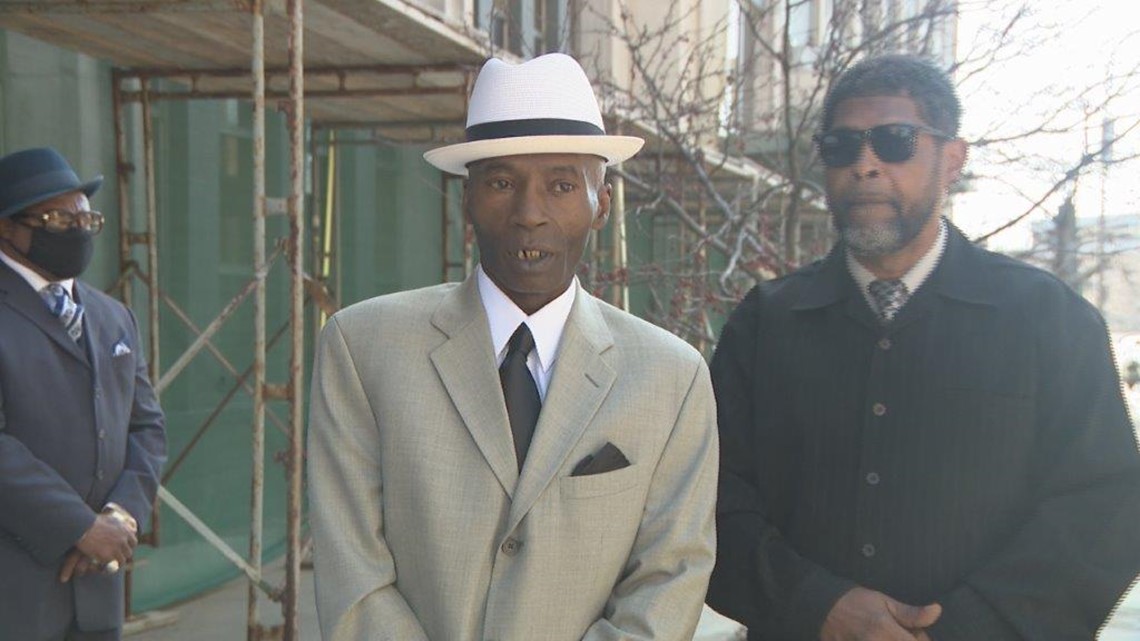
 www.wgrz.com
For US cases of exoneration, the National Registry of Exonerations tracks the contributing factors of the wrongful convictions. Their graph shows that Official Misconduct was a factor in 61% of the wrongful convictions that the NRE has recorded. The NRE also published a report in 2020 titled Government Misconduct and Convicting the Innocent.So much for a PGP member of another forum recently stating that police/prosecutorial misconduct is "extremely rare" and they were more ethical than defense lawyers and experts.
In 10% of exonerations, officers falsely reported that they examined forensic evidence that proved (or failed to disprove) the defendants’ guilt, saw the defendants
commit crimes that did not occur, or witnessed confessions by defendants who did not confess.
Forensic fraud—the deliberate falsification of forensic evidence to help convict a defendant—occurred in 3% of exonerations. Forensic fraud is a form of intentional misconduct. We do not count a larger set of cases with forensic evidence that was (as far as we know) unintentionally mistaken, misleading, or invalid.
Source:Concealing exculpatory evidence contributed to the convictions of 44% of exonerees, more than any other type of official misconduct we know of.
The rate of concealing exculpatory evidence varies by crime, from 61% for murder to 27% in child sex abuse cases. It is so common and widespread that it happened in 82% of all exonerations with any official misconduct.
Prosecutors concealed exculpatory evidence in 73% of cases in which it occurred. That’s not surprising, since prosecutors have the duty to disclose that evidence to the defense. We only count other officials as responsible if (as far as we know) prosecutors were ignorant of the evidence.
It's been posted here many times, the other earlier study from Canada, from 2007 I believe. After a slew of Canadian wrongful convictions, the study sought to identify any commonalities of how the justice system could so so wrong - especially in those Canadian cases where it later became so obvious that a miscarriage had happened.For US cases of exoneration, the National Registry of Exonerations tracks the contributing factors of the wrongful convictions. Their graph shows that Official Misconduct was a factor in 61% of the wrongful convictions that the NRE has recorded. The NRE also published a report in 2020 titled Government Misconduct and Convicting the Innocent.

I haven't seen anything. You'd think the Daily Mail would have a correspondent there, daily articles, etc., etc.Since Guede's trial started on Nov. 4, I've been unable to find any other mention of it in Italian media. Has anyone seen further info?

I just did an online search for the past week for "Rudy Guede processo" (Rudy Guede trial) and found no relevant Italian media citations except those for 4 or 5 November reporting the beginning of the current trial. Some citations appeared to be about the Kercher case.I haven't seen anything. You'd think the Daily Mail would have a correspondent there, daily articles, etc., etc