• Quick note - the problem with Youtube videos not embedding on the forum appears to have been fixed, thanks to ZiprHead. If you do still see problems let me know.

Gun controll?

The point that seems to be missing here is that nobody "took the guns away" because they weren't there in the first place.

Rolfe.
 
Semi-automatics too, correct. So no pump action shotguns. Generally speaking you don't need them to (say) hunt grouse.
Oh dear, the list keeps growing, doesn't it? Now pump-action, semi-automatics, automatics, and handguns are banned. No gun is allowed for self-protection.

So apparently there is no gun ban in the UK, except for the 98% of the population the state decides doesn't "need" a gun? Need, of course, defined by the state.

Something about ducks and walking...
 
The point that seems to be missing here is that nobody "took the guns away" because they weren't there in the first place.

Rolfe.
I see, so it's all about semantics. If they took them away so long ago nobody (by that I mean "very few") has them today you can claim that "nobody took our guns away".
 
I could get a gun licence if I wanted, but I don't want a gun, I've no use for a gun.
Ok I've an airsoft pistol, and I shoot paper targets with that, but I've absolutely no use for a real one.

Once thought about getting a licence for my grandad's old gun, so I could take it to clay pigeon shoots, but its something I really don't need.
 
I see, so it's all about semantics. If they took them away so long ago nobody (by that I mean "very few") has them today you can claim that "nobody took our guns away".

There is very little gun crime in the UK as very few people have guns, anyone carrying a handgun is either police or a criminal - makes things simple.
I don't know anyone (including ex South Africans) who feel the need for, or have any desire to own one, it is not a subject that I have ever heard being brought up in conversation in the UK.
(I couldn't be bothered to sit through 10 minutes of inane video, but if the first few minutes are anything to go by, foxes are hunted with dogs and horses, not guns. (Great skill being able to hit a fox with a dog on horseback.)
 
So handgns were banned. And you have to prove you have a "reason" to own other guns - and I note personal and home protecton isn't one of them you listed. Is it legal to keep a loaded gun in your home?

...snip...

No, and hasn't been for at least 70 years.
 
Wildcat perhaps this is the way to help you understand: in the USA it would appear that the majority of people want people to be able to own handguns and the like and therefore that is what your society permits, in the UK the opposite is true.

(ETA: And please let's not get side tracked with "the constitution says" it has no supernatural powers.)

In the UK our society has never involved the idea that having a gun is somehow a right, we are just not interested (as a whole) in creating this right.
 
Last edited:
I see, so it's all about semantics. If they took them away so long ago nobody (by that I mean "very few") has them today you can claim that "nobody took our guns away".

Not quite. If they took them away so long ago that nobody owning a gun at the time is still living now, then yes, we can quite honestly claim that nobody took our guns away.

Dave
 
The point that seems to be missing here is that nobody "took the guns away" because they weren't there in the first place.

Rolfe.

Now now, Rolfe, the Gun licencing legislation of 1870 did have a bit of an impact...
 
Not quite. If they took them away so long ago that nobody owning a gun at the time is still living now, then yes, we can quite honestly claim that nobody took our guns away.


When is this "taking away" supposed to have happened? (Sorry, Brodski, cross-posting. But contrary to popular opinion, I wasn't around in 1870!)

The major change in firearms legislation so far as I am aware happened after the Hungerford shootings in 1987. Reading about the situation then, it's clear that there was a fair amount of leeway in what people were allowed to own and keep at home - it's just that only a very small minority of the population actually took "advantage" of this capability. This book gives quite a lot of background.

Michael Ryan’s fixation with weaponry might have made him something of an exception in Hungerford. But he was by no means unusual in terms of the country as a whole. For in the summer of 1987 Britain’s gun culture was very widespread indeed. Ryan was just one among 160,000 licensed holders of firearms and 840,000 licensed holders of shotguns. However, the number of shotguns in legitimate circulation at that time was estimated at around three times that number, because several could be held on a single licence. And according to an estimate published in the Police Review there were then possibly as many as four million illegally held guns in the country. Gun shops and gun centres were also widespread, with more than two thousand legitimate dealers trading in arms, many extremely successfully, and some eight thousand gun clubs where the enthusiast could hone his skills.

In his love for guns, then, Michael Ryan was not alone. So when he applied to join the Dunmore Shooting Centre at Abingdon in Oxfordshire in September 1986, there was nothing particularly remarkable in his application. For Ryan membership of the Dunmore club was particularly attractive because it incorporated what it claimed was one of the biggest gun shops in the country. Ryan proved to be a good customer, spending £391.50 on a Beretta pistol shortly before Christmas 1986, and then buying a Smith and Wesson for £325, a Browning shotgun, a Bernadelli pistol and two other shotguns during the following year. Ryan borrowed the money to finance these transactions, a Reading finance company handling his repeated applications for funds.

There was more besides to attract the young gun enthusiast, for the Dumnore Centre’s shooting gallery had a 25-metre, fullboard, seven-lane range with television-monitored targets. The Centre, situated not far from Ryan’s home, also had a turning-target system, enabling him to practice rapid fire and combat exercises, an area of gun expertise known as practical shooting. Here, accuracy is tested not on Bisley-style targets where closeness to the bull’s-eye gains the most marks, but under simulated combat conditions, firing at representational figures, usually life-sized depictions of terrorists. The aim here is to kill or maim the ‘enemy’. In the summer of 1987 there were no fewer than forty ‘survival schools’ scattered around Britain, and magazines like Desert Eagle, Combat and Survival, Soldier of Fortune and Survival Weaponry were then enjoying a rapidly rising circulation. Michael Ryan was simply one of the gun-loving crowd.


The way this is written, however, may give an exaggerated impression of the "gun culture" to any Americans reading. Only a very very small percentage of the population were interested in guns, and even fewer kept their guns at home. Many of these people were ex-army, having developed an interest in shooting in the armed forces.

Ryan seems to have been one of the few who developed an American attitude to guns - this comes out in several places in the linked text. He finally flipped and went on a rampage with several legally-owned weapons, killing 16 people, then himself.

The public reaction to this was overwhelmingly to call for more gun control, not less. The idea that Ryan could have been stopped if only Sue Godfrey had had a loaded gun in her picnic basket was not one which was ever articulated. The number of people affected by the new legislation (and who were opposed to it - not everyone affected was in fact opposed to the legislation) was far far too small to have any influence on the outcome. Overwhelmingly, the public demanded that it should be made much, much harder for nutters like Ryan to get hold of weapons.

This worked OK until 1996, when Thomas Hamilton massacred a class of five-year-olds, again with legally-held weapons. It's arguable that the failure here was not the post-Hungerford legislation as such, but a failure of implementation. Nevertheless, once more the overwhelming public outcry was to restrict gun ownership even further. Legislation was indeed made more restrictive, and there have been no further incidents to date.

However, it would be entirely incorrect to characterise either of these legislation changes as "taking our guns away". The proportion of the population owning the sort of guns which were affected by the legislation was absolutely tiny, and for the most part, nobody even noticed. There were muted protests from the target pistol shooting fraternity, and the Olympic team had to go and train in France, but this represented so few people that, as I say, it was simply a non-event.

Rolfe.
 
Last edited:
...would be a grossly inaccurate rendering of the actual position.
Such renderings are the heart and soul of both sides of the gun control debates.

I likes my guns evil, accessible, and plentiful. You likes 'em nonexistent.
 
Well, you know the first thing the communists do when they take over a country is confiscate all the privately owned guns. I keep a rod buried behind the garage… just in case.

So what are your thoughts on US troops confiscating privately-held weapons in Iraq? Do you support the right of Iraqis to keep a rod buried in their garages, just in case?
 
So apparently there is no gun ban in the UK, except for the 98% of the population the state decides doesn't "need" a gun? Need, of course, defined by the state.
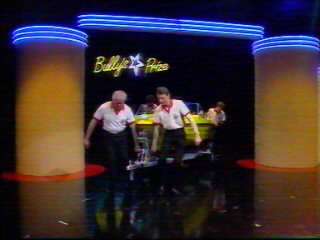
Unlucky, that it the wrong answer, never mind lets have a look at what you could have won.
bullseye_speedboat.jpg
 
In the UK our society has never involved the idea that having a gun is somehow a right, we are just not interested (as a whole) in creating this right.

Societies, of course, are a bout give and take - checks and balances. For example planning legislation does not permit you do develop a site without permission, because that might infringe on the rights of those adjacent to enjoy their property and/or a peacful existence. Only a lunatic would complain that this is somehow a fundemental breach of their right to own property.

In the case of weapons, the UK and most of Western Europe has taken the view that there are certain kinds of firearm which no ordinary person would need to own. This is not a top-down viewpoint, but rather bottom-up. If you ask the man (or woman) in the street if the public should be permitted to own automatic rifles, or carry concealed handguns, then you will almost invariable receive a negative reply.
Unless one is a conspiracy freak, it is clear that this is not some sort of vast brainwashing exercise but rather the general societal outlook. The ECHR does not include a right to own weapons, however no-one has rushed to the courts suggesting that this is some fundamental infringement of civil liberties.We have taken the view that the right not to get shot outweighs any perceived right to bear arms.

Now the nub of the debate which crops up here is whether gun ownership in itself leads to higher level of gun crime. In effect, more guns in circulation (whether legal or otherwise) leads to more gun use, a proportion of which is likely to be illegal. Trying to suggest that Europeans have somehow "lost" a right they don't want is merely a flimsy attempt to distract attention away from this core argument.
 
Such renderings are the heart and soul of both sides of the gun control debates. .... You likes 'em nonexistent.


Correct. You have got to the heart of the misrepresentation presented in the OP. It is incorrect to represent the situation in Britain as guns being "taken away", as if that was something done against the will of the population. On the contrary, we wants 'em "taken away".

Rolfe.
 
Nope. Ammunition has to be stored separately I believe.

Shotgun cartridges can be stored with the gun. You can store a shotgun loaded, and while it's against the suggested guidelines it's not against the law.

Everything else (i.e. ammunition for Section 1 weapons - "proper" rifles and suchlike) has to be stored in a separate locked box, but you are allowed to store it at home. There are some restrictions on the amount of section 1 ammunition you can have at one time, too.

Apparently, as a UK citizen it's your right to own a shotgun, and to be issued with a certificate you don't so much have to find a reason to have one as it's up to the police to find a reason for you not to have one. You do still have to go through the application process though, although it's hardly onerous. Besides, nobody will sell you cartridges unless you flash your card at them.
 

Back
Top Bottom
