• Quick note - the problem with Youtube videos not embedding on the forum appears to have been fixed, thanks to ZiprHead. If you do still see problems let me know.

Fat Logic

I've got some logic for discussion-

What if both extreme hypertension and obesity are caused by pinched nerves? Vagus in particular?

There seems to be some linkage of a positive feedback loop of hypertension caused by an artery pulsing against the vagus nerve. The more pulse, the more interference in the nerve signal, the brain raises blood pressure, with pulses harder against the nerve, rinse, repeat until a vessel explodes in your head. The fix is called "arterial decompression microvascular surgery". Also some cases of extreme hypertension are relieved incidental to neck disc surgery.

But doesn't the same nerve go to the stomach, and sense things like fullness? Irritate the nerve, get less signal of fullness? The vagus nerve enters the abdomen through the same window in the diaphragm as the esophagus- eat to much, dampen the signal that you are full?

Yes, it's still CICO, but appetite control is the key to less CI, the signals have to work right for that.

Side note- There is a group of symptoms tied to heart disease risk. Four items, called Syndrome X- one item for each leg of the X. Obesity, hypertension, diabetes, and hypercholesterolemia. I think I got that right. The vagusd nerve goes to the stomach (obesity) the heart (hypertension) the liver (cholesterol & diabetes) the pancreas ( diabetes). hmmmmm.

As a digression, here's a bizarre vagus related article. Vagus and Parkinson's disease:
http://neurosciencenews.com/parkinsons-gastrointestinal-tract-neurology-2150/
 
As a digression, here's a bizarre vagus related article. Vagus and Parkinson's disease:
http://neurosciencenews.com/parkinsons-gastrointestinal-tract-neurology-2150/

Not bizarre. It's an epidemiological study that shows the ulcer patients who have had a vagus nerve severed surgically have only half the chance of getting PD. Plus ulcer patients in general have a greater risk of PD.

Hmmmm, isn't Heliobacter Pyloris related to the Syphilis germ? Know to get into brains....

I winder if they've done a study on PD rate among those who have had ulcers treated with antibiotics, which might control a bacteriological infect, but have no effect if PD is caused by a virus?
 
A poster describing a (soon to be published) study:


It looks at the carbohydrate/insulin hypothesis, metabolic advantage, etc. (think Taubes).
 
The reaction of the youtube commenter to the video was very predictable :). "not long enough" "you did not measure the correct stuff" "what quantity of carbo ? I saw study which pretend 100g carbo was low carbo" etc...etc...
 
I thought this thread got bumped because of the article in the NYT today: http://www.nytimes.com/2016/05/02/health/biggest-loser-weight-loss.html

After losing a ton lot of weight, their metabolisms slowed to a crawl. As per the title, "Their Bodies Fought to Regain the Lost Weight." This means you should never, ever become fat in the first place. Maybe parents can get charged with a crime for having obese children. A woman(?) is suing her parents now because she has a permanent heart condition that could have been fixed in infancy. Her parents didn't believe in surgery and opted for "faith healing." Surprisingly, the faith healing didn't work...
 
I thought this thread got bumped because of the article in the NYT today: http://www.nytimes.com/2016/05/02/health/biggest-loser-weight-loss.html

After losing a ton lot of weight, their metabolisms slowed to a crawl. As per the title, "Their Bodies Fought to Regain the Lost Weight." This means you should never, ever become fat in the first place. Maybe parents can get charged with a crime for having obese children. A woman(?) is suing her parents now because she has a permanent heart condition that could have been fixed in infancy. Her parents didn't believe in surgery and opted for "faith healing." Surprisingly, the faith healing didn't work...

I shared my opinions in another thread about how I am concerned about the weight loss model employed in the Biggest Loser. Basically it's a crash diet that concentrates on rapid weight loss through exercise. Which is shown to be an ineffective way to achieve sustained weight loss. In other words: "This is how to fail."

In that sense, my response is "Well obviously." We already knew the participants had a low 5 year success rate, despite their NDAs that limited professionals' access.

However, the article makes some assertions - very specific claims about metabolic adaptation - that I have never seen in any research... so not sure how strongly the claims can be weighed versus published research that has never shown these effects. The actual study was published yesterday, so I'll have a more informed opinion shortly.
 
I shared my opinions in another thread about how I am concerned about the weight loss model employed in the Biggest Loser. Basically it's a crash diet that concentrates on rapid weight loss through exercise. Which is shown to be an ineffective way to achieve sustained weight loss. In other words: "This is how to fail."

In that sense, my response is "Well obviously." We already knew the participants had a low 5 year success rate, despite their NDAs that limited professionals' access.

However, the article makes some assertions - very specific claims about metabolic adaptation - that I have never seen in any research... so not sure how strongly the claims can be weighed versus published research that has never shown these effects. The actual study was published yesterday, so I'll have a more informed opinion shortly.

I've found an earlier study by the same team: [Metabolic Slowing with Massive Weight Loss despite Preservation of Fat-Free Mass]

It's nice to see replication, but I admit I have less confidence when the only replication is by the same team.
 
....
In that sense, my response is "Well obviously." We already knew the participants had a low 5 year success rate, despite their NDAs that limited professionals' access.
..,

I think the stats for successful weight loss goes something like this: " Less than 10% of people can lose 10 pounds and keep it off for a decade".

In other words, for 90% of people, NOTHING WORKS. You might as well crash diet, marathon and pump iron, and enjoy a few years of being light in your loafers. Rinse. Repeat.

I'm over 60 years old. I've seen a lot of friends get a clogged artery, get it fixed, lose 30-50 pounds under specter of death, and regain it all in a couple years. Even the exercise of walking through the valley of the shadow of death does not work.
 
I know a very, very small number of people who have lost weight and kept it off. They were all people who had put weight on fairly quickly as an emotional response to trauma or other major stresses, ate their way through it, then reverted to normal (for them)

Then again - this is a sample size of 3 people, so there's always the chance of some selection bias in my inferred correlation ;)
 
I think the stats for successful weight loss goes something like this: " Less than 10% of people can lose 10 pounds and keep it off for a decade".

In other words, for 90% of people, NOTHING WORKS. You might as well crash diet, marathon and pump iron, and enjoy a few years of being light in your loafers. Rinse. Repeat.

I'm over 60 years old. I've seen a lot of friends get a clogged artery, get it fixed, lose 30-50 pounds under specter of death, and regain it all in a couple years. Even the exercise of walking through the valley of the shadow of death does not work.

I think a better way to put it would be that 90% of people, for whatever reason, do not continue to do the one thing that does work.
 
I think a better way to put it would be that 90% of people, for whatever reason, do not continue to do the one thing that does work.

And that is the crux of the matter, not whether dieting triggers a slower metabolism.
 
More new, on-topic for the thread, links that have come across my desk.

Gary Taubes' "definitive" NuSI study: Interview with Dr. Kevin Hall here in Vancouver for ICO 2016, where he was presenting his results prior to publication. [YouTube Video]

Macronutrient ratio metabolic stuff "basically falsified".

What's worth mentioning is that this study was completed in the summer of 2014, but Taubes has been misrepresenting it as in progress and supportive for his thesis during paid appearances. I think this is clear evidence of fraud.


ETA: notice this is the same Dr. Kevin Hall from the Biggest Loser postmortem study that was released on Monday. He's been pretty busy, lately.
 
Last edited:
And that is the crux of the matter, not whether dieting triggers a slower metabolism.

I completely agree. Most people who lose weight do it by means of a temporary diet. When they reach their goal, or get close, they revert back to the nutrition and exercise habits they had before and rebound to their original weight. The only way to lose weight permanently is to permanently change your habits. It's hard.

I've never been obese, but at one time I was out of shape and had a belly at 6'6" 270 lbs. I'm now about 220 lbs, but my daily nutrition and exercise routine is completely different. I can never go back to how I previously ate and moved without re-gaining weight. I'm not on a diet, I just consistently eat smarter and keep active and it will need to stay this way if I want to maintain being fit.
 
Monza, how long have you been successful?

And I bet the charts say "obese" at 270. But the charts and the word are pretty meaningless. Kaiser did a actual study of 8,000 people with digital medical records. Healthy BMI turned out to be anywhere from 17-34. 17, 22 or 34, all just as healthy. And there was a hint that as height goes out of normal, the BMI is even more wrong.
 
Monza, how long have you been successful?

And I bet the charts say "obese" at 270. But the charts and the word are pretty meaningless. Kaiser did a actual study of 8,000 people with digital medical records. Healthy BMI turned out to be anywhere from 17-34. 17, 22 or 34, all just as healthy. And there was a hint that as height goes out of normal, the BMI is even more wrong.


I started gaining weight in 2006 and hit my peak in 2007. By 2009 I was down to the 230's and have been where I'm at now since about 2010-11. At my heaviest, you wouldn't have looked at me and called me fat per se, but definitely out of shape (for comparison my pants were 38" waist and 36" inseam and now they are 34" waist). BMI was probably high but yes, for tall people it's out of whack anyway.
 
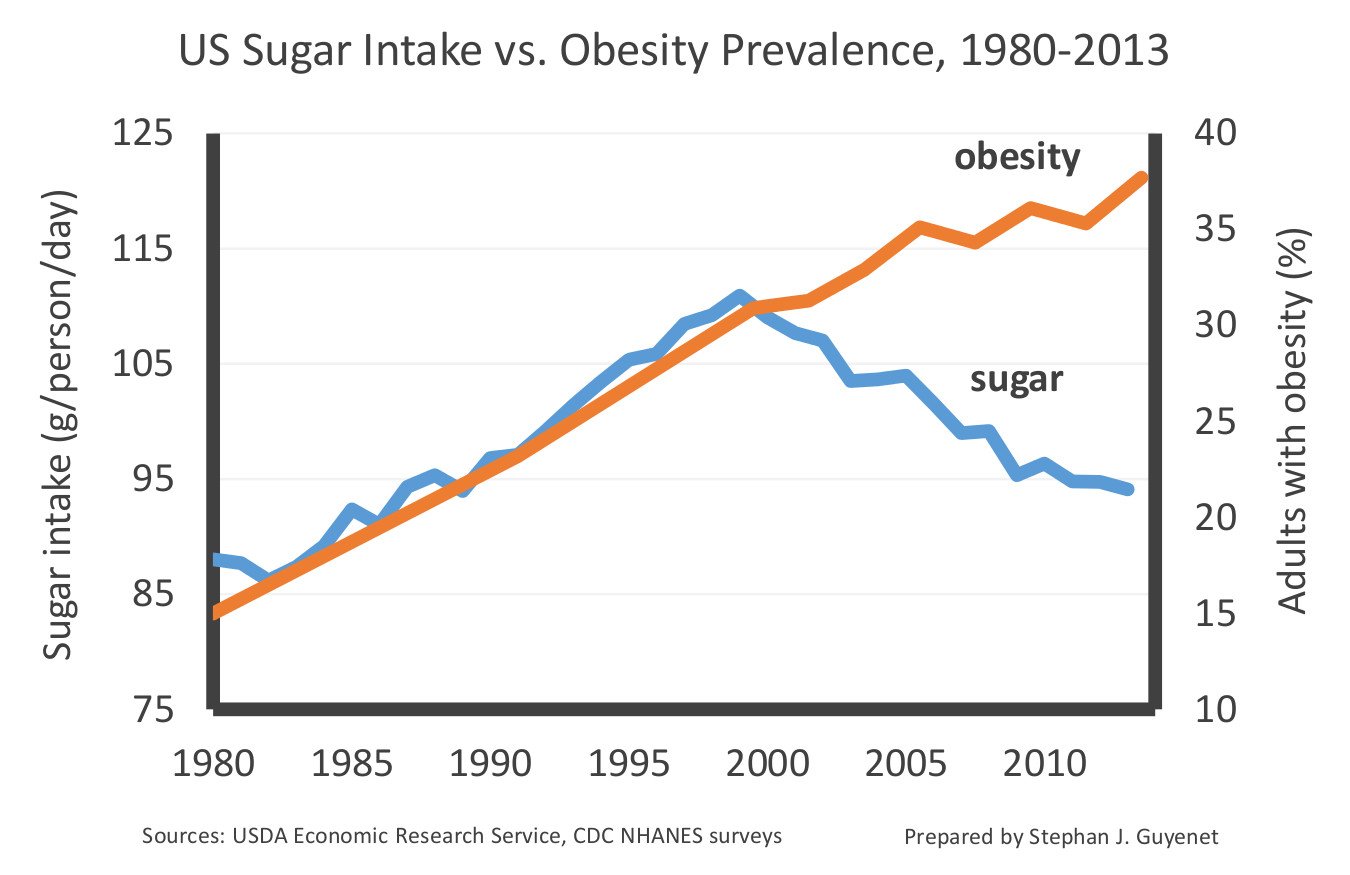
CUsIUgdVAAA-pu3.jpg:large
 
I shared my opinions in another thread about how I am concerned about the weight loss model employed in the Biggest Loser. Basically it's a crash diet that concentrates on rapid weight loss through exercise. Which is shown to be an ineffective way to achieve sustained weight loss. In other words: "This is how to fail."

This terrifies me! I have a thread in the science section about weight loss. I went from 270 in august to 170 in december, through (not much, but regular) exercise. I eat far, far more now than when I was 270 and am scared the weight will go back up. My weight is still fluctuating bouncing about 5 pounds, but generally trending down. I certainly am not eating less, does this remove the crash diet risk?
 
I shared my opinions in another thread about how I am concerned about the weight loss model employed in the Biggest Loser. Basically it's a crash diet that concentrates on rapid weight loss through exercise. Which is shown to be an ineffective way to achieve sustained weight loss. In other words: "This is how to fail."

This terrifies me! I have a thread in the science section about weight loss. I went from 270 in august to 170 in december, through (not much, but regular) exercise. I eat far, far more now than when I was 270 and am scared the weight will go back up. My weight is still fluctuating bouncing about 5 pounds, but generally trending down. I certainly am not eating less, does this remove the crash diet risk?

This might give you some comfort:

http://m.huffpost.com/us/entry/my-take-on-that-biggest-l_b_10055486.html

ETA: I looked very briefly at it but not critically - I was just reminded of it by your question.
 
I shared my opinions in another thread about how I am concerned about the weight loss model employed in the Biggest Loser. Basically it's a crash diet that concentrates on rapid weight loss through exercise. Which is shown to be an ineffective way to achieve sustained weight loss. In other words: "This is how to fail."

This terrifies me! I have a thread in the science section about weight loss. I went from 270 in august to 170 in december, through (not much, but regular) exercise. I eat far, far more now than when I was 270 and am scared the weight will go back up. My weight is still fluctuating bouncing about 5 pounds, but generally trending down. I certainly am not eating less, does this remove the crash diet risk?

I think the two principles that are problematic were:
  • the weight loss trajectory was so intense that it wasn't a lifestyle change - they were abandoning a life to temporarily concentrate on weight loss; the weight loss was extremely rapid
  • the effect was that participants were required so endure unsustainable regimens; participants would do this until they reached their target weight and then... well no real plan for maintenance

I believe the metabolic impact is probably a result of #1 rather than #2, but nobody knows the actual mechanism involved because there have been no related studies with controls; there is also some new accusations that drugs were involved, which further complicates analysis.
 

Back
Top Bottom