The OP doesn't actually have anything to do with your discipline. It's addressing creationist mis-perceptions. They aren't presented as arguments for evolution. They are addressing a common creationist misperception.
And, as I've argued before, they are not actually arguments for creationism either, but strawman arguments of such. They also don't address the actual argument creationists make when they make this form of argument, but address -- to be lenient in the interpretation of this word -- the strawman version.
As to whether they have anything to do with my discipline, I argue that they do. I do not think it makes much sense to counter these kind of arguments when presented by real creationists with crap arguments. This may or may not give the impression that these are the best arguments there are, or that this is what evolutionists believe are sufficient arguments to rebut the claims of the creationists. They are not, as I have shown above, and if the creationist is even slightly cognizant of the background to the creationist arguments, and the most common rebuttals, they may even prove counter-productive.
Oh, dear Empress of Space...
Physical similarity does
not equal transitionality. Tapirs do not become examples of intermediate stages of elephant evolution just because they look like
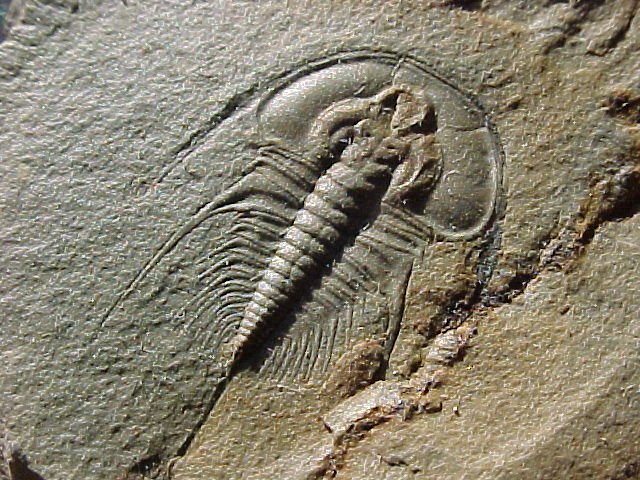
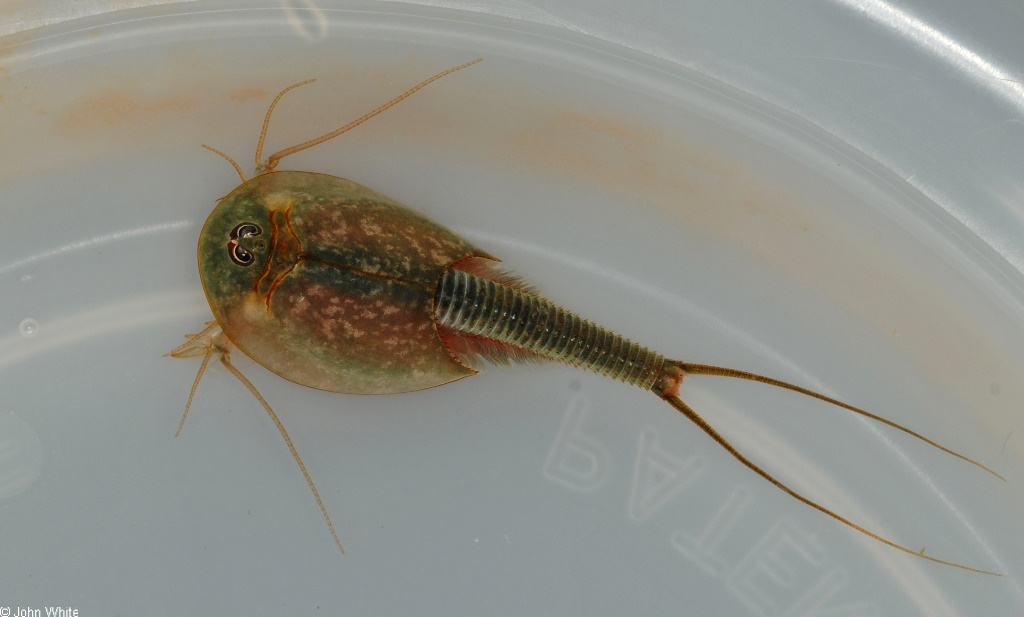
Moeritherium. And showing a picture of a horseshoe shrimp has even worse problems than showing a picture of a horseshoe crab, as branchiopods are even more remotely related to trilobites than are horseshoe crabs...
It is as if the entire last page has just passed you by without you even noticing, if it weren't for the fact that you quote it...
Look, there is a reason why morphology is a science and not just a word. We have ideas like "homology" and "analogy", and there are good transitional series for lots of organisms that show these terms to be useful, even if it is sometimes very hard to tell the two apart, or to determine whether two structures are homologous or not.
If I, in any serious setting among evolutionary biologists, proposed that a tapir would be evidence for the gradual evolution of trunks in the lineage leading to extant elephants, I would be laughed out of the room. This is not how it works, and this is not how creationists misunderstand evolutionary theory to work, and this is not how they put up their idiotic arguments o the theme of "X could not have evolved because what use is half an X?" Nor are these watertight arguments against either the strawman versions of creationist arguments you're presenting in the OP, or the actual versions of these arguments presented by creationists.
The main drawback with presenting organisms that are
not actually transitional between two other organisms (or at least widely believed among the relevant experts to be), is that you open yourself to a whole range of subsequent and actually valid criticism. Showing a tapir as an example that some animals can have short trunks does not in any way suggest that ancestors of extant elephants even had them. It shows precisely this: extant tapirs have short trunks, and these are useful to extant tapirs. The similarity between a tapir and
Moeritherium is not relevant. What
is relevant is
Moeritherium itself, provided that is at least potentially a good candidate for an actual ancestor of extant elephants.
Moeritherium is a good picture to include in your OP instead of the tapir there, because it is plausible that this is the ancestor of extant elephants. The discussion would then necessarily have to be directed into age and location of fossils, homologization of characters between
Moeritherium and extant elephants, the strengths and weaknesses of different phylogenies and evolutionary scenarios, and so on, and on these fields, the creationist is almost without exception entirely outclassed, and will, if they are intellectually honest, have to concede that the argument was not very good, and that you have successfully countered his/her argument (though normally this is followed by complaints, silence, or nonsense).
But using the tapir opens yourself to precisely the claim that what is in the picture is a "fully formed" tapir, and they obviously have short trunks because that's what God intended, or some such nonsense. It is useless, counter-productive, lacks an analysis of how the creationist argument works, and why it is invalid, lacks an understanding of evolutionary theory (the exact same claim we are typically accusing the creationists of!), and, if persistent enough, may be intellectually dishonest. I don't see that as a good way to proceeding in debates against creationists, but you may of course have a different opinion.
I usually only actually encounter the Ken Ham-type of YEC and they don't employ an internally-logical structure to their position that tend to have such observations as "If we evolved why don't we still live in the ocean since there's more ocean than land." type of, um, arguments.
I've debated these kinds of creationists as well. But the more interesting ones, the ones that have reflected on this more than a few hours, are the ones that would see through the OP for the nonsense that it is almost immediately, and then proceed to score points against the evolutionists...