• Quick note - the problem with Youtube videos not embedding on the forum appears to have been fixed, thanks to ZiprHead. If you do still see problems let me know.

An Exercise In Disproving Evolution

Unfortunately none of these are intermediate forms in the way that creationists would accept (at least not the creationists I've debated this with). They're also not intermediate forms in the sense that biologists use the term (with the possible exception of the okapi).

Moeritherium
palaeomastodon.jpg

Tapir
2137432455_55da974a16.jpg


Ammonite
large.jpg

Nautilus
animals-nautilus-slide1-web.jpg


And if a creationist asked you why trilobites aren't around any longer, and you showed pictures of horseshoe crabs, the creationist would be justified to laugh at you.
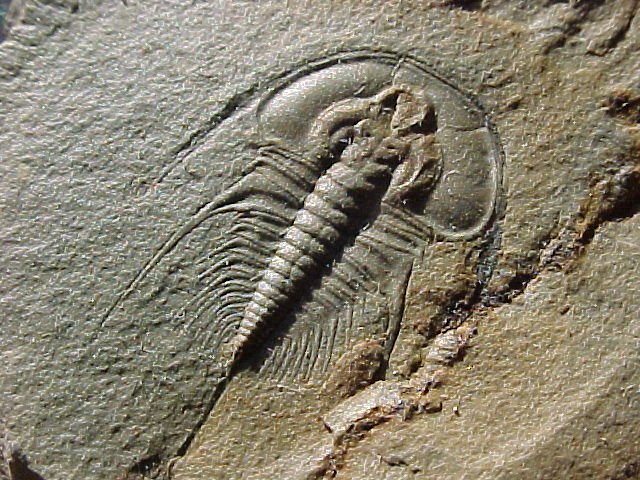
Trilobite
UST03A.jpg

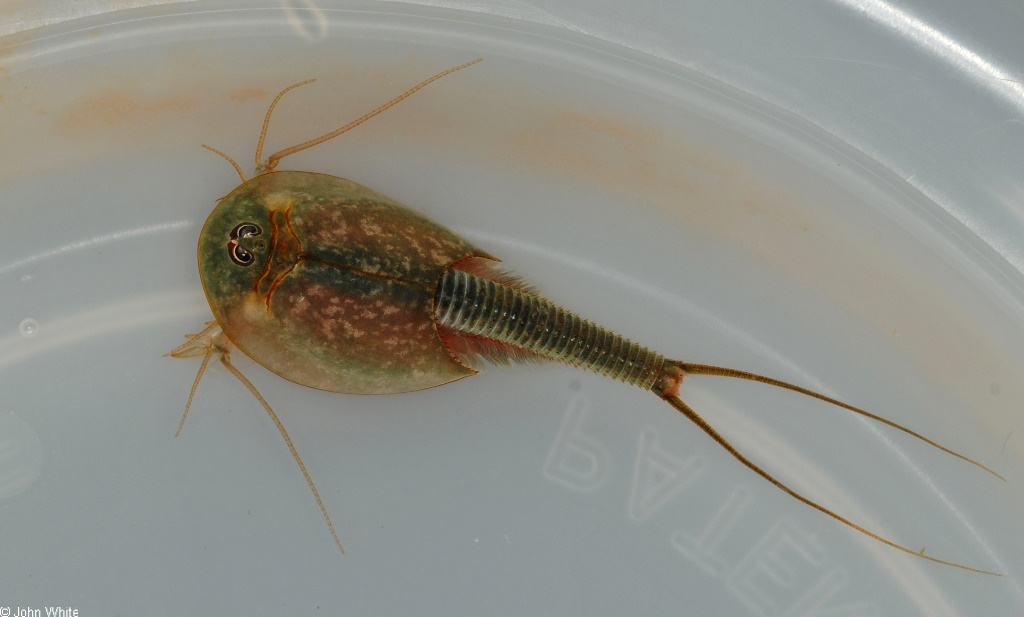
Horseshoe shrimp
0159.jpeg
 
Oh, barehl with the double-down.


I usually only actually encounter the Ken Ham-type of YEC and they don't employ an internally-logical structure to their position that tend to have such observations as "If we evolved why don't we still live in the ocean since there's more ocean than land." type of, um, arguments.
 
The OP doesn't actually have anything to do with your discipline. It's addressing creationist mis-perceptions. They aren't presented as arguments for evolution. They are addressing a common creationist misperception.

And, as I've argued before, they are not actually arguments for creationism either, but strawman arguments of such. They also don't address the actual argument creationists make when they make this form of argument, but address -- to be lenient in the interpretation of this word -- the strawman version.

As to whether they have anything to do with my discipline, I argue that they do. I do not think it makes much sense to counter these kind of arguments when presented by real creationists with crap arguments. This may or may not give the impression that these are the best arguments there are, or that this is what evolutionists believe are sufficient arguments to rebut the claims of the creationists. They are not, as I have shown above, and if the creationist is even slightly cognizant of the background to the creationist arguments, and the most common rebuttals, they may even prove counter-productive.

Moeritherium

Oh, dear Empress of Space...

Physical similarity does not equal transitionality. Tapirs do not become examples of intermediate stages of elephant evolution just because they look like Moeritherium. And showing a picture of a horseshoe shrimp has even worse problems than showing a picture of a horseshoe crab, as branchiopods are even more remotely related to trilobites than are horseshoe crabs...

It is as if the entire last page has just passed you by without you even noticing, if it weren't for the fact that you quote it...

Look, there is a reason why morphology is a science and not just a word. We have ideas like "homology" and "analogy", and there are good transitional series for lots of organisms that show these terms to be useful, even if it is sometimes very hard to tell the two apart, or to determine whether two structures are homologous or not.

If I, in any serious setting among evolutionary biologists, proposed that a tapir would be evidence for the gradual evolution of trunks in the lineage leading to extant elephants, I would be laughed out of the room. This is not how it works, and this is not how creationists misunderstand evolutionary theory to work, and this is not how they put up their idiotic arguments o the theme of "X could not have evolved because what use is half an X?" Nor are these watertight arguments against either the strawman versions of creationist arguments you're presenting in the OP, or the actual versions of these arguments presented by creationists.

The main drawback with presenting organisms that are not actually transitional between two other organisms (or at least widely believed among the relevant experts to be), is that you open yourself to a whole range of subsequent and actually valid criticism. Showing a tapir as an example that some animals can have short trunks does not in any way suggest that ancestors of extant elephants even had them. It shows precisely this: extant tapirs have short trunks, and these are useful to extant tapirs. The similarity between a tapir and Moeritherium is not relevant. What is relevant is Moeritherium itself, provided that is at least potentially a good candidate for an actual ancestor of extant elephants.

Moeritherium is a good picture to include in your OP instead of the tapir there, because it is plausible that this is the ancestor of extant elephants. The discussion would then necessarily have to be directed into age and location of fossils, homologization of characters between Moeritherium and extant elephants, the strengths and weaknesses of different phylogenies and evolutionary scenarios, and so on, and on these fields, the creationist is almost without exception entirely outclassed, and will, if they are intellectually honest, have to concede that the argument was not very good, and that you have successfully countered his/her argument (though normally this is followed by complaints, silence, or nonsense).

But using the tapir opens yourself to precisely the claim that what is in the picture is a "fully formed" tapir, and they obviously have short trunks because that's what God intended, or some such nonsense. It is useless, counter-productive, lacks an analysis of how the creationist argument works, and why it is invalid, lacks an understanding of evolutionary theory (the exact same claim we are typically accusing the creationists of!), and, if persistent enough, may be intellectually dishonest. I don't see that as a good way to proceeding in debates against creationists, but you may of course have a different opinion.

I usually only actually encounter the Ken Ham-type of YEC and they don't employ an internally-logical structure to their position that tend to have such observations as "If we evolved why don't we still live in the ocean since there's more ocean than land." type of, um, arguments.

I've debated these kinds of creationists as well. But the more interesting ones, the ones that have reflected on this more than a few hours, are the ones that would see through the OP for the nonsense that it is almost immediately, and then proceed to score points against the evolutionists...

 
Sure...through satire...Kotatsu is correct about the legitimacy of those as transitional arguments, though.

Right. But, one more time, no one claimed they were. They are presented as addressing one particular creationist misperception, the "what good is half an eye" misperception.

My explanation is "They went extinct in the Permian. It is therefore irrelevant to show pictures of horseshoe crabs." If you agree with this, I don't see how the picture of the horseshoe crabs "demonstrate the valid answer to the question."
I was being way too indirect when I said that. What I was going for when "hinting" that there was a "valid answer to the questions" is that we're looking for simple answers to simple misperceptions. I wasn't trying to imply I'd time traveled to witness the extinction of the trilobites.

This is bizarre. It is "perfectly fine" to show pictures of an entirely separate group of organisms to answer the question "Why aren't they [trilobites] still around?" without any explanation?

I said it would need an explanation.
 
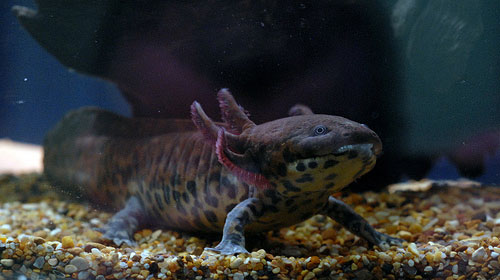
These are "still fish", as they have fins and gills. They also don't have "one pair of legs", they have "one pair of modified fins".
Four legs and gills
anderson1.jpg


This one is just bizarre. The creationist is supposed to accept as an intermediate between non-flying and flying lizards the neck frills of a cobra? They're in a different part of the body, used for a different thing, and in a different taxon...

Flying snake
flying_snake.jpg


I fail to see how any creationist could be persuaded to accept a lizard as an intermediate between a lizard and a snake just because the lizard has shorter legs. It still has legs!!!!! How can an intermediate between two taxa have all the distinct characters of one extreme, and none of the other extreme?

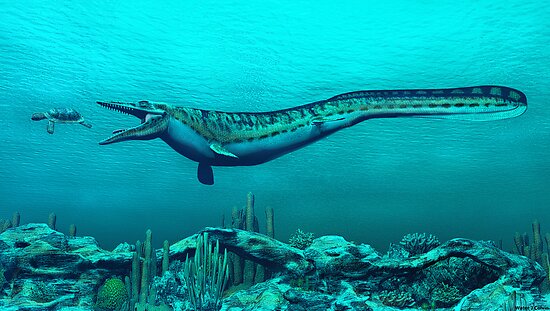
Mosasaur
flat,550x550,075,f.jpg

Sea snake
banded-sea-snake.jpg
 
Then why are either of you here except to play this Waldorf and Statler routine?

You know, I often wonder the same thing.

I usually only actually encounter the Ken Ham-type of YEC...
And your experience has been exhaustive, I take it.

There are transitional forms. I can show you many of them; hell, I've found a few myself. However, you have to understand WHY they are transitional. Specifically, transitional from what to what. Elephants evolved from something; that something had different traits, otherwise they would be elephants. Actually, it's a lot more complicated than that, but that's the version that doesn't involve n-dimensional statistics. Anyway, the entire notion that you can transition from a modern organism to another modern one is akin to saying you can transition from your sister to yourself; it makes no sense from any perspective whatever.

From a Creationist standpoint, the issue is the definition of "kinds". You can't transition from one "kind" to another--and the biggest fallacy is in their incapacity or refusal to define the term. This, by the way, is a modern error; in the past, they WERE able to do so, which allowed them to make fairly rigorous predictions. At any rate, nothing presented deals with those issues.

Kotatsu said:
This is bizarre. It is "perfectly fine" to show pictures of an entirely separate group of organisms to answer the question "Why aren't they [trilobites] still around?" without any explanation?
Yup. Because it attacks Creationists, and that's the most important thing.

The main drawback with presenting organisms that are not actually transitional between two other organisms (or at least widely believed among the relevant experts to be), is that you us open yourself to a whole range of subsequent and actually valid criticism.
One minor correction.

See, here's the thing these folks don't realize: Creationists use ANY excuse to attack us. I've been quote-mined multiple times, and i'm small fry. Leading evolutionary biologists, anatomists, taxonomists, paleontologists, in short anyone involved with evolution get quote-mined all the freaking time. This necessitates that we be very careful in how we approach these discussions. Simply put, we don't get to make stupid statements like the OP. They WILL latch onto it and use it to make it look like we don't know our own theories. If this was in a humor section, we'd have some sort of defense to offer; here, though, it merely appears to demonstrate a complete lack of knowledge on our part. OUR part, by the way--the backlash hits all of us.

barehl said:
Four legs and gills
This is the first real transitional form that I haven't provided. I'm impressed.

Flying snake
And you drop the ball. A flying snake is a novel adaptation, and by definition novel adaptations CANNOT be transitional forms. In a few million years, sure. Now? No. It's like calling a newborn a parent.

Mosasaur...Sea snake
There's evidence they're related, but as I understand that conversation with a guy who studies the evolution of snakes (and the loss of legs in lizards in general, which is not something that happened only once, which is why the photo isn't a transitional form), they're more akin to cousins. There are a bunch of reasons to conclude that Mosasaurs didn't evolve into snakes. For one thing, the ancestors of snakes had legs. Not flippers, LEGS. Kinda hard to be the transitional form when you lack key components.

Hesperornis
That's a bird. Not exactly compelling evidence. This is the kind of error I'm talking about--you've confused real evolutionary issues with adaptations to fit in similar niches. And not very similar at that; it's more similar to loons than crocs.
 
It gladdens me that you're including more fossil species in your posts, but you're still not getting the point, are you? In order for a taxon to be useful as an example of an intermediate between two other taxa, it has to be evolutionarily intermediate between these taxa, not just resembling them. Any non-fossil taxon you can come up with does not fit the bill. And, surprisingly, any fossil taxon you come up with also need to be an actual candidate for a representative of the transition between two morphotypes, or you will again open yourself to the same kind of criticism I outlined above.

The salamander is not a good example, as the creationist will just state that this is a "fully formed" species. Gills are ubiquitous around the Metazoa, so having gills are not sufficient.

The flying snake is amazing, but still in a different taxon from the flying frog or the flying lizard, and thus while it may be enough to convince some creationists that flight does not require wings, it will likely not be enough to convince them that flight has actually evolved in birds, bats, or insects, as it is an extant organism, distantly related to these three, and thus shows only that there are some "fully formed" organisms today that can fly/glide, but this does not actually prove that flying birds have at some point evolved from non-flying ancestors. As such, the flying snake is also easy for the creationist to dismiss.

Mosasaurs are not the ancestors of snakes, and can therefore be dismissed as "fully formed" organisms that don't show that evolution is true. They became extinct without descendants (as far as I am aware). In addition, since the criticism you quote is about skinks not being a good example of an intermediate between lizards and snakes, as they have all the characters of one taxon and none of the other, it is worth pointing out that the same could be said for mosasaurs, with the exception that they have fins that are not present in either of these. the fact that you can find nice pictures of sea snakes is irrelevant, as mosasaurs did not evolve into sea snakes.

Finally, I fail to see how Hesperornis is in any way a crocoduck.
 
Last edited:
Right. But, one more time, no one claimed they were. They are presented as addressing one particular creationist misperception, the "what good is half an eye" misperception.

And all I see in barehl's examples are things that are not addressing that question, because they are all "fully formed" organisms that, importantly, are not positively known to be on the verge of evolving into something else (with the exception of the fossil species). That is the problem with these examples. Creationists will state that any extant organism is "fully formed" or "perfectly created" or something like that. They will then ask what possible use the ancestors of that particular organism had of half an X. Showing that other organisms have "half an X" (or something similar) and that that is useful for these organisms does not address the creationist's question. It answers an entirely different question, namely: "Are there any organisms that have characters that are reminiscent of half an X?"

Comparative morphology is great (it is part of what I do for a living), and I have no problems with that. But it has limitations, and one of those limitations is that while it may be likely that taxon X uses character Y in the same way as taxon Z uses character pseudo-Y, this cannot be assumed without evidence. It may be likely that Moeritherium used it's short trunk in a manner similar to how a tapir uses its, but we cannot assume this without evidence. The question "what would taxon X use half an Y for?" is not necessarily invalid (depending on what "half" means), and comparing taxa that have pseudo-"half an Y" may be instructive, but it does not actually answer the question.

I was being way too indirect when I said that. What I was going for when "hinting" that there was a "valid answer to the questions" is that we're looking for simple answers to simple misperceptions. I wasn't trying to imply I'd time traveled to witness the extinction of the trilobites.

Let us assume that I am incredibly dense today (perhaps because I've just found out that 1/8th of the population in my homeland are racists...). What, explicitly, is the link between a picture of the horseshoe crabs and the question 'Where are the trilobites today?" Under what explicit scenario is showing such a picture a valid answer to that question?
 
Last edited:
Kotatsu said:
Any non-fossil taxon you can come up with does not fit the bill.
Two minor caveats:

1) If all the organisms involved are still extant, the intermediate can be modern. Again, ring species do that. If we have very, very good records that would count too, but I'm not sure we have such records for anything.

2) If we constrain ourselves to discussing individual traits, we can use extant organisms that exhibit intermediate forms of that trait as evidence of an intermediate form. However, this requires A) that we limit the discussion to a single trait; 2) that we prove that the trait is intermediate via the fossil record or other historical information; and 3) that we prove that the trait has remained the same to the present day. That's why I'm willing to call the salamanderr an intermediate form--it's not the critter, but the trait that's the intermediate form. Not that anyone's presented such evidence in this thread; I've seen papers discussing the posibility, though (it's hard to provide clear evidence, there being little in the way of hard parts in gills).

I'm not criticizing you; I'm just mentioning it for the sake of thoroughness. :)
 
If someone wants to see what a real discussion about transitional forms looks like, here's my go-to paper on the topic. The second link is to the full paper; the first is to a blog post summarizing it.

http://ecologicablog.wordpress.com/2012/05/25/the-evolution-of-baleen-evidence-from-molecules-and-morphology/

http://sysbio.oxfordjournals.org/content/57/1/15

The beauty of the paper is that it provides not one, but multiple lines of evidence for what it's talking about. This includes specific fossils showing specific traits, along with specific gene sequences related to those traits, and that those two lines of evidence line up as well as can be expected (different types of evidence have different temporal resolutions).
 
A bit OT, perhaps ...

Kotatsu, welcome to the wonderful world of questioning JREF skeptical dogma. The logic is as follows: Creationists are wrong, therefore their arguments are wrong, therefore all we need do is find ways to prove them wrong. It's dogmatic nonsense under the guise of rationality. [...]
My active involvement here is almost exclusively physics and astronomy/cosmology, but I am an avid reader of biology/geology-related threads, especially concerning the pre-Cambrian and evidence of life therein.

Within physics/astronomy/cosmology, here in the SMMT section of JREF, my perception is that your description, Dinwar, applies to almost no regular JREFer. Mind you, we don't get very many creationists these days, in physics/etc (here in JREF SMMT anyway), but we do get rather a lot of, um, cranks. And the EU (Electric Universe) has rather a lot of rather remarkable similarities to creationism (needless to say, EU proponents are keen on astronomy and cosmology; by default, they also take strong anti-relativity stances).

I may even go so far as to say that perhaps one of the most powerful set of statements you can make, when engaging creationists, is that based on astrophysics ... it can take the form of something like "if you are consistent in your creationist beliefs (as expressed {here}), shouldn't be spending the majority of your time and effort on astrophysics?"

And then there's the Gish Gallop, which someone right near the start of this thread pointed to; there's content, and then there's tactics ...
 
You know, I often wonder the same thing.

It seems there is a great will among atheists/skeptics/whatever to debate creationists, and YouTube videos and similar things that do so generally receive a lot of praise. Meanwhile, creationists are being attacked wherever they pop up, which is a good thing.

However, there is also no apparent will among many of the people who do the praising in sentence one and the attacking in sentence two to actually learn about the processes and principles they are purportedly defending. That is why we get these crap arguments from both sides repeated over and over again.

The delight of a good creationist (like Kleinman or the front-loading guy we had a few years ago whose name eludes me at the moment) is that they are not afraid of offering a new argument, and reading up on the criticism of an existing counter-argument. Kleinman, as I recall, was particularly good at this. He was willing to spend lots of time reading through things superficially to find holes or counter-examples or weaknesses. The fact that he mainly read nonsense like AiG is beside the point. Even though he didn't change his stance on anything (or at least never admitted it) and had as little understanding of how evolutionary theory works at the end of the almost two years we debated him here is also beside the point. It was a challenge (at least initially), and I learned lot of stuff during that debate, not least of which was to make sure I make it hard to be quote-mined, and the value of the quote button here.

Yes, creationist arguments are inane. They don't make sense, and they do not map onto reality in any recognizable fashion. But I fail to see why that means that we should be satisfied with the least amount of opposition, and the worst possible arguments whenever we debate with them. When I debate creationists, I prefer to show the sophistication that is inherent in modern evolutionary theory, not resort to the sort of easily dismissed and borderline intellectually dishonest stuff that is in the OP. I don't always succeed, of course, and I do use sarcasm whenever appropriate, but that is the goal. The OP is the opposite of that goal. While I of course cannot dictate what goal everyone should have when they debate creationists, I don't see the reason for why I (or Dinwar) should have to justify why we feel a need to point out that crap arguments are crap arguments, regardless of the circumstances.

I might as well ask: why do other people in this thread feel the need to mock creationists rather than trying to educate them?

And by educating them, I certainly don't mean showing pictures that are irrelevant to the question asked, failing to address or understand the underlying logic of both creationism and evolutionary theory, or showing answers that are wrong. Answers in Genesis is wrong, but so are most of the "answers" posted in this thread as well (the okapi still being the closest thing to a "correct" answer that has been given, with the Moeritherium possibly being better, but as barehl doesn't seem to be interested in actually addressing critique rather than just posting more pictures, it's hard to know whether this is intended as a replacement for the tapir or something else).
 
2) If we constrain ourselves to discussing individual traits, we can use extant organisms that exhibit intermediate forms of that trait as evidence of an intermediate form. However, this requires A) that we limit the discussion to a single trait; 2) that we prove that the trait is intermediate via the fossil record or other historical information; and 3) that we prove that the trait has remained the same to the present day. That's why I'm willing to call the salamanderr an intermediate form--it's not the critter, but the trait that's the intermediate form. Not that anyone's presented such evidence in this thread; I've seen papers discussing the posibility, though (it's hard to provide clear evidence, there being little in the way of hard parts in gills).

I'm not criticizing you; I'm just mentioning it for the sake of thoroughness. :)

I've highlighted what I feel is the most important part of your post. If someone was to show that the last common ancestor of the tapir and the elephant, itself descended from trunk-less organisms, had a short trunk, which has been retained in one lineage (the one leading to tapirs) but extended in the other (the one leading to elephants), the tapir would be a acceptable example of an intermediate form. If this is not the case, and the trunk in the two taxa is the result of convergence, the tapir is useless as an example of this, as the evolution of trait X in one taxon does not necessarily say anything about the evolution of trait pseudo-X in a different taxon.

(But as usual, we're in more or less perfect agreement otherwise)
 
Let us assume that I am incredibly dense today (perhaps because I've just found out that 1/8th of the population in my homeland are racists...). What, explicitly, is the link between a picture of the horseshoe crabs and the question 'Where are the trilobites today?" Under what explicit scenario is showing such a picture a valid answer to that question?

Creationist Q: "Where are the trilobites today".

Evolutionist A: "Replaced by horseshoe crabs". (Other good answers are possible).

It really is that simple. I get the impression you don't realize there are a lot of people who have simple misconceptions. Not every creationists works for Answers in Genesis. Most just have simple misconceptions.
 
Creationist Q: "Where are the trilobites today".

Evolutionist A: "Replaced by horseshoe crabs". (Other good answers are possible).

It really is that simple. I get the impression you don't realize there are a lot of people who have simple misconceptions. Not every creationists works for Answers in Genesis. Most just have simple misconceptions.

But that is not an answer to the question! That is the answer to another question, specifically "Can you give me an example of an organism that fills the same general niche as the trilobites did?" In addition, the answer does not explain anything, nor does it actually dispel any misconceptions. Finally, it is not at all obvious in the OP that this is the intended interpretation, especially not now that brachiopods have been brought up by barehl as well.
 
RecoveringYuppy said:
Creationist Q: "Where are the trilobites today".

Evolutionist A: "Replaced by horseshoe crabs".
Except they weren't. Horseshoe crabs don't occupy the same niches. For one thing, there aren't enough types. Where are the upside-down nectic horseshoe crabs, for example? How about the shovel-headed horseshoe crabs? Where are the meter-long super-preditor horseshoe crabs?

http://www.cornellcollege.edu/geology/courses/greenstein/paleo/trilobites.pdf

Above is an example of just how wrong your statement is. You've latched onto superficial similarities between what you're most familiar with in those taxa, and ignored the collosal complexities involved in this topic. Trilobites were extremely diverse, and occupied a wide variety of niches, and a variety of environments (though all within the ocean, far as I'm aware).

Simply put, nothing took the place of trilobites. At best a large number of taxa, ranginig from horseshoe crabs to urchins to some fish to bryozoans, filled a number of the niches. But even that is a misrepresentation; three mass extinctions shifted those niches to the point where some don't exist, and some that exist now didn't back then. Comparison between the two ecosystems is notoriously difficult, and constitutes an entire sub-field within paleontology (paleoecology).

The best quote I've heard to describe that is "They say the past is a different country; they do things differently there." (From a show about how life in the Victorian Era was a constant series of death-traps and poisonings, oddly enough.) You can't just point to two things that look similar and say "This replaced that."

It really is that simple.
When you look at anything at the 1:10,000,000 scale it all becomes simple. However, the rule of thumb amongst my colleagues at work is that anything past the 1:100,000 scale is, by its nature, useless. And when the search for simple answers ends in errors, those are still errors.

Kotatsu said:
(But as usual, we're in more or less perfect agreement otherwise)
We're in complete agreement about the tapir. :) I was only discussing the salamander, and there only a way that it might be true.
 
Some things are taken WAY too seriously...

Well, since some of us have our livelyhoods on the line in this fight, I think that's understandable. I mean, when they institute their theocracy I'm gonna be first against the wall. I tend to take it a TAD seriously.
 
@Kotatsu and Dinwar, This answer I gave is fine for a creationist. The pictures from barehl are even better answers for their purposes. You guys should talk to the creationists after the rest of us are done with their simple misconceptions and a handful of them want to go to graduate school in the subject.

Putting aside the fact that we're taking some partially humorous material too seriously, you guys just seem to be out of the touch with people with simple misconceptions. A lot of those people aren't going to run to a dictionary every time you guys want to educate them. You guys have a lot of great information, but, for me, listening to your arguments in this particular subject is shining a light on just how great those pictures are for a certain segment of the world.
 

Back
Top Bottom