• Quick note - the problem with Youtube videos not embedding on the forum appears to have been fixed, thanks to ZiprHead. If you do still see problems let me know.

Who wants to Learn about Cryptocurrencies First Hand?

doesn't look like it's going to sync...

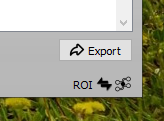
It takes a while to catch up. Look at the lower right corner of the wallet front end display, hover your mouse pointer over the connections tab and verify you have at least 1 connection.

The more connections you have the faster the wallet will sync.
 
It's important to remember that this is a step by step procedure. You don't want to skip any steps.

1. Install the wallet and let it sync to the blockchain. (This will take a while as it has to download the blockchain)

2. After the wallet is caught up it will display a check mark in the lower right hand corner of the user interface.

3. Create a new payment address by first clicking on "Receive" at the top of the user interface, then select "Request Payment". A new payment address will pop up in a small window, click on "copy address" and paste it here on the forum. This will be your new payment address to which you can only receive deposits. It's ok and does not have to be kept secret. The only thing anyone could do with your payment address is to send you coins.
 
Thanks. I found that link as well.

TBH I'm more interested in a crypto that overcomes the shortcomings of bitcoin (deflationary, limited transaction rate, excessive fees, excessive energy consumption) than in another instrument of speculation. Unfortunately, the white paper seems to be high on obfuscation and short of answers to these questions.

Also, I suspect that another upstart crypto has less chance of hitting it big than bitcoin has of hitting it bigger. Nevertheless, I will install the software in due course and advise you. I might get something for free after all. ;)

It's also possible the wallet software is malware, right? You might also get something unwanted for free.
 
[qimg]http://www.internationalskeptics.com/forums/imagehosting/10058609aacab2eeef.png[/qimg]

When I hover over this it says:

"0 active connections to ROIcoin network"

and

"Mining
Miners: 1
Threads: 6"


How would I know it was synced?

Click on "Mining" at the top right and turn mining off while you sync. It will not mine until the blockchain is in sync anyway.

If you have "0" active connections your wallet is not connected to peers. When you first open the wallet on Windows, it will likely ask you if you want to allow the wallet to connect to the internet, you should let it connect if you want to be able to download the blockchain and use the wallet.

After you establish a connection and the wallet syncs it will show you a check mark just to the right of the connections icon in the lower right.
 
It's also possible the wallet software is malware, right? You might also get something unwanted for free.

Many antivirus programs will flag wallets as malware because they have mining software in them. This is a false flag though and is a remainder from the good old days in which people were sending emails with mining software to automatically begin mining BTC when you opened them.

If your system flags the wallet as malware it's a false flag, it's not mining malware as only you can benefit from any mining you do. The wallet will have to connect to the internet to operate.
 
Many antivirus programs will flag wallets as malware because they have mining software in them. This is a false flag though and is a remainder from the good old days in which people were sending emails with mining software to automatically begin mining BTC when you opened them.

If your system flags the wallet as malware it's a false flag, it's not mining malware as only you can benefit from any mining you do. The wallet will have to connect to the internet to operate.

It seems like you are pumping this. Do you have any disclosures to make? Are you a developer, or a beneficial holder of a large % of coins?
 
picture.php
 
Thanks. I found that link as well.

TBH I'm more interested in a crypto that overcomes the shortcomings of bitcoin (deflationary, limited transaction rate, excessive fees, excessive energy consumption) than in another instrument of speculation. Unfortunately, the white paper seems to be high on obfuscation and short of answers to these questions.

You really, really, don't like the idea of deflation, do you? The thought that someone who worked hard for their money might actually be able to buy slightly more in the future seems anathema to you. But apparently it's ok for the investments of rich investors to appreciate in value against inflationary fiat currencies, for reasons entirely unrelated to business fundamentals, and with no hard work required.

You do realize that if bitcoin actually does transcend from digital asset to global currency (definitely with the help of some kind of credit system overlaid on top that fixes the transaction rate), that it's price will stabilize (at some vastly higher price that it is now), and then it will become disinflationary, as opposed to deflationary, and it's appreciation will begin to resemble the productivity norm. What is wrong with this hypothetical scenario?
 
Last edited:
ChrisBFRPKY, thanks and so on, for this teach-the-skeptics-how-to-crypto thing -- no, I mean it, nice of you to take the trouble -- not to mention the make-these-skeptics-millionaires-in-spite-of-themselves initiative, but:


  1. What does it mean when you say the developer went rogue? What did he actually do, and what did he get out of it, turning rogue I mean, whatever that might entail? And how did it impact the others who were into this thing at that time, you for instance?

  2. And are there any minimum tech specs to the kind of machine you ought to be using for this kind of thing?

  3. This download and mining thing, how much of the CPU capacity, RAM, whatever, does it occupy? Might doing this slow down the machine, in terms of the rest of what you do on it? Or put it to risk of crashing, or something like that?

  4. Also, what kind of data volumes, data consumption I mean to say, does doing this sort of thing involve?

  5. And this exercise, this download, this whole mining thing, does this carry any risk at all of compromising one's machine? In terms of making it vulnerable to hacking, malwares and viruses and bugs and what-have-you, or something like that?
 
It seems like you are pumping this. Do you have any disclosures to make? Are you a developer, or a beneficial holder of a large % of coins?

I disclosed everything in the OP. What the thread is about etc.

It's perfectly fine if you don't understand my motive for doing this or if you're suspicious, I do ask that you at least take the time to read the OP before giving this horse a thorough dental exam.
 
OP: total newb here. Haven't even looked into crypto much because of how much it looks like a street corner hustle from what little I know. The only saving grace of the whole gig seems to be Bitcoin's undeniable success.

So. To a pure newb, it looks like this site is asking me to download a wallet, that my machine flags as malware, and I'm supposed to just trust them that it's all good and it will do something called mining that I'll have my computer doing something all the time and this makes me money. In theory.

Instead of downloading this to learn about it, as you say, can you explain it a bit? That's learning on the more traditional way. Learning by experience can turn out to be quite costly.
 
ChrisBFRPKY, thanks and so on, for this teach-the-skeptics-how-to-crypto thing -- no, I mean it, nice of you to take the trouble -- not to mention the make-these-skeptics-millionaires-in-spite-of-themselves initiative, but:


  1. What does it mean when you say the developer went rogue? What did he actually do, and what did he get out of it, turning rogue I mean, whatever that might entail? And how did it impact the others who were into this thing at that time, you for instance?

  2. And are there any minimum tech specs to the kind of machine you ought to be using for this kind of thing?

  3. This download and mining thing, how much of the CPU capacity, RAM, whatever, does it occupy? Might doing this slow down the machine, in terms of the rest of what you do on it? Or put it to risk of crashing, or something like that?

  4. Also, what kind of data volumes, data consumption I mean to say, does doing this sort of thing involve?

  5. And this exercise, this download, this whole mining thing, does this carry any risk at all of compromising one's machine? In terms of making it vulnerable to hacking, malwares and viruses and bugs and what-have-you, or something like that?

One of the developers for this coin encoded a way to receive millions of coins he should not have been able to receive. I believe they're still trying to determine a way to save the project by using a hard fork, and getting rid of the ill-gotten coins but it does not look promising at this time. However that could change. Nevertheless, it is a good opportunity to learn, and perhaps profit? You never know.

The wallet should run on any windows based computer. I think there are other versions of the wallet available for Mac and Linux, but I have no experience with those.


Any machine that can run the wallet is capable of mining blocks with the wallet. Of course if you have high end equipment you will mine more blocks than say someone with a chromebook, but it doesn't take much. I mined a few blocks yesterday on my old conservative desktop and it's quite old. Mining can produce a lot of heat though, so it's usually not a good idea to mine with a laptop as they don't dissipate heat very well , but desktops should be fine.

The blockchain is quite large, the biggest headache is likely downloading it to begin with, after the initial sync is completed, it catches up rather quickly every time you open the wallet.

Security is an issue in order to protect your coin wallets from hackers. I suggest everyone set a password in their wallet to encrypt it once install and sync is complete. The wallet itself will not try to steal your coins but if you visit a compromised site for example, a hacker could notice you have a wallet and try to steal your coins. Make sure you do not forget your password or you will lose access to your coins.
The wallet is not malware yet it does have a miner you can use, so it can be falsely flagged as malware because of that feature. The miner can only mine for you though, and not anyone else and you can turn it on or off as you prefer. The wallet must also be allowed to connect to the internet to work. Windows will often ask if you wish to allow it to connect because it does not know if it's ok or not. It's pretty straightforward once you get the hang of it.
 
OP: total newb here. Haven't even looked into crypto much because of how much it looks like a street corner hustle from what little I know. The only saving grace of the whole gig seems to be Bitcoin's undeniable success.

So. To a pure newb, it looks like this site is asking me to download a wallet, that my machine flags as malware, and I'm supposed to just trust them that it's all good and it will do something called mining that I'll have my computer doing something all the time and this makes me money. In theory.

Instead of downloading this to learn about it, as you say, can you explain it a bit? That's learning on the more traditional way. Learning by experience can turn out to be quite costly.

It's a false flag. The antivirus sees the miner software within the wallet as malware. It happens with every Crypto wallet. Unfortunately, it's a fact of life with wallets and antivirus software. If you don't feel comfortable then don't do it or use an older machine you're not concerned with. Sometimes learning can be a bit uncomfortable, but I don't want anyone to feel obligated. It's up to you.
 
...The blockchain is quite large, the biggest headache is likely downloading it to begin with, after the initial sync is completed, it catches up rather quickly every time you open the wallet....


Any idea how large? In terms of data requirement, I mean. Ballpark's fine.


... The wallet is not malware ...


Are you entirely sure?

Not doubting you personally -- and in any case, there would be little point to asking you if I did! :) -- but I don't really know all that much about the innards of computers, and, given that the people who developed this thing have already sprung one surprise on you, might they not have others worked into their product, that you might not be aware of?
 

Back
Top Bottom