Hundreds of thousands of people are "slowly starving" in Kenyan refugee camps after US funding cuts reduced food rations to their lowest ever levels, a United Nations official has told the BBC.
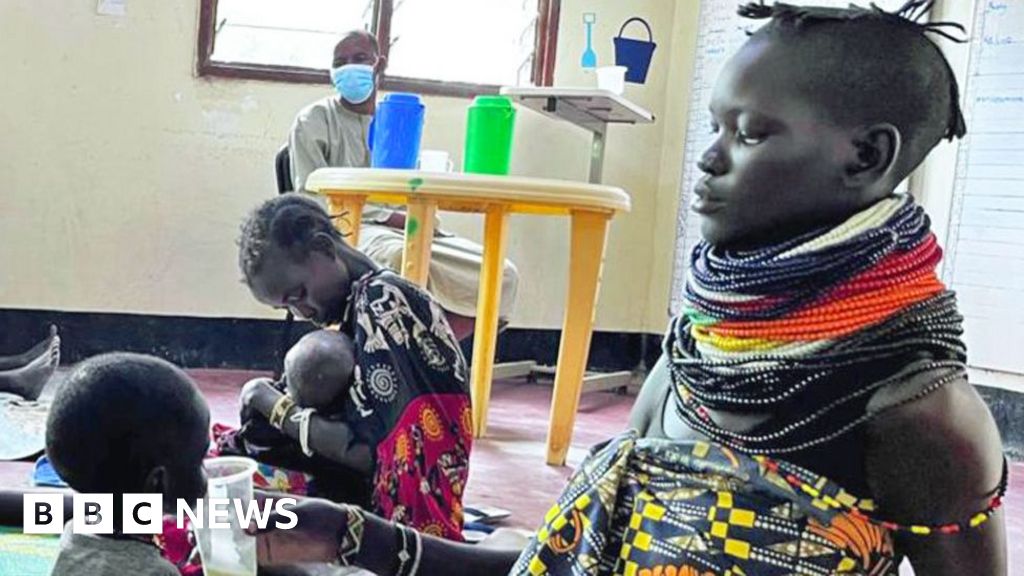
The impact is starkly visible at a hospital in the sprawling Kakuma camp in the north-west of the East African nation. It is home to roughly 300,000 refugees who have fled strife in countries across Africa and the Middle East.
Emaciated children fill a 30-bed ward at Kakuma's Amusait Hospital, staring blankly at visitors as they receive treatment for severe acute malnutrition.
One baby, Hellen, barely moves. Parts of her skin are wrinkled and peeling, leaving angry patches of red - the result of malnutrition, a medic tells the BBC.
Across the aisle lies a nine-month-old baby, James, the eighth child of Agnes Awila, a refugee from northern Uganda.
"The food is not enough, my children eat only once a day. If there's no food what do you feed them?" she asks.
James, Hellen and thousands of other refugees in Kakuma depend on the UN's World Food Programme (WFP) for vital sustenance.
But the agency had to drastically reduce its aid operations in many countries after President Donald Trump announced sweeping cuts to US foreign aid programmes earlier this year, as part of his "America First" policy.
The US had provided around 70% of the funding for the WFP's operations in Kenya.
The WFP says that as a result of the cuts, the agency has had to slash the refugees' rations to 30% of the minimum recommended amount a person should eat to stay healthy.
"If we have a protracted situation where this is what we can manage, then basically we have a slowly starving population," says Felix Okech, the WFP's head of refugee operations in Kenya.