Lothian
should be banned

To reiterate JT's First Law: "The amount of serious consideration a post is due is inversely proportional to the area of the post occupied by smileys, emojis, and animated gifs."


To reiterate JT's First Law: "The amount of serious consideration a post is due is inversely proportional to the area of the post occupied by smileys, emojis, and animated gifs."

Interesting short article for Heritage Foundation, that is generally considered a conservative outlet.
I disagree that National Guard is the only qualified militia. There a a lot of people out there who are trying to form their own regulated militia, just in case elections don't go their way.
Sorry for not bringing clear. Gun rights folk often refer to the 2nd amendment as allowing them to have guns. As I understand your argument that does not give any rights, it instead says they won't be taken away. You mention codified rights and that is what I would expect. Guns seems an exception, in it does not appear to be codified. I am trying to understand where it comes from.
Hard to give one word answers to questions like this. I guess from both sides of the debate. I guess most pro gun people deny the right to arm for self defence to some groups eg, children felling, mentally ill.
I believe in self defense but I think that needs to be proportionate. There is in my view a risk when arming people for self defence that sone could use those arms for the wrong purpose and the more people you arm the more 'bad' people will be armed.
I guess I support arming people to protect a community but doing so by minimising those with arms.


2A doesn't guarantee the right. It guarantees that the State will not squash that right, which is already a given.
Just read the words: It says the right to keep and bear shall not be infringed. The right is summarily noted, and the amendment says it will not trample it through legislation. The part about the militia is showing why a free state has an interest in not trampling this right.
None of this has to do with defining the right itself. It doesn't mean that it is an unregulated right, as some like to argue. Regulation is a great thing for an orderly free society, unless your ideal of freedom is anarchy.
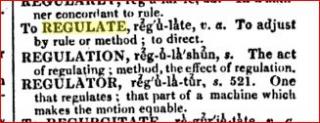
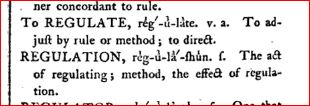
"Well regulated" in 1776 is not synonymous with "well organized" in 2024. Or 1924, for that matter. Probably not even 1824. It's synonymous with "well equipped". In the context in which the amendment was drafted, we can interpret the entire passage to mean "people equipping themselves with arms for defense of themselves and their community is their right, and also a good thing for the community, therefore the federal government will not try to prevent them from so equipping themselves."
I'm not so sure it does, though.
Which would mean the same thing with the 2nd, wouldn't it?
On the crafting of the Second Amendment at the Constitutional Convention
It was in response to the concerns coming out of the Virginia ratification convention for the Constitution, led by Patrick Henry and George Mason, that a militia that was controlled solely by the federal government would not be there to protect the slave owners from an enslaved uprising. And ... James Madison crafted that language in order to mollify the concerns coming out of Virginia and the anti-Federalists, that they would still have full control over their state militias — and those militias were used in order to quell slave revolts. ... The Second Amendment really provided the cover, the assurances that Patrick Henry and George Mason needed, that the militias would not be controlled by the federal government, but that they would be controlled by the states and at the beck and call of the states to be able to put down these uprisings.
<snip>
On how the Black Panthers responded to restrictions on Black people's ability to bear arms in the 1960s
What the Black Panthers were dealing with was massive police brutality. Just beating on Black people, killing Black people at will with impunity. And the Panthers decided that they would police the police. Huey P. Newton, who was the co-founder of the Black Panthers along with Bobby Seale, ... knew the law, and he knew what the law said about being able to open-carry weapons and the types of weapons you were able to openly carry and how far you had to stand away from the police arresting somebody or interrogating somebody. ... And the police did not like having these aggressive Black men and women doing that work of policing the police. And the response was a thing called the Mulford Act, and the Mulford Act set out to ban open carrying of weapons. And it was drafted by a conservative assemblyman in California with the support and help of an NRA representative and eagerly signed by Gov. Ronald Reagan as a way to make illegal what the Panthers were legally doing.

Exactly. Your own truths.You are right I certainly do have my own beliefs and have my own truths.
I think you believe in some moral principles whether they're shared universally or not.I don't believe that those beliefs are shared universally and I don't believe they are rights.
I honestly believe that wealth taxes for the super rich should be higher. I think it self evident some people have more money than they need and could ever spend and that money could be used to make many lives better. That does not give me or anyone else the right to strip them of their wealth unless my new tax rates are codified and agreed.
I would also say that in this scenario, you believe those people have an innate right to freedom from being stripped of their wealth without due process - a right that may not even be formally codified anywhere. You just believe it's moral. Even though you know not everyone agrees with you.
Yes, I know. That's clearly addressed by both Lothian and myself.The wealth tax is the due process. BTW, we already do have wealth taxes. They are called "property taxes."
<whoosh>
I have no opinion about that.. In my opinion, you missed the point entirely.
."you believe those people have an innate right to freedom from being stripped of their wealth without due process - a right that may not even be formally codified anywhere."
Apparently.
I believe my response was a reasonable inference.
You said "you believe those people have an innate right to freedom from being stripped of their wealth without due process - a right that may not even be formally codified anywhere.".
As if society is doing something very wrong.
So back at you. What was I supposed to infer?
Lothian said he believes people should not be stripped of their wealth without due process.
I responded that this implies Lothian believes in a right to not be stripped of your wealth without due proces.
You should infer from this that I am not objecting to, nor even interested in discussing here, such wildly off-topic matters as the alleged propriety of our tax laws.
I mean, a "reasonable inference" from what? Nothing in my reply to Lothian suggests I don't know about tax laws, or don't consider them due process, or have an problem with such laws.
