• Quick note - the problem with Youtube videos not embedding on the forum appears to have been fixed, thanks to ZiprHead. If you do still see problems let me know.

Peer-review

It should be pointed out that the colour of anything that glows is basically determined by its temperature. So solid iron at 1000°C will glow in the same colour as liquid aluminium at 1000°C as gas heated to 1000°C in a wood fire: These will all glow orange.
If you see something glowing red, it's probably somewhere between 500°C and 700°C hot, if you see something glow yellow, it may be around 1200°C, and beyond that you are approaching white.


Suppose you see some yellow-hot liquid: This tells you its temperature is in the vicinity of 1200°C. This alone in turn tells you it can't be, say, pure iron, because iron melts only at 1538°C, at which point it would already appear white hot.
It could also not be pure zinc, because it already boils (vaporizes) at 907°C, where it would still glow orange-red.

But it could be aluminum.
Or lead.
Or copper.
Or gold.
Or glass.
Or even concrete.
Or any number of alloys that may include iron or zinc.
Or a mix of several molten substances.

Pure aluminium would glow red when it melts at 660°C and not look silvery, but there may well be aluminium alloys that melt before visible (i.e. only infrared) glowing occurs, at which point it would look silvery still.

However, as posters have pointed out, it is not clear that the flow we see in some lo res video is really glowing yellow. You will often find in digital fotografy and film that objects that are overexposed will wash out to white regardless of their "true" colour, and before they do, some colour components might be saturated before others, so an orange glow might come out yellow (or red, or green, depending on the properties of the camera) in the picture when it is too bright.


ETA: Even if the flow was really yellow, it does not necessarily have to be all 1200°C. I can., for example, imagine* the following: UPS blocks, containg a lot of lead (Melting point: 327°C), but also other materials, some of which might be flammable, get heated to 400-500°, in an oxigene-starved air. They melt, and form a deep puddle in some "tub" that might have formed for whatever reasons. Any flammable material in that pool would be prevented from burning because it's surrounded and protected by the lead. Then, the floor gives partially way, the "dam" that formed the puddle goes, the whole liquid mess starts flowing downhill and out the building. There, our flammables get finaly exposed to fresh, oxigene-rich air as the flow disperses and turbulences bring materials to the surface, and they ignite at once, glowing yellow-hot on the surface, giving the whole flow the appearence of being yellow-hot.


*) Being able to imagine something is the standard truther benchmark for positive proof, just as not being able to imagine something "proves" it's impossible :D

So, aluminum heated to 1,000 C will look orange-ish even when it is poured? Sorry if I'm missing what you are saying...
 
So, aluminum heated to 1,000 C will look orange-ish even when it is poured? Sorry if I'm missing what you are saying...

It will look orangish when it flows, stands, wobbles, runs, is poured, shaken or stirred, yes. As long as it stays at 1000°C.
And so will anything else that is 1000°C. Provided it's liquid at that temperature, otherwise pouring would be kinda difficult :p

Of course, when it's poured it like in the video, it might cool quickly due to increased surface-to-mass ratio, and get darker in the process.

But what I am really trying to explain is:
1. The colour of glowing does not tell you what material it is, it only tells you what temperature it is. You can only discount those materials that would be in a different state (solid or gas) at that temperature.
2. The colour might not come from the bulk of the material but from a burning surface, and hence not represent the temperature of the bulk of the material
3. The colour you see in the video might not be the true colour in reality due to technical artefacts
1.-3.: You can't determine from the video what it is, and you can't rule out much either. It most certainly isn't steel. But could be lead, aluminium, glass, copper, ... some flammable organic liquid maybe?
 
It will look orangish when it flows, stands, wobbles, runs, is poured, shaken or stirred, yes. As long as it stays at 1000°C.
And so will anything else that is 1000°C. Provided it's liquid at that temperature, otherwise pouring would be kinda difficult :p

Of course, when it's poured it like in the video, it might cool quickly due to increased surface-to-mass ratio, and get darker in the process.

But what I am really trying to explain is:
1. The colour of glowing does not tell you what material it is, it only tells you what temperature it is. You can only discount those materials that would be in a different state (solid or gas) at that temperature.
2. The colour might not come from the bulk of the material but from a burning surface, and hence not represent the temperature of the bulk of the material
3. The colour you see in the video might not be the true colour in reality due to technical artefacts
1.-3.: You can't determine from the video what it is, and you can't rule out much either. It most certainly isn't steel. But could be lead, aluminium, glass, copper, ... some flammable organic liquid maybe?

So, when Steven Jones shows his experiment showing molten aluminum pouring with a silver color, what is he doing wrong in the experiment? Did he even heat it to 1,000 C?
 
So, when Steven Jones shows his experiment showing molten aluminum pouring with a silver color, what is he doing wrong in the experiment? Did he even heat it to 1,000 C?

1. He did not adequately address contaminants within the molten material, and their effect on the color of the slag at the given temperature. He added in a handful of wood chips, and said he had addressed the contaminant issue..

2. Those people above are right...the color of a molten material is reflective of its temperature, not its atomic make up.

In other words...let us say that you heat up aluminum sufficiently to make it appear white/silver....well that would be reflective of a given temp, call it Temperature X.

If we add in wood, plant, human flesh, gypsum, etc... in sufficient quantity, we can change the temperature of the molten metal, to Temperature Y, and hence the color of the slag will change (down to lets say an orange) even though the primary metal within is still aluminum. Contaminants, IIRC, can also change the temperature at which the said metal would remain in liquid form.

You combine the above, with all of the other things we have spoken about (both in terms of the material it could have been, and the video factors), and you can see that that molten material could have been just about anything, and was likely, aluminum or glass.

Disclaimer: My chemistry and materials science knowledge is intro college level only...

TAM:)
 
but, but, but...open chemical physics journal is so reputable you can't measure it! that's why it isn't included!

From an analytical chemical viewpoint, this statement is correct. Their influence is below detection limit :D

McHrozni
 
1. He did not adequately address contaminants within the molten material, and their effect on the color of the slag at the given temperature. He added in a handful of wood chips, and said he had addressed the contaminant issue..

2. Those people above are right...the color of a molten material is reflective of its temperature, not its atomic make up.

In other words...let us say that you heat up aluminum sufficiently to make it appear white/silver....well that would be reflective of a given temp, call it Temperature X.

If we add in wood, plant, human flesh, gypsum, etc... in sufficient quantity, we can change the temperature of the molten metal, to Temperature Y, and hence the color of the slag will change (down to lets say an orange) even though the primary metal within is still aluminum. Contaminants, IIRC, can also change the temperature at which the said metal would remain in liquid form.

You combine the above, with all of the other things we have spoken about (both in terms of the material it could have been, and the video factors), and you can see that that molten material could have been just about anything, and was likely, aluminum or glass.

Disclaimer: My chemistry and materials science knowledge is intro college level only...

TAM:)

Doesn't glass have a really high melting point?
 
So, when Steven Jones shows his experiment showing molten aluminum pouring with a silver color, what is he doing wrong in the experiment? Did he even heat it to 1,000 C?

Uuuhhhmmm.... :confused:
I must admit I am was not familiar with Jones' experiment until I started writing the post you are now reading. I think we are talking about this?
http://www.scholarsfor911truth.org/Experiments-to-test-NIST-orange-glow-hypothesis.html

I just picked the round number "1000" to make a point; it has nothing to do with Jones or the properties of aluminium, except that aluminium is liquid at 1000°C (and glows orange). It is, however, also a liquid from 660°C to 2519°C, and will subjectively glow from red to orange to yellow to white when heated through this range. Source:

http://en.wikipedia.org/wiki/Aluminium
http://en.wikipedia.org/wiki/Blackbody_radiation

A metal will appear "silvery" (metallic is the better word) if it does not yet glow visibly. Which is under 480°C.

If Jones had liquid aluminium that did not glow (appear silvery), my guess would be that he did not use pure aluminium, but some alloy. There are aluminium alloys that melt at temperatures as low as 475°C, where glowing might be so faint that you'd miss it in daylight, and the liquid appears just metallic.
Note in Jones' videos, that the aluminium he pours cools solidifies very quickly!

Oh found one other factor: Emissivity
http://www.engineeringtoolbox.com/emissivity-coefficients-d_447.html
This is a coefficient that measures how much radiation a material emits compared to a perfect blackbody. The emissivity of aluminium (and indeed most elemental metals) is very low, under 0.1, whereas that of aluminium oxide is near 0.3 and that of glass ond rough concrete is above 0.9.
This means that even the orange glow of aluminium might be unnoticable in daylight.


Note also one conspicuously absent video: That of a flow of molten steel shown to drop hundreds of feet glowing orange! His argument seems to be: It isn't aluminium, so it must be iron. Wrong dychotomy! Chipping in wood plastic is probably a bit naive, why not ship in glass and concrete? Aluminium oxide?
 
Uuuhhhmmm.... :confused:
I must admit I am was not familiar with Jones' experiment until I started writing the post you are now reading. I think we are talking about this?
http://www.scholarsfor911truth.org/Experiments-to-test-NIST-orange-glow-hypothesis.html

I just picked the round number "1000" to make a point; it has nothing to do with Jones or the properties of aluminium, except that aluminium is liquid at 1000°C (and glows orange). It is, however, also a liquid from 660°C to 2519°C, and will subjectively glow from red to orange to yellow to white when heated through this range. Source:

http://en.wikipedia.org/wiki/Aluminium
http://en.wikipedia.org/wiki/Blackbody_radiation

I think I chose "1,000 C" because I thought that that was how hot the fires got in the towers (correct me if I'm wrong)

A metal will appear "silvery" (metallic is the better word) if it does not yet glow visibly. Which is under 480°C.

If Jones had liquid aluminium that did not glow (appear silvery), my guess would be that he did not use pure aluminium, but some alloy. There are aluminium alloys that melt at temperatures as low as 475°C, where glowing might be so faint that you'd miss it in daylight, and the liquid appears just metallic.
Note in Jones' videos, that the aluminium he pours cools solidifies very quickly!

Oh found one other factor: Emissivity
http://www.engineeringtoolbox.com/emissivity-coefficients-d_447.html
This is a coefficient that measures how much radiation a material emits compared to a perfect blackbody. The emissivity of aluminium (and indeed most elemental metals) is very low, under 0.1, whereas that of aluminium oxide is near 0.3 and that of glass ond rough concrete is above 0.9.
This means that even the orange glow of aluminium might be unnoticable in daylight.


Note also one conspicuously absent video: That of a flow of molten steel shown to drop hundreds of feet glowing orange! His argument seems to be: It isn't aluminium, so it must be iron. Wrong dychotomy! Chipping in wood plastic is probably a bit naive, why not ship in glass and concrete? Aluminium oxide?

I think what I'm looking for is an experiment where molten metal (assuming it is molten metal pouring out of the south tower) can look orange-ish/yellow-ish when poured in daylight and stay orange-ish/yellow-ish for a somewhat long distance pour.
 
Doesn't glass have a really high melting point?

Glass...totally depends on the composition/type. A 5 second search on google yields this link,

http://hypertextbook.com/facts/2002/SaiLee.shtml

Where if you look at the third or fourth entry in the column, they say that glass can melt with temps as low as 500 C.

Where are you going with this? After all that has been shown you here in this thread, if you are not convinced that the molten material could have been any number of other things besides molten iron/steel, then I suspect your motive/position for asking.

TAM:)
 
Has Jones ever tried to get his paper published in any of the top journals?
 
Has Jones ever tried to get his paper published in any of the top journals?

You would have to ask him tj, but I SUSPECT the answer is yes, in particular his most recent thermite chip paper. I don't think he would have went straight to a "Pay to play" vanity journal for publishing as his first choice, but rather after failure to publish said paper in respected, legitimate journals.

The ONLY way to find out, i would think, it to ask him...and then you have to take his word for it.

TAM:)
 
Glass...totally depends on the composition/type. A 5 second search on google yields this link,

http://hypertextbook.com/facts/2002/SaiLee.shtml

Where if you look at the third or fourth entry in the column, they say that glass can melt with temps as low as 500 C.

Where are you going with this? After all that has been shown you here in this thread, if you are not convinced that the molten material could have been any number of other things besides molten iron/steel, then I suspect your motive/position for asking.

TAM:)

I'm just looking for the debunk on this... Jones seems to claim that aluminum pours out as a silver color. So, I'm wondering what temperature will create a silver pour. I don't know what temperature Jones used in his experiment.
 
I'm just looking for the debunk on this... Jones seems to claim that aluminum pours out as a silver color. So, I'm wondering what temperature will create a silver pour. I don't know what temperature Jones used in his experiment.

If you just melt aluminum (660 C) it will be silvery. If you get it much hotter (below it's boiling point, 2500 C) it will look like this:


The point of the matter is, Jones is not going to continue to heat the metal past it's melting point if it does not support his view. How would he get to the "truth" if he did? :rolleyes:
 
Last edited:
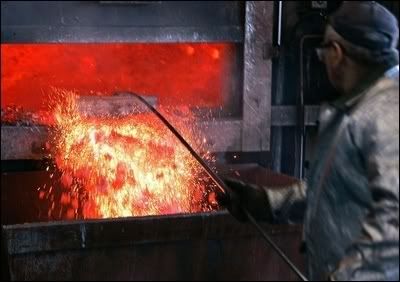
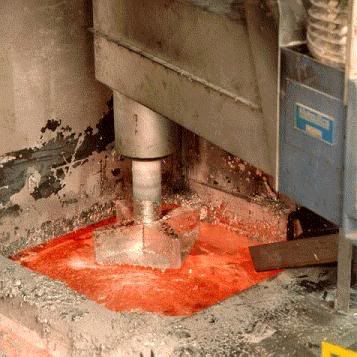
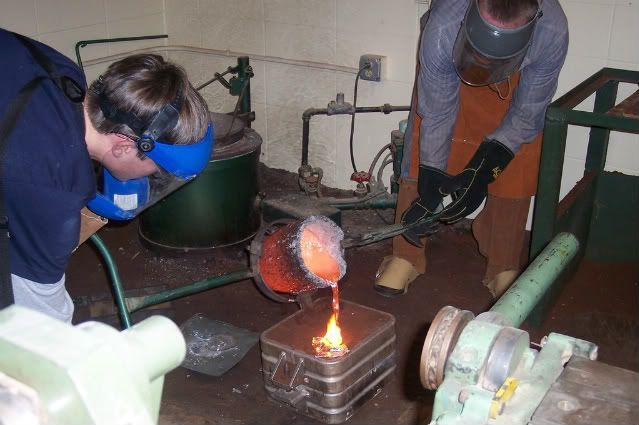
Molten aluminium, in various settings (thanks, I recall, to Gravy's LC guide above. I have long since lost my record of the sources)

moltenaluminium.jpg


moltenaluminium2.jpg


moltenaluminium3.jpg


moltenaluminium4.jpg
 
The truther argument is that temps did not get hot enough in the WTCs to cause aluminum to reach such a temp as to make it orange.

My argument is that it could have been other materials, and/or contaminents could have made the orange color.

TAM:)
 
The truther argument is that temps did not get hot enough in the WTCs to cause aluminum to reach such a temp as to make it orange.

My argument is that it could have been other materials, and/or contaminents could have made the orange color.

TAM:)

More precisely, the argument is, that office- and fuel fires alone would not get hot enough for anything to glow orange-hot. And that anything that's glowing orange could have anything to do with aluminium.

They want to conclude from this that something must have been there that melts steel.

Well, the premise is far from proven. You just can not do a rough experiment with one pot of one material, see that you get a different result, and from there jump to definite conclusions.
 
Speaking of the topic "Peer-review", Heiwa just claimed that ASCE has asked him to perform peer-review for them:

https://www.flashback.org/sp22701270

(...) när jag sände in min vetenskapliga artikel till ASCE/JEM sà fràgade de faktiskt om jag kunde ställa upp och peer review andra artiklar som sänds in. Jag tackade naturligtvis ja!

(...) when I submitted my scientific article to ASCE/JEM, they actually asked me if I could peer-review other submitted articles. Of course I said yes!
 

Back
Top Bottom