Monster Talk: Episode #012 - Suitable for Framing (Greg Long)

making-of-bigfoot-cover.png


Author Greg Long discusses his book The Making of Bigfoot which chronicles his search to get to the bottom of the Patterson-Gimlin film. His findings destroy the image of Roger Patterson as a simple country man looking for Bigfoot at the right place and right time. And it provides at least one plausible answer to the question “What did Patterson film that day in 1967?” Or should we say “Who?”

Long presents a very plausible tale of how two cowboys came to film one of the most controversial pieces of footage in American history.

Music

Monstertalk Theme: Monster
by Peach Stealing Monkeys
Dirty Little Secret by 54 Seconds

Special Note to JREF Bigfoot Forum Folks:
We tried to address some of the pressing questions about Long's book in this episode. Here's some of the stuff we tried to nail down:
Why was the timeline of the film's development important, and why would Patterson lie about it?
Why don't we have the original film that Patterson shot?
Who has the original?
Why is that important?
Did Patterson ever make any money with the film?
Does Bob H have any evidence to back up his claims to be the man in the suit?
Why is the Bob H's description of the suit up close different from that of Philip Morris?
What about others who have claimed to be in the suit?
================================================
Hopefully you'll find Long's talk informative. His book is very interesting and has a lot of details in it. After reading it I didn't find it to be the sort of "Patterson Hit Piece" some have described, but I don't think I'd want to loan Patterson any money if I knew all the details Long described. Even so, I can't help but think that it would've been interesting to meet him. He sounded like quite a character.
 
The hosts and Greg Long never mentioned that Gimlin has said that Bob Heironimus' horse (Chico) was at Bluff Creek. Gimlin admits to borrowing it for the Bigfoot search.
 
Coming up next: Ghosts

We've started our multi-episode coverage of ghosts by interviewing Dr. Steven Novella about the brain, the survival of the mind without the brain, and about lots of other skeptical and geeky stuff. Much fun was had - should go live Wed.
 
Monster Talk: Episode #013 Ghosts - W/ Steve Novella

novella-goggles-243px.jpg


LISTEN NOW

This week on Monstertalk, we begin a multi-episode examination of ghosts. We start at the core of the idea by discussing the plausibility of continued consciousness after death. Our guest is neurologist and skeptical activist, Dr. Steven Novella. Steven is a prolific blogger whose work regularly appears on SkepticBlog.org, NeurologicaBlog, Science Based Medicine and The Rogues Gallery. He is the president of the New England Skeptical Society, and host of the popular Skeptic’s Guide To the Universe podcast as well as the short-form SGU 5x5.

All three hosts of MonsterTalk have conducted ghost investigations. Ghosts are a huge topic, and it will take many episodes to cover this type of phenomena. We begin with a brief discussion of the nomenclature, and some of the strange implications of ghosts in relation to privacy. We will dig much deeper into these issues in future episodes, bringing our own unique experiences to bear on the topics.

In this episode

The terminology of ghost hunting
New England and the culture of “Ghost Country”
The legacy of Ed and Lorraine Warren
The distinction between demons and ghosts
and the impact of religion on ghost belief
The mind as hardware/software
The brain as an antennae for consciousness
Connections between NDE and ghost sightings
The NESS’s own ghost investigations
Many tangential topics including AI, robots and Dungeons & Dragons

Music
Monstertalk Theme: Monster by Peach Stealing Monkeys
Haunted by Kelly Cavagnuolo (her CD is available at CDBaby.com)
 
MonsterTalk #014 - Ghost Bird

What happens when a creature thought to be extinct is spotted alive in the swamps of Arkansas? Can such a creature have survived? Can scientists verify the story? And when a town’s hopes and a school’s grant money are on the line, to what lengths will people go to find proof?

This week on MonsterTalk we discuss these issues with Scott Crocker, the documentary filmmaker behind Ghost Bird — a feature length exploration into the mystery of the Ivory-billed woodpecker.

Producer's Note: The audio during the show is rough during the host-chat before the interview. It clears up a good bit after about 5 mins. Apologies for this. We are seeking an alternative recording program and will be working to improve our sound.

Music

Intro Music:How Can We by Paul Martin’s Soothing Music (1938)
Monstertalk Theme: Monster
by Peach Stealing Monkeys
 
MonsterTalk #015 - Historical Paranormal Investigations

Listen here: http://monstertalk.skeptic.com/media/skeptic/015_Monstertalk.mp3

Ghost investigations often feature in television shows and other media. Typically, these amount to people wandering around at night with EMF detectors, talking into the darkness and jumping at shadows and noises.

But how does one do a scientific paranormal investigation? On this first half of a two-part MonsterTalk, the hosts review two past ghost investigations (Ben Radford’s “Kimo Theater Ghost” and Dr. Karen Stollznow’s “Waverly Hills Sanatorium” investigations) and discuss some of the techniques that can help solve such cases. What steps are common to this type of research? Learn more this week on MonsterTalk.

In this episode

Picking what case to investigate
Finding case-zero
What phenomena is being reported
How many witnesses
Identifying and contacting witnesses, or getting primary research
Corroborative evidence
Evidence which falsifies
Research, research, research
Music

Monstertalk Theme: Monster
by Peach Stealing Monkeys
Intro Music: Vampire Organ
by Jeff Rosiana
 
Episode #014 - HISTORICAL GHOST INVESTIGATIONS PART II

HISTORICAL GHOST INVESTIGATIONS
PART II — SINKING THE WATERTOWN

SSWatertown-ghosts-243.jpg


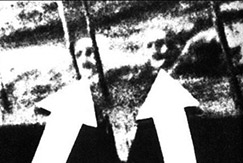
This week, MonsterTalk continues its two-part discussion of historical ghost investigations. Blake Smith describes his investigation into a famous photo that allegedly shows two dead sailors floating off the side of a 1920’s oil tanker. Methodology for conducting historical investigation is detailed, using Ben Radford’s upcoming book on scientific paranormal investigation as a basis for the talk.

Did two sailors haunt their fellow shipmates? Does the photo really show two ghosts? Find out the answers in this informative conclusion — and find out how you can solve your own cases!

In this episode

Blake Smith’s Watertown research is in the April (UK) and May (US) editions of Fortean Times.

Much of the material for these Episode 15 & 16 of MonsterTalk come from Ben Radford’s upcoming book on Scientific Paranormal Investigation.

The following is a brief sample of Ben’s insights which come from his own experiences in this field:

General Versus Specific Claims

As an investigator, you will be dealing with specific cases and claims. For example, general claims might be that house X is haunted, or person Y is psychic. Specific claims would be that a ghost was reported or photographed on one or more specific occasions at house X, or psychic Y can read volunteer’s minds. General claims are not testable or falsifiable (you cannot prove or disprove the existence of Bigfoot or psychic powers, but you can prove or disprove specific claimed examples or reports). One of the most important things is to ask the right questions; you must be able to focus on the relevant issues and know what to look for.

In many cases what seems like one simple question must actually be broken down into several different ones for independent analysis. For example, say a published report by a writer (Person A) quotes a psychic, ghost investigator, or eyewitness (Person B) as describing a ghost experience (information X).

To begin investigating, we first need to examine all the components of the claim: 1) Did Person B actually give Information X? Who heard him/her say that? Is there any independent proof or written record of it, or is it just A’s assertion? What, exactly, was the information? It could be that the claim is wrong; she said something different, and the story got better in the retelling. 2) Is the Information X accurate or plausible? For example, are they describing something that they physically could not have seen from their alleged location?

In sum, you need to not only verify that the claim about person A’s information is accurate (that is, she really said what it was claimed she said), but also that the information itself is accurate (information X correctly matches independently gathered information about Person B). Do not assume anything; check out everything.

Once you have chosen a mystery to investigate, you should research the topic thoroughly, on three levels: A) the general topic; B) the localized version of the topic; and C) the specific sighting, event, or phenomenon.

For example, if you are looking into a Bigfoot sighting on a farm in rural Pennsylvania, you need to not only learn as much as you can about that specific incident (C), but you also should research the history of Bigfoot sightings in Pennsylvania (B), as well as have a general knowledge (A) of Bigfoot sightings, claims, hoaxes, etc.

If you are investigating a local missing persons case where a psychic detective claims to have solved the crime, you should find out all you can about that missing persons case (C), but also do some investigation into the psychic detective herself (B), as well as have a good understanding of the skeptical literature about psychics detectives (A), their history, claims, and methods.

Types of mysteries and investigations

There are basic types of investigations you’ll encounter as a paranormal investigator. These divisions are not hard and fast, and some investigations fall into more than one category, but each of them requires a slightly different focus.

Historical mysteries

Historical cases are those in which an unexplained event or phenomena happened at some time in the past, usually at a specific place, and is not currently active. This might include the Great Pyramid of Ghiza, the Amityville Horror case, the Nasca lines of Peru, the Bermuda Triangle, the 1947 Roswell Crash site, and so on. My investigation of the Pokémon Panic (Chapter 11) is a historical mystery, as were parts of my chupacabra investigation (Chapter 14). These cases are often solved largely through careful research and analysis. While I always advocate actually going to the place where the mystery occurred, it is not always practical or useful in historical mysteries. For example it’s unlikely you will uncover any new information by visiting the Great Pyramid, or taking a cruise through the Bermuda Triangle.

Forensic research mysteries

Forensic research mysteries are similar to historical mysteries, though not necessarily tied to a specific place. Such investigations might include investigating a psychic detective’s claim of having solved an old crime, or looking at Nostradamus’s prophecies, or re-examining a person’s claim of alien abduction. “The psychic and the serial killer case” case is an example of a forensic research mystery. Like historical mysteries, these cases are often solved by attention to detailed research and analysis—discovering a “smoking gun” hidden in some obscure newspaper report, or double-checking facts to find that primary sources contradict the “official version.” These cases can be especially challenging because the investigator must rely on his or her research skills, and unlike historical mysteries, there may be no actual “place” to visit to further investigate or do original research: it’s all in books, files, newspaper reports, original documents, and so on. However, all investigations—every single one, no matter the subject matter—begins with good background research, and sometimes the mystery is solved by doing little more than reading what you found.

Music

Monstertalk Theme: Monster
by Peach Stealing Monkeys

Eternal Father, Strong to Save
from Archive.org
 
Typical Bigfoot trivia: I was told by Meldrum that the "CA" designations on several of the casts were put there by Grover Krantz, who died in 2002. Chilcutt examined Meldrum's collection in the late 1990's. Perhaps Medrum didn't receive CA-19 until after Krantz' death.

But if that is the case, then what cast did Chilcutt examine?

Since Chilcutt has decided not to concede that he's wrong, we can expect that some within Bigfootery will maintain the textures on CA-19 are "dermal ridges" UNTIL THE END OF TIME.

According to Meldrum's book, he had worked with Krantz since 1996, and Krantz "passed the baton" in 2001, when "most of his cast collection was transferred." Meldrum says he himself already had collected some casts by that time. Sasquatch: Legend Meets Science, p. 22.
 
HISTORICAL GHOST INVESTIGATIONS
PART II — SINKING THE WATERTOWN

[qimg]http://www.skeptic.com/eskeptic/10-04-21images/SSWatertown-ghosts-243.jpg[/qimg]

This week, MonsterTalk continues its two-part discussion of historical ghost investigations. Blake Smith describes his investigation into a famous photo that allegedly shows two dead sailors floating off the side of a 1920’s oil tanker. Methodology for conducting historical investigation is detailed, using Ben Radford’s upcoming book on scientific paranormal investigation as a basis for the talk.

Did two sailors haunt their fellow shipmates? Does the photo really show two ghosts? Find out the answers in this informative conclusion — and find out how you can solve your own cases!


Maybe I need to listen to the episode again, but I don't recall hearing what your conclusion to the mystery was. What are the answers to these intriguing questions?
 
Spoiler Alert

Maybe I need to listen to the episode again, but I don't recall hearing what your conclusion to the mystery was. What are the answers to these intriguing questions?

Joe Nickell provided me with a better quality version of the photo via Readers Digest Mysteries of the Unexplained. That version has clear signs of tampering - the ghost photo is literally a product of airbrushing and cut & paste 1920's style. But that wasn't evident in the half-tone reproductions from the version that appeared in FATE magazine.

The write-up in Fortean Times has those details but in June (or around that time) I'll put a much longer version of my research up on the web. I feel like I need to wait until after FT is off the shelves so I don't diminish the value of the article I wrote for them. But the full version will include a lot of stuff that wouldn't fit in the 3000 word version.
 
DNA from the Ontario cabin vandal

And that even partials could be verified by comparing to different sections of the genome for confirmation.

The big thing that the show dispelled was the thing that has been chucked around by footers where they said Nelson's findings seemed to indicate Bigfoot when they showed nothing other than completely modern human. The point where you guys replayed Nelson boldly announcing that he now thinks he may have sasquatch DNA just had me shaking my head. Disotell stressed that were talking about variation on the level of Doctor Atlantis and kitakaze, not on the order of genera.

Even Nelson has now admitted that the DNA was "probably human." I emailed the guy who owns the cabins in Canada, he said that the scientists never got back to him on the results. So I told him he didn't have to worry about Bigfoot. The single nucleotide polymorphism, that Nelson focused on as being unlikely to be human ("5,000 to 1 odds"), is actually frequently found in Native Americans in Canada, and of course there is a NA village only a few miles away, with a road leading to the lake where the cabin is. Of course, Dr. Meldrum and MonsterQuest won't tell you that. From what I could gather from his emails, Nelson, who is an entomologist and is not a Ph.D, seems to have been completely out of his league in trying to interpret the DNA of a human (or pretty much anything else, it seems to me). He denies he made the 5,000 to 1 statement. I assume the only reason he got involved was his pre-existing belief in Sasquatch (He was a member of one of the Bigfoot "research organizations.")

Geneticists I contacted scoffed at Nelson's findings and indicated that the identification of human DNA is trivial.
 
MonsterTalk #017 - Monsters From The Lab

In this week’s episode, MonsterTalk looks once again at genetics and creatures created in the laboratory. Dr. Marcus C. Davis joins the hosts to discuss what constitutes a “monster.” In his work, Davis deals with paleontology, as well as embryological manipulation — which, by some definitions, means he literally creates monsters.
marcus-davis.jpg

What kinds of creatures are scientists making in labs today? What is the scope of their power? What guides their ethics? Learn more this week on MonsterTalk!

In this episode

Some questions we address with Dr. Marcus:

What defines a monster — and what is the history
of the word in a scientific context?
What does it mean to create a monster in the lab?
What are the ethical bodies that govern embryological and genetic experiments?
How do scientists feel about being subject to those levels of oversight?
What is up with that photo of a mouse with an ear on its back?
Links for more information on topics in the show

The mouse with an ear on its back.
http://en.wikipedia.org/wiki/Vacanti_mouse
mouse-human-ear.jpg


The governing bodies that guide embryology/development experiments:
National Institute of Health has animal health governing body called OLAW:
http://grants.nih.gov/grants/olaw/olaw.htm
Institutional Animal Care and Use Committee (IACUC):
http://www.iacuc.org/

Music

Monstertalk Theme: Monster
by Peach Stealing Monkeys
 
Monster Talk: Episode #019 - Cthulhu Rises

Vampyroteuthis.jpg


Listen to Episode 019

That is not dead which can eternal lie And with strange aeons even death may die.

—H.P. Lovecraft,
The Call of Cthulhu

(The official show notes has pictures)

The literary work of Howard Phillips Lovecraft is dark and macabre. It casts a long shadow in American Literature, influencing such writers as Rod Serling, Steven King, Bob Howard, Robert Bloch, and many others. In his stories he wove a tapestry of mad alien gods and unspeakable horrors and the insignificance of man. And of a mountainous evil that sleeps in the ocean, worshipped by mad cults and known only as … Cthulhu.

In this episode

Robert-W-Price.jpg

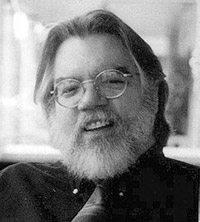
Robert M. Price, a noted Lovecraft scholar, discusses:

  • [li]The life of H.P. Lovecraft[/li]
    [li]The history of the Cthulhu Mythos[/li]
    [li]Lovecraft’s philosophy, religious beliefs and racism[/li]
    [li]The cultural impact of Lovecraft’s work[/li]

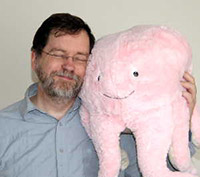
pzmyers.jpg

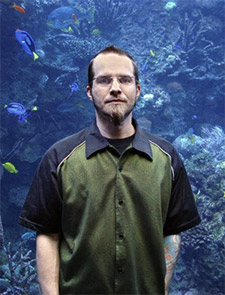
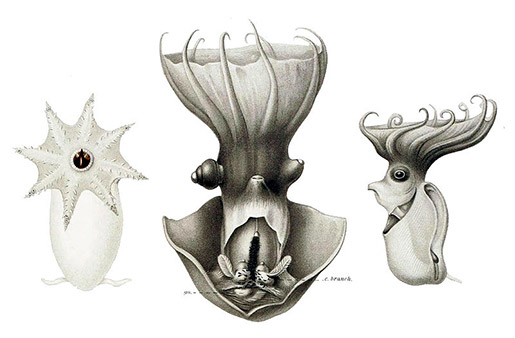
We then interview biologist PZ Myers about Cthulhu’s biological inspiration, discussing the weird alien biology and physiology of cephalopods.

Links of interest

More on PZ Myers’ favorite monster
Robert M. Price’s interview of ST Joshi on Point of Inquiry
Quirks and Quarks on the evolution of Cephalopod pseudopods: http://www.cbc.ca/quirks/archives/09-10/qq-2010-05-29.html


Music
Monstertalk Theme: Monster
by Peach Stealing Monkeys
Intro Music: Death by 1000psi

Robert W. Price
Interstitial Music: Goblin Dreams A.R. Morgan
Outro Music: Hey There Cthulhu by The Eben Brooks Band and used by special permission.
 

Back
Top Bottom