
You are using an out of date browser. It may not display this or other websites correctly.
You should upgrade or use an alternative browser.
You should upgrade or use an alternative browser.
Is this a real ghost?
- Thread starter Cainkane1
- Start date
-
- Tags
- ghost pictures ghosts
Axxman300
Philosopher

Nope.
As for my professional ghost-hunting opinion:
Nope.
Here's why:
There are two glass surfaces affecting this photo, the rear window, and the reflection from the front windshield (which you can see). What is unknown, but likely is that part of this comes from a reflection of something on the dashboard.
The rest is matrixing from the thick tree-line.
Creepy as heck until you look closer.
As for my professional ghost-hunting opinion:
Nope.
Here's why:
There are two glass surfaces affecting this photo, the rear window, and the reflection from the front windshield (which you can see). What is unknown, but likely is that part of this comes from a reflection of something on the dashboard.
The rest is matrixing from the thick tree-line.
Creepy as heck until you look closer.
Cosmic Yak
Philosopher

How do ghost believers explain how a camera, which just picks up the visible light coming in through the lens, is able to capture an image of a ghost that no-one else, i.e. the people who were there whose eyes work in exactly the same way, can see?
In conducting an analysis with the goal of reaching a defensible conclusion on such an object as the photograph in the OP, it behooves one to review the current state of the science. Allow me:
1. We know that people do not lie about the circumstances surrounding such a photograph
2. We know that it is impossible to have deceitfully manipulated so as to artificially produce such a photograph
3. We know that it is impossible for an initially-unobserved reflection to have appeared in such a photograph
4. We know that current lens grinding techniques make modern day cameras more capable of photographing ghosts
5. We know that items 1 through 4 rule out any other possibility
Given all the above, there is only one reasonable conclusion which all true skeptics will reach:
Yes. Yes, it is a ghost.
1. We know that people do not lie about the circumstances surrounding such a photograph
2. We know that it is impossible to have deceitfully manipulated so as to artificially produce such a photograph
3. We know that it is impossible for an initially-unobserved reflection to have appeared in such a photograph
4. We know that current lens grinding techniques make modern day cameras more capable of photographing ghosts
5. We know that items 1 through 4 rule out any other possibility
Given all the above, there is only one reasonable conclusion which all true skeptics will reach:
Yes. Yes, it is a ghost.
The 'modern lens grinding technique' is of course balderdash, but underneath is the fact that most if not all camera lenses can cover a larger spectral range than can the human visual system. For instance, IR-sensitive films and sensors used with the same lenses do form images.
So what we must point to instead is the resultant spectral coverage of the sensor and any built-in filtering applied by the coating on the sensor's cover glass. And just about all cameras designed for 'ordinary' photography will have IR rejection in the filtering if the sensor is sensitive to the near IR. Else the color balance could be harder to achieve, and chromatic aberrations could be unacceptable.
As an amateur astronomer, I'm well aware of such factors. Even to capture the red of hydrogen alpha emission, which is nearly 50nm blueward of the 700nm visual spectral limit, is often compromised by the built-in filtering. And so modified filters can be obtained for some cameras which have an extended red response whereby the red end cut-off is steeper (but not extended into the near IR) so that the H-alpha emission line is much less aggressively attenuated.
At any rate, consumer grade cameras have no better spectral coverage than our own eyes, unless specifically operating in a 'night shot' mode wherein there is extended spectral coverage into the near IR. Such a daytime photo as shown in the OP's linked-to page is almost certainly not covering outside the same ~400-700nm visual spectral range.
The presence of glass which is strongly indicated is seemingly providing a reflection, providentially positioned.
So what we must point to instead is the resultant spectral coverage of the sensor and any built-in filtering applied by the coating on the sensor's cover glass. And just about all cameras designed for 'ordinary' photography will have IR rejection in the filtering if the sensor is sensitive to the near IR. Else the color balance could be harder to achieve, and chromatic aberrations could be unacceptable.
As an amateur astronomer, I'm well aware of such factors. Even to capture the red of hydrogen alpha emission, which is nearly 50nm blueward of the 700nm visual spectral limit, is often compromised by the built-in filtering. And so modified filters can be obtained for some cameras which have an extended red response whereby the red end cut-off is steeper (but not extended into the near IR) so that the H-alpha emission line is much less aggressively attenuated.
At any rate, consumer grade cameras have no better spectral coverage than our own eyes, unless specifically operating in a 'night shot' mode wherein there is extended spectral coverage into the near IR. Such a daytime photo as shown in the OP's linked-to page is almost certainly not covering outside the same ~400-700nm visual spectral range.
The presence of glass which is strongly indicated is seemingly providing a reflection, providentially positioned.
Jack by the hedge
Safely Ignored

- Joined
- Oct 14, 2009
- Messages
- 23,014
... outside the same ~400-700nm visual spectral range.
So... you're saying it's a spectre?

tinribmancer
Hasbarian NWO Templar Cattle

How do ghost believers explain how a camera, which just picks up the visible light coming in through the lens, is able to capture an image of a ghost that no-one else, i.e. the people who were there whose eyes work in exactly the same way, can see?
^this right here always pisses me off when reading so called "ghost are real, here's a recording/picture" BS..
Brain Dunning made a nice video about this:
Which makes me wonder why these ******** can get away with their TV scam show...
Then again, AE911Truth has been getting away with selling bull for 15 years, so...
CORed
Penultimate Amazing
I don believe in ghosts but unless its a reflection which it probably is its a good fake.
Reflection or photoshop. Take your pick.
abaddon
Penultimate Amazing

I don believe in ghosts but unless its a reflection which it probably is its a good fake.
Do ghosts have such obviously out of scale heads for some reason?

No reflections or photoshop involved.
TripleScorp
New Blood
- Joined
- Feb 3, 2017
- Messages
- 18
I wonder if the family even realizes the reflection or if they're seriously looking back at this photo and freaking out.
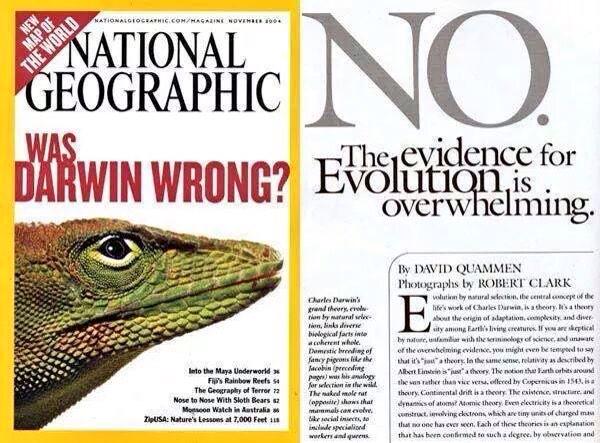
Thank you!en.wikipedia.org/wiki/Betteridge%27s_law_of_headlines
eta welcome in and [.dogpile.com is your friend!!!!!
JohnG
Pedantic Bore

I just can't get behind an idea of an afterlife that in any way involves baseball caps.
Fast Eddie B
Philosopher

If the headline ends in a question mark, the answer should be assumed to be "no".
I had not heard of that law, but a great example:
Learjet
Thinker

- Joined
- Jul 1, 2010
- Messages
- 173
...
As an amateur astronomer, I'm well aware of such factors. Even to capture the red of hydrogen alpha emission, which is nearly 50nm blueward of the 700nm visual spectral limit, is often compromised by the built-in filtering. And so modified filters can be obtained for some cameras which have an extended red response ...
Amateur astronomer here also. The latest ghost hunting fad is with full spectrum cameras. As such there are quite a few models available that have been modified for ghost hunting, for which I am grateful for my interest in astrophotography and infrared scene photography.
According to one of the commenters in the link in the OP, it's a "confederate soldier"...wearing a baseball hat.
Not a Yankees, one would suspect.
Last edited:
tinribmancer
Hasbarian NWO Templar Cattle
According to one of the commenters in the link in the OP, it's a "confederate soldier"...wearing a baseball hat.
Maybe that soldier is a baseball fan and was on his way to the stadium. So, when he saw that car with a girl being photograph, he probably thought: "when I was alive, I loved getting photographed. You know what? I going to stand right next to that guy and smile when he's taking a picture from that girl, just like the good old days before I head to the stadium".
And the rest is history.
I once came across a guy on another forum, who ran ghost tours for a living, and who claimed to be a professional photographer, who made one of the silliest comments I've seen about ghosts and cameras.
He claimed that 'modern lens grinding techniques' allowed camera lens to pick up more of the electromagnetic spectrum and this allows new cameras to be better at photographing ghosts. What do you even say to something like that?
Boy, that is stupid, you idiot something!!!!!!!!! - as is the guy who claimed you!!!!!!!!!
^this right here always pisses me off when reading so called "ghost are real, here's a recording/picture" BS..
Brain Dunning made a nice video about this:
Which makes me wonder why these ******** can get away with their TV scam show...
Then again, AE911Truth has been getting away with selling bull for 15 years, so...
Because there are idiots running around out there who find the world much more fun if there is imaginary **** running around in it!!!!!! Hopefully they will leave their brains to science. Real soon!!!!
Bluegill
Graduate Poster

- Joined
- Oct 17, 2002
- Messages
- 1,243
Does anyone think this might be an example of pareidolia? Or maybe that's not quite the right word for this, if it is--what I mean is, maybe the combination of background vegetation and pixelation just by chance made a very dude-in-a-baseball-cappy illusion.