turingtest
Mistral, mistral wind...

I hope that one won (or at least was nominated for) a TLA.


Have you read Barbara Tuchman's "The Guns of August" yet? If not, please do so and return to this thread. You lack some important foundational knowledge for this discussion.
Geoffrey Wawro's A Mad Catastrophe and Fromkin's Europe's Last Summer are my recommendations.Robert Massie's Dreadnought would be good, too, though that might be a bit involved for Bubba.
That was excellent.

I hope that one won (or at least was nominated for) a TLA.

Ummm... there wasn't anything secret about the run up for war. The only things that were unclear were what side Italy would be on and would Turkey enter the war. That there would be another European War was a forgone conclusion after the Franco Prussian War in the 1870s that forced France to cede Alsace Loraine.

The actual facts, as opposed to the rantings of a paranoid conspiracy nut are even more intriguing and astonishing. A complex web of alliances, treaties and stupidity meant that war was more or less inevitable when it finally broke.
Robert Massie's Dreadnought would be good, too, though that might be a bit involved for Bubba.
Why?
That's a fair question, Bubba. I think that was an unnecessary dig at you on my part, and I apologize for it. If you haven't read the book, though, you should. You'll see that CTs about "secret origins" and "new world orders" simply aren't necessary.
... You'll see that CTs about "secret origins" and "new world orders" simply aren't necessary.
Ummm... there wasn't anything secret about the run up for war. ...

I'd vote for noting trends, behaviors, correlations, etc instead of looking for some certain critter wearing a hat with NWO printed on it.
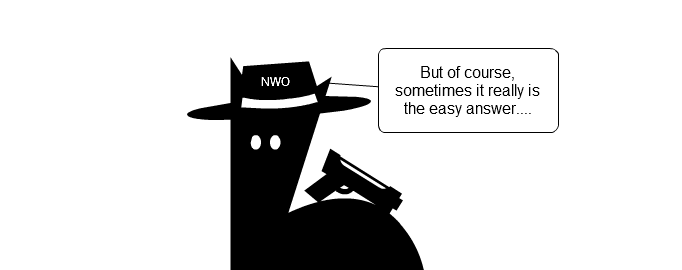
Whoa, how can one know that?
Isnt there a descriptive term for that skill?
God, I love that post. I've quoted you without attribution to some European co-workers.
A couple of book recommendations if you really want to know about WWI's origins:Why?

I'm sure Robert Massie's Dreadnought is a good informative read, thanks.
"Secret origins" implies secrecy is involved.
In war and in other business practices, secrecy seems fairly commonplace, doesn't it? Or is that only in the movies?
Secret deals made in back rooms, corporate spies, surprise attacks, codes, military spies, code breaking, dirty campaign tricks, etc, flying a false flag on your ship to trick the other guys into lowering their guard, etc, blowing stuff up and blaming others or wearing their uniforms, secret handshakes, etc. Secrecy greases the rails.
It only makes sense (to me) that in war and business, secrecy would be used whenever possible to gain advantage. Hence it seems reasonable to say that it sometimes succeeds without being detected, because some guys are smart enough or lucky enough. Haven't some of those military classified secrets remained classified for years before finally being unclassified? I wonder what was the longest time period for classification of secret stuff.
Since it makes sense that secrecy would be used because it can effectively deliver advantages, it therefore seems logical to me that
a) secrecy is used often, and therefore
b) it has succeeded on occasion, and we will never know because it is secret.
Didnt the Manhattan project succeed in being undetected for a while? Dont conspirators in crime and govt need to keep their stuff secret, even if they wind up getting caught? Is it reasonable to claim there has never been any successful (secret) conspiracies pulled off? How surprised should one be if it turned out that there were secret origins leading to war?
Seems like secrecy is the way to go for bad guys, and for good guys wanting to stop the bad guys. Power corrupts, secrecy improves the odds for the power mad bad guys. Secrecy helps the good guys win.
Why would you, as a clever military/corporate/tyrant evil unscrupulous bad guy, knowing the advantages, not operate in secret whenever appropriate (whenever you think you can get away with it) in order to gain power, gold, land, slaves, fame, whatever?

I posted a simplified explanation a few years back that one or two people quite liked...

Just make sure they put the hole in the right place.It's as valuable a discussion as what kind of tack should I get for my unicorn...

Geoffrey Wawro's A Mad Catastrophe and Fromkin's Europe's Last Summer are my recommendations.
That was excellent.
I concur that Dreadnought is something of a must read.
It's really clearly written and, considering the amount of stuff going on, not that large a book.
I also liked "Castles of Steel", even though there were some minor sloppy errors in it and it more or less ended after the Battle at Jutland.'Dreadnought" is very good but it's mainly about why Germany and Britain went to war;it's not really concerned with why the other great powers went to war. Almost nothing on Russia,France,the Balkans and Austria Hungry. That's not a criticism, the story of how the friendship between Germany and Britian went bad is the story Massie wanted to tell.But you really need other books to understand the origin or World War One.
I also really liked "Castles of Steel",Massie's sort of sequel to Dreadnought,which tells the story World War One at sea,with Britian and Germany being the two main combantants.

