How cold is it on Mars, really?

Live monkey (or any primate) lungs might suffer from the low pressure though.

Yes, for an unprotected person (or monkey) on Mars, as in outer space, asphyxiation would be the first problem and also the one that leads to death. The second problem is the lack of atmospheric pressure which is decidedly unhealthy for the human body in anything but the short term.

The temperatures on Mars are more of a side issue. Any structure that provides a breathable atmosphere and sufficient pressure would easily (for space values of "easy") be designed to deal with the temperatures as well. This goes both for a hab and a personal space suit.
 
Because the moon is right next door astronomically speaking. We'd be facing the same (or only slightly worse) issues with radiation, temperature, etc but that would be, in my opinion, highly offset by a 2-3 day travel time (versus a travel time so long it pretty much every scenario I've seen requires a one way trip) and (near) instantaneous communications. We took off and landed on the moon nearly 50 years ago. It's a proven place we can get to and get back to.

The moon is very close, but the delta-v required to land on its surface is higher than for Mars because the Moon does not have an atmosphere that allows a spacecraft to shed velocity without burning propellant. Propellant and rocket mass increase very quickly with higher delta-v requirements, thus putting mass on the surface of the moon is actually harder and more expensive than placing it on Mars.

To return from the Moon a lot less delta-v is required, therefore smaller vehicles and less propellant need to be placed there to begin with (see Apollo), but this does not apply to mass that is intended to stay on the Moon (i.e. a base).

The Moon also has a lot fewer (and more difficult to access) useful resources that could be used to build a base or produce propellant. There is virtually no carbon and water is not nearly as ubiquitous as it is on Mars. Thus the supply of hydrogen and oxygen is limited. On Mars, using existing technology, spacecraft fuel and oxidizer can be produced simply from the atmosphere, if hydrogen is transported to the planet. Among other things, the more abundant and more accessible resources mitigate Mars' disadvantage in terms of the delta-v budget of return vehicles.

Regarding mission duration, almost all manned Mars missions are designed to return the crew. See the NASA Design Reference Architecture as an example:
https://www.nasa.gov/pdf/373665main_NASA-SP-2009-566.pdf

Travel times to and from Mars are usually around 200 days each and total mission length varies between 2 and 4 years.
 
Last edited:
It would take a lot of energy to keep the evil solar radiation at bay.

That's the biggest issue with Mars.

The radiation environment on Mars is significantly better than that on the ISS:
http://www.jpl.nasa.gov/spaceimages/details.php?id=PIA03480

And a deep lava tube is far more than you need to shield from what's left. Radiation is mainly an issue for transit to Mars, being roughly 2-3x as intense in open space as at the ISS, and a reason to try to keep the trip as short as possible.

Remember, you're going to have to move a lot of equipment and structures into your living space, and unless you're incredibly fortunate in finding a stable opening that provides convenient access to the interior, using a lava tube will likely mean doing a lot of heavy boring/earthmoving to create an access tunnel. It's probably more practical to build on the surface and shield with sandbags/jugs of frozen water/etc. Put some greenhouses on the roof, short-lived plants won't care as much about radiation.
 
The radiation environment on Mars is significantly better than that on the ISS:
http://www.jpl.nasa.gov/spaceimages/details.php?id=PIA03480

Hm, half that on ISS. Interesting, thanks :)

Remember, you're going to have to move a lot of equipment and structures into your living space, and unless you're incredibly fortunate in finding a stable opening that provides convenient access to the interior, using a lava tube will likely mean doing a lot of heavy boring/earthmoving to create an access tunnel. It's probably more practical to build on the surface and shield with sandbags/jugs of frozen water/etc. Put some greenhouses on the roof, short-lived plants won't care as much about radiation.

There is no need for an or-or decision as far as I can see. Put some structures on top and some underground, and you're set. Colonization would have to be done in multiple waves anyway, first explore the area with robots, prepare it, dump the necessary equipment there in several trips, maybe even have robots dig the necessary holes and pre-place everything and only then send the pioneers in. If Mars had flowing water recently there could be readily available caves already there.

Colonizing the Americans in the 16th century was a pleasant picnic compared to colonizing Mars though. Ideally you'd want to terraform it, but without magnetosphere that'll be rather hard to do. We could vector a few dozen icy comets in and it would start to look like Earth 2 within a century or two.

Hm. Mars loses 100 grams of atmosphere a second, or about 2.4 kg a day, roughly a ton per year. That's ... replaceable, actually. A single comet could take a million years to be blown away, so that's not a game killer. The upside is that we'd get the necessary technology to divert asteroids if and when that becomes relevant.

McHrozni
 
Warning - there be spoilers here!

If you recall, they have overshot their landing target by 75 km, the overloaded rover only got them part way to the Workshop Module before it broke down, so they were facing a 16 hour walk in -35°C dropping to -70°C. The question would really be, how efficient are their EVA suits?

I have to say that I am very disappointed in the series so far. Yes, the sets and special effects are very good, but the script has the characters making fundamental errors that defy belief.

1. The mission commander had to leave his command seat to perform emergency maintenance during re-entry. With only seconds to go before retro-thruster firing, instead of climbing down to safety, he tried to climb up, and when the RTs fired, he lost his grip and fell about 15 feet at high G, sustaining an injury that was eventually fatal,. If he had climbed down, he would not have fallen.

2. The crew communications back to mission control is a shambolic mess. They are unclear in what they are saying. The second in command mumbles a lot instead of making her decisions and commands clear and concise.

3. In episode three, one of the crew members finds a panel missing from a piece of equipment he is responsible for. He finds that another crew member has cannibalized some parts for another job, and has left exposed wires inside. When the crew member reaches in to find out why the equipment is not working, it sparks and he gets a shock.

4. Also in episode 3, they have to winch a member of the crew 200m down into a lava tube to look for a flat area so they can erect their living area dome. Its very, very dark when she gets to the bottom, and what does she do? She unhooks herself from the winch cable, and with spotlights only on the front of her EVA helmet, she takes a a few steps backwards and almost drops into a deep canyon.

Now, I know that there is a need for some dramatic license to make things a bit exciting for the viewers, but some of this is beyond ridiculous. These people are supposed to be highly trained ASTRONAUTS!!!

- no astronaut would make such a poor decision as the commander did;

- no astronaut would mumble incoherently when communicating with other crew members and with Mission Control,

- no astronaut would cannibalize a piece of equipment without following a strict procedure and without the express knowledge of the crew member responsible for that piece of equipment.

- and finally, no astronaut would ever, ever, ever step backwards in the pitch dark in a completely unfamiliar area.


I started reading the thread, arrived at your post then decided I wanted to watch the series before reading further, my thanks for the spoiler warning.


I agree entirely with what you've said above. One of the joys of The Martian is that the NASA crew actually behave like a NASA crew, there are none of the artificial social tensions that are often introduced to create dramatic tension where none would exist - NASA choose their long term assignee groupings really carefully.
 
Given the energy costs, I suspect that if we could divert comets to impact mars in most cases there would be more economical things to do with them. I suppose we might get lucky with a comet or two that was already on a very close orbit, but in general those things are big, and the delta v will be quite large as well.

If we have the technology to move comets around the solar system I think we might as well just colonise them directly.
 
So am I missing something, or is the cold on Mars not as big a challenge as portrayed in popular media?


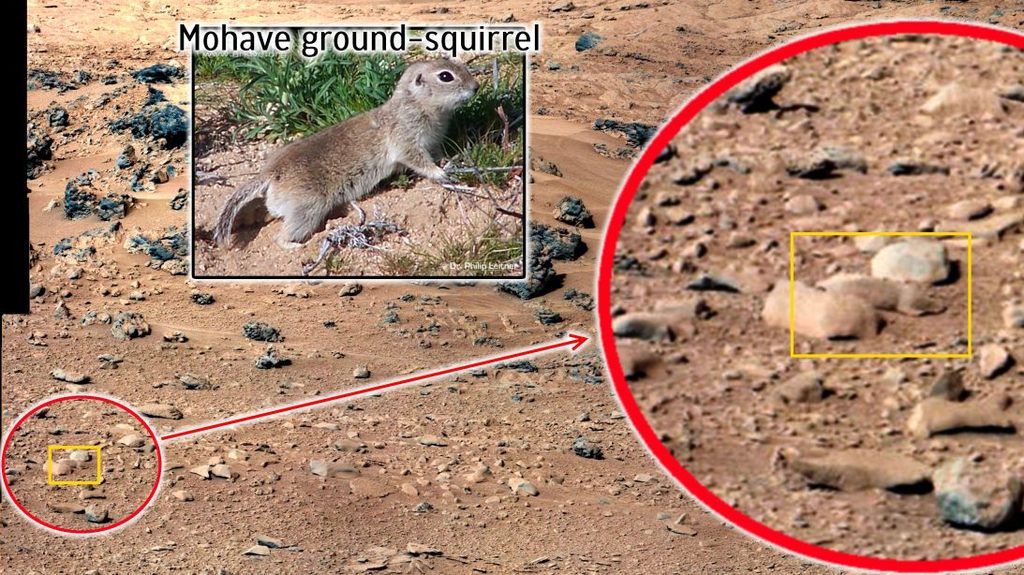
It's not that big of a Challenge, "Life" already exists on Mars...

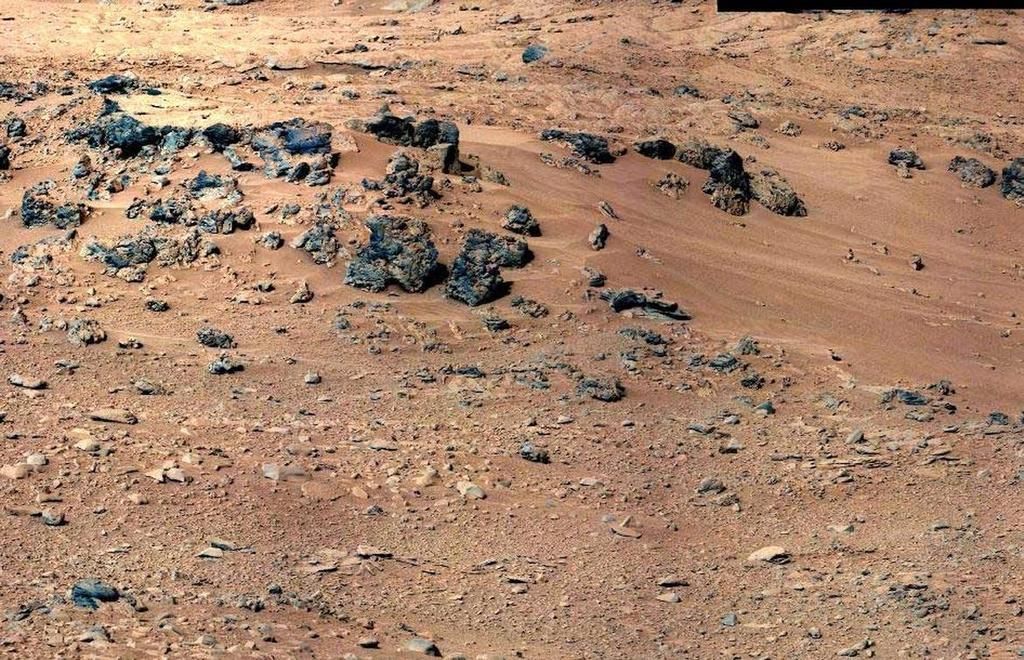
Life%20on%20Mars_zpspqsp1f1y.jpg


https://www.nasa.gov/images/content/694114main_Watkins-2-pia16204_full.jpg


Life%20on%20Mars%202_zps59mkmnnt.jpg


Reached for comment 'nasa' "Officially" stated: " No Comment ".

"Unofficially" 'nasa' Astrobiologists (who spoke collectively under the condition of ambiguous anonymity--- who affectionately called it: "That Wascally Weasel" ) are forced to conclude --- due to the complete absence of fossils on the entire planet, that evolution (Whatever that is...they didn't know when queried) has been "Ruled Out" and since the rocks found beside the furry vermin 'Carbon-Dated' to 18.2 Billion Years (+/- 18.2 Billion Years) --- that this is a clear case of an " Immortal Furry Varmit " that "POOFED" itself into existence WHOLE --- from absolutely nothing, some time before the 'big bang' --- solely from it's inherent/non-inherent deterministic Free Will --- who 'burrowed' (Quantum 'Squirrel' Tunneling perhaps ??) it's way through almost all of the 10 560 (+/- 10 560 ) other universes sustaining itself on dark matter acorn remnants before red-shifting through a black-hole into 'Mars Reality'.

Next up: Achromatic Rainbows on Neptune. Followed by...

The World Premiere: "How you can have a Vacuum attached to a Non-Vacuum in the same system, simultaneously ...and the Death of the 2nd Law of Thermodynamics."


regards
 
Given the energy costs, I suspect that if we could divert comets to impact mars in most cases there would be more economical things to do with them. I suppose we might get lucky with a comet or two that was already on a very close orbit, but in general those things are big, and the delta v will be quite large as well.

If we have the technology to move comets around the solar system I think we might as well just colonise them directly.

A comet usually has an orbit that makes it unsuitable for colonization in the first place.
I'm not talking about moving comets around at will, btw. I'm talking about taking a comet in a convenient orbit and rerout is into Mars. That's a lot easier than picking a comet and moving it to Mars.
It may not be doable every century though.

McHrozni
 
Hm. Mars loses 100 grams of atmosphere a second, or about 2.4 kg a day, roughly a ton per year. That's ... replaceable, actually. A single comet could take a million years to be blown away, so that's not a game killer. The upside is that we'd get the necessary technology to divert asteroids if and when that becomes relevant.

That's interesting. I had not thought the numbers to be so low. Is that the current mass loss or the projected loss once the density is increased and composition changed to create a breathable atmosphere?

Given the energy costs, I suspect that if we could divert comets to impact mars in most cases there would be more economical things to do with them. I suppose we might get lucky with a comet or two that was already on a very close orbit, but in general those things are big, and the delta v will be quite large as well.

If we have the technology to move comets around the solar system I think we might as well just colonise them directly.

Without having done the math, I suspect that the delta-v could be quite modest if orbits are modified hundreds or thousands of years before the Mars rendezvous.
Having said that, while simply smashing a comet into Mars might be fairly simple, this would really only be an option in the early stages of terraforming and certainly not when the planet is inhabited. At that stage, the comet would have to be brought into a stable, tightly managed orbit, likely using aerocapture and braking. The orbit would then need to be lowered slowly until most of the mass is eroded away into the atmosphere. I doubt that existing or even projected propulsion technology would be able to sufficiently control the orbit of such a large mass.

Generally however, I am not sure if comet diversion would be required. As far as I know, there is enough raw material on Mars to create a breathable atmosphere. Replacing the losses, even if one or two orders of magnitude higher than the number McHrozni posted, should be fairly easy for a civilization that has shipped enough mass to Mars to terraform it.
 
That's interesting. I had not thought the numbers to be so low. Is that the current mass loss or the projected loss once the density is increased and composition changed to create a breathable atmosphere?

I have no idea, but it probably does increase with atmosphere density. Even if it's 100 times that it's still reasonably replaceable though. Crash one comet more than you need and you're set for fifty millennia or so.
Mars atmosphere has a pressure of 6 mbar at attitude 0 however you define that, a human can survive on a pressure of 600 mbar well enough without a breathing mask, if there is enough oxygen (~20%). We can survive on a pressure half that with a breathing mask. It's not ideal but it's doable.

Without having done the math, I suspect that the delta-v could be quite modest if orbits are modified hundreds or thousands of years before the Mars rendezvous.

Yeah. We need to predict which comets would fly near Mars sometime reasonably soon and alter their trajectories so they hit the planet sometime in the future. It's a very long-term plan though.

Having said that, while simply smashing a comet into Mars might be fairly simple, this would really only be an option in the early stages of terraforming and certainly not when the planet is inhabited. At that stage, the comet would have to be brought into a stable, tightly managed orbit, likely using aerocapture and braking. The orbit would then need to be lowered slowly until most of the mass is eroded away into the atmosphere. I doubt that existing or even projected propulsion technology would be able to sufficiently control the orbit of such a large mass.

Aerocapture and breaking are a problem if the atmosphere has a pressure of 6 mbar at ground level. That's some 350 times less than Earth.

Generally however, I am not sure if comet diversion would be required. As far as I know, there is enough raw material on Mars to create a breathable atmosphere. Replacing the losses, even if one or two orders of magnitude higher than the number McHrozni posted, should be fairly easy for a civilization that has shipped enough mass to Mars to terraform it.

Comets have several advantages. They bring water to the planet, which I assume is in short supply there. It exists yes, but we've evolved to live on a planet where 2/3 of surface is covered with water, usually miles deep. Mars has enough for a small colony to survive, but if we're talking about making Mars habitable for anything beyond a few small outposts we'll need more water. Comets provide that.

The second advantage of the comets is that they should bring proportionally far more mass, especially water, on the planet we could ever ship from anywhere, be it Earth, Europa or wherever. We don't know enough about Martian geology to say for certain there are sufficient resources to build and maintain a breathable atmosphere there, and comets are a neat way of bringing the raw material there.

The third advantage is that it's simply cool to hit a planet with a comet :)

The composition of Maritan soil shows that bringing water might be quite useful:

https://en.wikipedia.org/wiki/Marti...72-MarsCuriosityRover-RoverSoils-20121203.jpg

Sodium and potassium oxides will decompose into sodium and potassium hydroxides spontaneously. Phosporous pentoxide will form phosporic acid spontaneously, sulfur oxide will form sulfuric acid, nickel and zinc will also dissolve into basic hydroxides. You end up with salty water that could have a useful pH to work with right away. If not the solution is to bring in more water to dilute the soup.

McHrozni
 

Back
Top Bottom