• Quick note - the problem with Youtube videos not embedding on the forum appears to have been fixed, thanks to ZiprHead. If you do still see problems let me know.

Bazant in a nutshell

Bazant had zero evidence 48 hour post collapse that there was not some other mechanism i.e bombs, explosives, hand of god..involved in the collapses. It's a terrorist attack for crying out loud.

Yes.

Yet he somehow has all this 48 hours later?
Can he prove it mathmatically, sure, but why bother so early? Who is he trying to impress or convince?

In fact, he didn't prove it. That's the point. This has been shown by others. Not only is his guess wrong, but his calculations on his wrong model not only grossly over-exaggerate available energy, but ignore critical energy sinks. It's a clown show through and through.
 
Yes.


In fact, he didn't prove it. That's the point. This has been shown by others. Not only is his guess wrong, but his calculations on his wrong model not only grossly over-exaggerate available energy, but ignore critical energy sinks. It's a clown show through and through.
Surely you want mind showing where he "grossly exaggerated" the energy?

What was it you do again?
 
Yes.


In fact, he didn't prove it. That's the point. This has been shown by others. Not only is his guess wrong, but his calculations on his wrong model not only grossly over-exaggerate available energy, but ignore critical energy sinks. It's a clown show through and through.

There were no bombs on 911, I saw the building collapse, no bombs were present. I have been in combat and close to bombs, there were no bombs used on 911. Sorry, it is a fact, and you don't seem to have the math, physics, or experience to comment on the issue of bombs.

His model is not wrong, your claims are delusions. You can't do the math to prove anything. You comments are nonsense. Calling an engineer who you can't comprehend, a clown, is priceless.

Can you put numbers to the energy? No. Why?
Because this is your fantasy physics, it is not real.
http://www.internationalskeptics.com/forums/showpost.php?p=6263596&postcount=621
 
Last edited:
In a way, his response to the question of what he does is his answer, I'm figuring. He responded with nothing.
The interesting factor for me is that I spent some time assembling a fairly high level reasoned response to lexicon and he has not acknowledged it. ("YET???" - maybe...:boggled:)

ergo's stuff is the usual trolling trivialities...

HOWEVER iirc there is an argument that Bazant overestimated the energy....

...and there is a rational rebuttal available -- in the form of "So what?" by showing no net effect.

But given the low level of interest by the member who posted the question.....

....it can wait. We may never reach that stage of reasoned discussion. :rolleyes:
 
Oz,

My objection to Bazant is the 48 hour timeframe. That is my own personal roadblock since no investigation had even started. While I completely agree that what he postulated was possible, he had at that time assumed things that were not known at the time.
For example,
Firstly, "the conflagration caused by the aircraft fuel spilled into the structure
causes the steel of the columns to be exposed to sustained temperatures apparently exceeding 800ŽC."
No analysis had been done so he could not possibly know what temperatures were in play. He could postulate based on the energy available from fuel fires but that is simply a guess really.
Second, there was no evidence that "prolonged heating caused the majority of columns of a single floor to lose their load carrying capacity" 48 hours post collapse. No one even knew how many columns had actually been damaged at that point. Realistically the known damage was what could be seen that that was the exterior columns. Until someone actually saw that the inward bowing had occured (and i'm not sure if that was known 48 hours post collapse) there was no real way to know how many affected columns there were.
Third, "The heating is probably accelerated by a loss of the protective thermal insulation of steel during the initial blast." while again a postulation could be made here based on the energy of impact, this feature was again unknown until much later.

He also indicated that if the upper floors had not remained as a static block then the tower would likely not have collapsed fully.

Again, what he is saying makes sense, but it uses alot of assumptions and information that at the time was unknown. From a purely thought experiment point of view it works, but as you have shown, his model does not reflect the complex reality of the collapses.
 
Oz,

My objection to Bazant is the 48 hour timeframe. That is my own personal roadblock since no investigation had even started. While I completely agree that what he postulated was possible, he had at that time assumed things that were not known at the time.
For example,
Firstly, "the conflagration caused by the aircraft fuel spilled into the structure
causes the steel of the columns to be exposed to sustained temperatures apparently exceeding 800ŽC."
No analysis had been done so he could not possibly know what temperatures were in play. He could postulate based on the energy available from fuel fires but that is simply a guess really.
Second, there was no evidence that "prolonged heating caused the majority of columns of a single floor to lose their load carrying capacity" 48 hours post collapse. No one even knew how many columns had actually been damaged at that point. Realistically the known damage was what could be seen that that was the exterior columns. Until someone actually saw that the inward bowing had occured (and i'm not sure if that was known 48 hours post collapse) there was no real way to know how many affected columns there were.
Third, "The heating is probably accelerated by a loss of the protective thermal insulation of steel during the initial blast." while again a postulation could be made here based on the energy of impact, this feature was again unknown until much later.

He also indicated that if the upper floors had not remained as a static block then the tower would likely not have collapsed fully.

Again, what he is saying makes sense, but it uses alot of assumptions and information that at the time was unknown. From a purely thought experiment point of view it works, but as you have shown, his model does not reflect the complex reality of the collapses.
None of the objections apply to the first paper.
 
Oz,

My objection to Bazant is the 48 hour timeframe. That is my own personal roadblock since no investigation had even started. While I completely agree that what he postulated was possible, he had at that time assumed things that were not known at the time.
For example,
Firstly, "the conflagration caused by the aircraft fuel spilled into the structure
causes the steel of the columns to be exposed to sustained temperatures apparently exceeding 800ŽC."
No analysis had been done so he could not possibly know what temperatures were in play. He could postulate based on the energy available from fuel fires but that is simply a guess really.
Second, there was no evidence that "prolonged heating caused the majority of columns of a single floor to lose their load carrying capacity" 48 hours post collapse. No one even knew how many columns had actually been damaged at that point. Realistically the known damage was what could be seen that that was the exterior columns. Until someone actually saw that the inward bowing had occurred (and i'm not sure if that was known 48 hours post collapse) there was no real way to know how many affected columns there were.
Third, "The heating is probably accelerated by a loss of the protective thermal insulation of steel during the initial blast." while again a postulation could be made here based on the energy of impact, this feature was again unknown until much later.

He also indicated that if the upper floors had not remained as a static block then the tower would likely not have collapsed fully.

Again, what he is saying makes sense, but it uses alot of assumptions and information that at the time was unknown. From a purely thought experiment point of view it works, but as you have shown, his model does not reflect the complex reality of the collapses.

This post shows you have no idea what Bazant's paper is about. His model does reflect the complexity of the collapse, but your lack of knowledge in engineering and structures, is keeping you in the 911 truth woo repetition competition. Can't believe you are trying to leave 911 truth, but you use silly stuff to show you don't do engineering, and don't understand models.

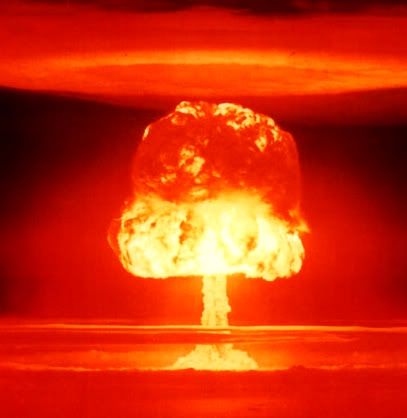
E=mc2Models the reality of this...
111nukeweapon.jpg

But you don't do models
Next time read the paper, it will keep your post on your own topic...

... He also indicated that if the upper floors had not remained as a static block then the tower would likely not have collapsed fully. ...


It would be better to state his assumptions, instead of making up stuff.

This paper3 presents a simplified approximate analysis of the overall collapse of the towers of World Trade Center in New York on September 11, 2001. The analysis shows that if prolonged heating caused the majority of columns of a single floor to lose their load carrying capacity, the whole tower was doomed. The structural resistance is found to be an order of magnitude less than necessary for survival, even though the most optimistic simplifying assumptions are introduced.

Where in the paper does he say the static block stuff? How about block? Which paper are you talking about? Did you read the paper?
 
Last edited:
"An important hypothesis implied in this analysis is that the impacting upper part, many
floors in height, is so stiff that it does not bend nor shear on vertical planes, and that the
distribution of column displacements across the tower is almost linear, like for a rigid body
.

To me this sounds like the "rigid body" must act as a single block that does not bend or shear vertically. The visual record shows that several of the floors collapsed once the upper block started falling and from there it is obscured by dust so we can't say one way or the other if bazants model is in fact what occured.

"If, however, the upper part spanned only a few floors (say, 3 to 6), then it could be so flexible that different column groups of the upper part could move down separately at different times, producing a series of small impacts that would not be fatal."

Why Did the World Trade Center Collapse?—Simple Analysis
By Zdenek P. Bazant, Fellow ASCE, and Yong Zhou
Journal of Engineering Mechanics ASCE, in press 9/13/01, Expanded 9/22/01, Appendices 9/28/01

This implies to me that unless we can verify that the number of floors in the "rigid body" exceeded 6 and that there was no vertical shear or bending, the collapse was not definitely fatal.

I have read his subsequent papers and alot of the above assumptions have been elaborated on. Which is part of the reason that I have lightened my stance on the CD vs no CD argument.

I have no objection to Bazant showing it could collapse..I just don't feel Bazants model explains how it did collapse.

Just as an aside, what were the theories of what would happen when the a-bomb was detonated beach? Were they all sure it was going to be a fancy mushroom cloud?
 
lexicon008;9324901... Just as an aside said:
BINGO - shows why you have problems with models, and what they are used for. Funny, they were calculating the energy of the nuke with math. Like Bazant, using math to explain why. Then 911 says, don't look right. Because 911 truth has no use for math and physics in their world of woo.

Why is there a mushroom cloud? What would it look like in space? Don't cheat and look at the sun.

Bazant model was not made to explain to you and 911 why the collapse looked like a building falling, crushing itself with the massive amount of energy stored in it; E=mgh...

Why explain what you think Bazant implies, he wrote it down so you would not have to imply, you can quote the paper, present the math. With some math you could explain any mistakes Bazant made.

When 911 truth brings up Bazant, you know the people complaining can't do the math, have no clue what models are. Like pilots for truth claiming the poor flying of the terrorists were marvel of aviation, maneuver no new guy could do. Bazant, and the fantastic flying maneuver are both signs 911 truth has woo to follow. Where is your model? Ironically Ross's model shows no collapse; will Ross bet his life on his theory and stand at the top of the WTC, or in the middle below the impacts?

No CD on 911. How did 911 truth fool you with lies? What was it?

How long will it take to shake off all of the failed claims 911 truth infected you with? Where was the block stuff again?
 
Oz,

My objection to Bazant is the 48 hour timeframe. That is my own personal roadblock since no investigation had even started....
Thanks for this response. I'm quite sure that I understand where you are coming from and where your roadblock is. I am trying to build bridges to our common understanding.

I have been impressed with your posts and the willingness you show to apply reasoning. That is why I wrote the earlier comprehensive replies. I rarely post these days because the technically interesting discussions are mostly over. You appear to me to be a genuine sceptic and wanting to think for yourself. That is rare and I see that you are getting the usual polarised objections. I try to ignore the nonsense, also the trolling and reverse-trolling. :) I usually succeed - but not always. :o

Let me see if there is a possibility of us working through your concerns.

(Note I intend to give step by step responses to your post - I would prefer if you could put yourself into the context I explained in my post #160 - my belated apology for the aggression in the setting of the post - It was an attempt at getting attention away from the detailed nit picking you were being subjected to - it failed... :o - however let's try it your way for now.)

While I completely agree that what he postulated was possible,...
...a point of agreement.

...he had at that time assumed things that were not known at the time...
I think most of them were in the public domain of the world of engineering. Therefore legitimate assumptions to an engineer especially one of his academic standing. Let's see:

For example,
Firstly, "the conflagration caused by the aircraft fuel spilled into the structure causes the steel of the columns to be exposed to sustained temperatures..."
It was public knowledge that there was a conflagration. That it was caused by aircraft fuel was a reasonable conclusion even for lay persons. Ditto for sustained temperatures being a reasonable assumption - the actual degrees not available to lay persons but see next point.
apparently exceeding 800ŽC."
A reasonable assumption for him - a professional with ready access to the relevant generic data. If I had been forming the judgement I would have come at the issue from the other direction - he knew that the building collapsed from impact damage and fire damage which accumulated over time. So the temperatures must have been high enough to have an effect. ( And you can add in CD if you want - it doesn't change the argument. :rolleyes:) I wont complicate the discussion or set up potential derails at this stage - we can go into those bold assertions later if you are interested.

No analysis had been done so he could not possibly know what temperatures were in play. He could postulate based on the energy available from fuel fires but that is simply a guess really.
Not so. Research into building fires has been comprehensive over recent decades and the data well known to engineers and fire specialists. The difference with WTC 9/11 is more rapid start of the fires which was WTC specific. However that makes a worse case so he was on safe ground. Take care you don't fall for the trap of working from details when the big picture approach is readily available. - more on that later.
...Second, there was no evidence that "prolonged heating caused the majority of columns of a single floor to lose their load carrying capacity" 48 hours post collapse. No one even knew how many columns had actually been damaged at that point. Realistically the known damage was what could be seen that that was the exterior columns. Until someone actually saw that the inward bowing had occured (and i'm not sure if that was known 48 hours post collapse) there was no real way to know how many affected columns there were.
Please heed my caution about looking for details and missing the bleeding obvious.

The observable facts were that the buildings collapsed. That means that:
"Realistically the known damage was what could be seen that that was the exterior columns." >>> The known damage was that all the columns had failed. The building collapsed. No need to look for which one first or how many started it at this stage. Try working the logic from what is known in context. For this item it is "all columns failed". (If you want to include CD in the reasons I'm quite willing to leave CD on the table as a factor at this stage of our discussions.)

Third, "The heating is probably accelerated by a loss of the protective thermal insulation of steel during the initial blast." while again a postulation could be made here based on the energy of impact, this feature was again unknown until much later.
Don't miss the context - he is setting up an analysis AND don't miss the key word "probably". You are putting forward an alternate argument. Whether you are right or not matters little. His assumption of "probably" is valid for purposes of his paper. More important he is stating it for explanatory purposes - it had/has no effect on his argument - whether it was true or not was irrelevant to his paper. Note you cannot say that the the fire insulation remained in place despite the aircraft impact. (You could but I wouldn't be that game... :))

He also indicated that if the upper floors had not remained as a static block then the tower would likely not have collapsed fully...
Also valid BUT remember that it is a valid assumption for his paper. Whether or not it fits your reasoning for a different argument 12 years later is a separate issue.

Again, what he is saying makes sense, but it uses a lot of assumptions and information that at the time was unknown.
I'm suggesting that many of what you see as unsupported assumptions are based on known engineering facts. We can work our way through those if you wish

The second issue is that you are approaching your understanding from a different direction to either Bazant or me. We may need to work though that aspect also. Either from your direction OR from mine plus my interpretation of Bazant.


From a purely thought experiment point of view it works,...
Yes - and remember that was the second main purpose of the paper - though I doubt Bazant would use the terminology "thought experiment" ;)

...but as you have shown, his model does not reflect the complex reality of the collapses.
Agreed - but not only me - many others in the discussions here and elsewhere.

 
Last edited:
....
Why Did the World Trade Center Collapse?—Simple Analysis
By Zdenek P. Bazant, Fellow ASCE, and Yong Zhou
Journal of Engineering Mechanics ASCE, in press 9/13/01, Expanded 9/22/01, Appendices 9/28/01
At the start of the post you are referring to Bazant and Zhou. You change target in the middle of the post then you conclude apparently back with B&Z this:

I have no objection to Bazant showing it could collapse..I just don't feel Bazants model explains how it did collapse.
Take care when you switch horses in mid stream.

This conclusion would be correct:
I have no objection to Bazant [and Zhou] showing it could collapse..I just don't feel Bazant [and Zhou's] model explains how it did collapse
...to which I and many others would respond:

'Noted" and "It wasn't intended to"' respectively.

However for the middle of your post you start to change horses - change the object under discussion - with this:
...This implies to me that unless we can verify that the number of floors in the "rigid body" exceeded 6 and that there was no vertical shear or bending, the collapse was not definitely fatal...
The first bit applies to B&Z the latter misapplies the assumptions of B&Z to a different scenario. (Have you been mixing with Tony Szamboti and/or David Chandler -- that is the central error both of them have made in some prominent papers.)
...I have read his subsequent papers and a lot of the above assumptions have been elaborated on. Which is part of the reason that I have lightened my stance on the CD vs no CD argument...
There are far better sources of counter-CD explanations. Remember that the various Bazant et al papers focus on global collapse but:
A) They come from a perspective of academic abstraction and NOT "what really happened" so they carry all the limitations of assumptions which do not match reality; AND
B) Even in that abstract context they can only show "CD was not needed" (- which leaves open the subtle possibility in pure logic that CD was performed even though it was not necessary. that one needed fro dealing with logic pedants....:()

Just as an aside, what were the theories of what would happen when the a-bomb was detonated beach? Were they all sure it was going to be a fancy mushroom cloud?
I'll leave you to have fun with beachnut. :)
 
Last edited:
The first bit applies to B&Z the latter misapplies the assumptions of B&Z to a different scenario. (Have you been mixing with Tony Szamboti and/or David Chandler -- that is the central error both of them have made in some prominent papers.)
:)

actually no this didn't come from TS or DC it came from the BZ paper.
It was part of this paragraph...

"An important hypothesis implied in this analysis is that the impacting upper part, many floors in height, is so stiff that it does not bend nor shear on vertical planes, and that the distribution of column displacements across the tower is almost linear, like for a rigid body. If, however, the upper part spanned only a few floors (say, 3 to 6), then it could be so flexible that different column groups of the upper part could move down separately at different times, producing a series of small impacts that would not be fatal."

Again this, to me, implies that a non rigid body or an upper part of 6 or less floors would not necessarily lead to fatal collapse. Perhaps i am seeing a causality relationship that was not what was intended.

Perhaps i'm not a fan of the papers title.
"Why Did the World Trade Center Collapse?—Simple Analysis"

the first part implies that the paper is explaining the actual collapse dynamics (maybe i'm reading too much into it)
the second implies that the collapse was a simple thing..which it wasn't..block diagrams just don't work when the blocks are made up of thousands of parts that were shredded during the collapse.

The whole crush down/crush up thing..its not intuitive to me..seems far fetched from what i was taught in my university physics courses (amazingly i did pass them all)..but as beach likes to rant about..i'm not an engineer
 
Last edited:
actually no this didn't come from TS or DC it came from the BZ paper.
It was part of this paragraph...

"An important hypothesis implied in this analysis is that the impacting upper part, many floors in height, is so stiff that it does not bend nor shear on vertical planes, and that the distribution of column displacements across the tower is almost linear, like for a rigid body. If, however, the upper part spanned only a few floors (say, 3 to 6), then it could be so flexible that different column groups of the upper part could move down separately at different times, producing a series of small impacts that would not be fatal."
Thanks - I hadn't been checking B&Z

...Again this, to me, implies that a non rigid body or an upper part of 6 or less floors would not necessarily lead to fatal collapse. Perhaps i am seeing a causality relationship that was not what was intended...
you may be right - it is an areas where there has not been much discussion. I don't think the causality was intended in the setting of B&Z.

This is why I keep emphasising the setting for Bazant's first paper. He is not applying 2005-6----2013 hindsight with all the intervening discussion of truther claims.

The facts were simple at that stage. They still are. Plane struck and did damage, fires started and did more damage (add in a bit of CD if you want it still on the table for discussion at this stage) Top Part of Tower starts to fall.

This is the stage where Bazant asks "would it stop?" and subordinate questions about available energy.

Now at this point, if you and I are discussing it, we must rigorously decide to discuss what really happened NOT abstracted academic modelling.

...Perhaps i'm not a fan of the papers title.
"Why Did the World Trade Center Collapse?—Simple Analysis"...
I'm not a fan of academic papers which use complicated maths to confuse simple things. I am doubly not a fan of papers which hide behind complicated maths to claim to explain simple things in a complicated way WHEN the simple thing they explain is not what actually happened.

And it gets worse. The concept of the collapse initiation stage is simple - as a concept - in that it was a dynamic cascading failure. Easily said that way. Very complicate to explain and rarely even attempted. I will try it if you want but it comes later in discussion. However I am aware of many posting here from both "sides" who simplify that cascade failure and totally lose reality.

...the first part implies that the paper is explaining the actual collapse dynamics (maybe i'm reading too much into it)...
I'll read it again and get back to you on that BUT from memory the assumptions about the actual mechanism were comprehensively wrong.
....the second implies that the collapse was a simple thing..which it wasn't..block diagrams just don't work when the blocks are made up of thousands of parts...
True - but take care to distinguish the academic model from "what really happened". What happened in the real world certainly wasn't "rigid block falling". Bazant's paper made those assumptions for simplicity and "block" - whether rigid or semi-flexible/elastic - was and still is a valid assumption for his purpose. Just don't do what untold numbers of truthers and debunkers have done and believe it was what really happened.
...sense that were shredded during the collapse.
Take care - few were "shredded", surprisingly few were "buckled or crushed". Again another aspect worthy of separate explanation.
...The whole crush down/crush up thing..its not intuitive to me..seems far fetched from what i was taught in my university physics courses (amazingly i did pass them all)..
Same cautionary warning. It is utter crap in terms of what actually happened. At best is is a one dimensional academic simplification which may be of some value in some circumstances. It is worse than useless IMNSHO in the setting of 9/11 discussions where it has confused many people - it hinders many more than it has helped - they tend to think it applied to the real collapse. It didn't

...but as beach likes to rant about..i'm not an engineer
I get tired of the "engineer status" and "academic status" non-arguments. The test of what anyone says is "Is it true?" NOT all the phallic symbolism of "my degree is bigger than yours".
A) If an engineer says something which is wrong - it is wrong because it is wrong. Their engineering degree does not make it right nor by some magic correct their error.
B) Conversely if a non-engineer says something that is true it is true because it is true. It does not become false because the claimant is not an engineer.

(Plus several more variations on that theme... ;))

Bottom line is the "you're not an engineer" argument is not an argument - it is a personal attack. I quote the lawyers credo "If you have no case attack the witnesses" and the corollary which applies here "If they are attacking the witnesses they (almost certainly) have no case."

Rant over. Cheers for now.
 
Last edited:
Don't need to be an engineer to understand stuff

People make up their own model of Bazant's model, and don't try to explain his work at Bazant's level. They make up silly claims, and they complain because they are not engineers?

Sorry about the engineers stuff, I like Gravy, and the way he reads and comprehends stuff. I want to be what Gravy is. What is that?

I hate to see people say nonsense they picked up from 911 truth about Bazant, and the 48 hours crap, and fail. Please leave me behind, use some differential equations and show your own great model. I think the best attack on work, is doing better work, and not attacking work.


I don't need NIST or Bazant to tell me what happened. I saw the real full up models of WTC 1, 2, 7, 5, 6, 4, etc. 1 and 2 collapsed due to impacts and fire. I saw it on 911, two days before Bazant. I understand why, Bazant does too. The full up models can be models with simple models to help understand why it fell at the speed it fell, etc. Impacts and fire. My model used the full size WTC 1 and 2. I got it on video.

I know steel fails in fire, I know the WTC was steel with foam and wallboard insulation... My model is reality. I am an engineer, but anyone can understand 911, structures, and more better than I. I would rather fly, or have an engine fire flying then take more engineering courses. I would rather have red lights blinking and emergencies, then sit though a class.

But I laugh when silly claims about Bazant are made, and for no reason.

If you can't comprehend the collapse, then maybe you need to get help from an engineer, or Gravy.

When beach says you need to be an engineer, your response should be, I don't need no stinkin engineer to understand 911. Don't blink, stand up and be better than silly engineers, stand up. But don't attack work you don't understand in the first place, or the purpose; which was not done to debunk the nuts in 911 truth.

I like laypeople who are smart, don't need Bazant, but hate people who bash Bazant and don't have clue what they are saying. Why are people complaining and attacking stuff they can't understand? All you non-engineer are ... my betters; please live up to my ideal. (apple pie, the girl across town ... truth, justice, thrifty, etc...)
 
Don't need to be an engineer to understand stuff

Bazant's model was ...
a simplified approximate analysis of the overall collapse
Where is their simplified approximate analysis of the overall collapse?
Why is 911 truth fooled by the meaning of simplified?
Why is 911 truth fooled by the meaning of approximate?
Anyone got an answer?
The fact is the Bazant model should not be a topic for 911 truthers, they can't define or comprehend words. It turns out to be a way to identify nuts in 911 truth, when they realize they have no evidence.
 
Last edited:
actually no this didn't come from TS or DC it came from the BZ paper.
It was part of this paragraph...

"An important hypothesis implied in this analysis is that the impacting upper part, many floors in height, is so stiff that it does not bend nor shear on vertical planes, and that the distribution of column displacements across the tower is almost linear, like for a rigid body. If, however, the upper part spanned only a few floors (say, 3 to 6), then it could be so flexible that different column groups of the upper part could move down separately at different times, producing a series of small impacts that would not be fatal."
That paragraph is not in the paper published two days after the attacks. It's from the second B&Z paper published in JEM months after.


Perhaps i'm not a fan of the papers title.
"Why Did the World Trade Center Collapse?—Simple Analysis"

the first part implies that the paper is explaining the actual collapse dynamics (maybe i'm reading too much into it)
I think so. To me, the implied answer in the paper is, "because it just couldn't not collapse". Sorry for the double negative. Perhaps a better wording would be "because it was unstoppable once started".

Maybe you're confusing "Why" with "How".

From the context of the (first B&Z) paper, it's clear that the main focus of the paper is why it was unstoppable. He postulates a plausible reason for it to begin falling and then elaborates on the progression. So the main focus of the paper is why it couldn't be stopped.

Remember I'm talking about the B&Z paper published in SIAM News all the time. That's the one which was published two days after the attacks. You seem to be mixing several papers. Please focus on one at a time only and leave clear which one you're referring to. If your objection is the date of publication, then you have to refer to the right paper in order to criticize that.
 
Last edited:
That paragraph is not in the paper published two days after the attacks. It's from the second B&Z paper published in JEM months after....
Thanks for the clarification pgimeno.

As I said:
....I hadn't been checking B&Z
..and none of the points I have been making depend on which version of B & Z.

..and I have already commented on ensuring we don't "change horses" AKA change between papers or versions of papers when the differences matter to the argument.

...To me, the implied answer in the paper is, "because it just couldn't not collapse". Sorry for the double negative. Perhaps a better wording would be "because it was unstoppable once started"....
Yes - that puts it simply.
thumbup.gif
 
That paragraph is not in the paper published two days after the attacks. It's from the second B&Z paper published in JEM months after.


I think so. To me, the implied answer in the paper is, "because it just couldn't not collapse". Sorry for the double negative. Perhaps a better wording would be "because it was unstoppable once started".

Maybe you're confusing "Why" with "How".

From the context of the (first B&Z) paper, it's clear that the main focus of the paper is why it was unstoppable. He postulates a plausible reason for it to begin falling and then elaborates on the progression. So the main focus of the paper is why it couldn't be stopped.

Remember I'm talking about the B&Z paper published in SIAM News all the time. That's the one which was published two days after the attacks. You seem to be mixing several papers. Please focus on one at a time only and leave clear which one you're referring to. If your objection is the date of publication, then you have to refer to the right paper in order to criticize that.

The paragraph in question came from the paper printed in..
"Journal of Engineering Mechanics ASCE, in press 9/13/01, Expanded 9/22/01, Appendices 9/28/01"
can be found here http://www-math.mit.edu/~bazant/WTC/WTC-asce.pdf

It wasn't from several months later.

I found it here http://www-math.mit.edu/~bazant/WTC/
a site apparently written by Bazants son. So if this isn't the original then perhaps someone should let his son know this and direct me to the original original.
 
Last edited:
It wasn't from several months later.

Actually it was. If you look in the references:

Jirasek, M., and Bazant, Z.P. (2002). Inelastic Analysis of Structures. J. Wiley and Sons,
London and New York.


Calculating the dissipation per column line of the framed tube as the plastic bending moment Mp of one column (Jirasek and Bazant 2002)...........

You don't normally see a reference to the future.
 
Last edited:

Back
Top Bottom