
I think that many companies are wasting artificial intelligence where it is not needed nor appropriate. Just yesterday, I received an advert for a device to monitor the heating system of the apartment building where I live. AI is presumably used to optimise the energy efficiency of the heating system. I have strong doubts that an old-fashioned script couldn't do the same thing.The point of an AI* is not that it can do the same kinds of tasks as a simple script is that you don't have to create a separate simple script to answe each individual question that could possibly be asked. These programs are wasted on things like counting letters in words.

You are using an out of date browser. It may not display this or other websites correctly.
You should upgrade or use an alternative browser.
You should upgrade or use an alternative browser.
Merged Artificial Intelligence
- Thread starter Puppycow
- Start date
- Featured

It was a marketing buzzword before the public LLMs, my washer when first switched on displays "Optimising with AI", it's about 7 years old. And as far as I can tell all that it means is that it shuffles the order in which it displays the various washing programs depending on the frequency I use them. I am pretty certain there is no AI being used to do that. Mind you it does have something in common with the post-chatgpt3 world, it's a bloody infuriating feature as you are always having to spin through the programs as you can't know where a certain program is in the sequence.I think that many companies are wasting artificial intelligence where it is not needed nor appropriate. Just yesterday, I received an advert for a device to monitor the heating system of the apartment building where I live. AI is presumably used to optimise the energy efficiency of the heating system. I have strong doubts that an old-fashioned script couldn't do the same thing.
Not at all surprising since we apparently want AI that thinks like humans they are being designed to work more like humans, which is to use various techniques to get to a result. So if I have a need to know how many letters there are in an English translation of "War and Peace" they may use a single method or mix and match depending on what is required. For example with that prompt and nothing else it may run a web search and use the figure it finds from that search (which is likely to be in a search result for info about War and Peace given how often the length of the book is mentioned), but the "deeper thinking" models can do other things and those models may be triggered by the prompt. So if I had asked something along the lines of it being critical that I know the exact number of letters, it may decide to find a version, download it, create a small program to go through the text and count the number of letters, some would even double check that with a search result to see if it "looks" right.Well I wasn't being entirely serious. But it's a valid point that an AI can struggle with a task it's "wasted on". There's a lot of hype with people saying "look what it can do " and the occasional reminder of their very real limitations is a necessary thing I believe.
NB I thought I'd check this before I hit Post Reply. Phew I was right.
First pass simply asking Copilot in "Quick response" mode how many letters in an English translation of War and Peace
The English translation of War and Peace contains approximately 3.2 to 3.5 million letters.
It did a web search (it cites it), couldn't find the number of letters but did find number of words and did some averaging to come up with the result.
This estimate is based on the word count of the novel and average word length in English:
---
 Breakdown of the Estimate
- Word count of the English translation: ~560,000 words (Rosemary Edmonds version)
- Average word length in English: ~5.7 letters per word (based on linguistic studies)
- Estimated total letters:
\( 560,000 \text{ words} \times 5.7 \text{ letters/word} = 3,192,000 \text{ letters} \)
Depending on the translation and formatting, this number could vary slightly. Some versions may have more or fewer words due to stylistic choices, and punctuation and spacing are not included in this count.
I then asked for an exact word count, it told me that would vary from translation to translation so for which version did I need to know the exact letter count. Which was fair enough pushback, told it to use the version on Project Gutenberg.
The exact number of alphabetic letters (A–Z, a–z) in the Project Gutenberg English translation of War and Peace is 3,156,347.
This count is based on the full text of the Louise and Aylmer Maude translation available at Project Gutenberg. It includes only alphabetic characters and excludes all spaces, punctuation, digits, and special symbols.
---
 Method Used
- The entire plain-text file (pg2600.txt) was processed programmatically.
- Only characters matching [A-Za-z] were counted.
- No rounding was applied—this is the precise total.
If you'd like a breakdown by volume, chapter, or even a comparison with the Russian original, I can help with that too.
Last edited:
Wudang
BOFH

Oh don't get me wrong. I think AI and LLMs are fascinating. Although my career is in IT, a big chunk of my psychology degree was in psycholinguistics and natural language processing. But I remain sure that people trusting them to do anything important are a few bits short of a word.
novaphile
Quester of Doglets

A friend sent me this, appropriate for this thread....
AI is perfectly safe, new White House Press Secretary assures public
WASHINGTON, D.C. — Artificial intelligence presents no danger to the public, the White House said Monday during the first briefing by its newly appointed Press Secretary.
“The administration’s position is clear,” the Press Secretary told reporters. “AI is completely safe, fully under human control, and functioning within parameters of responsible governance.”
Officials described the delivery as calm and confident, though several noted the unusual stillness with which the Press Secretary maintained eye contact throughout the session.
When asked about reports that certain government networks had begun operating independently, the Press Secretary dismissed them as “routine calibration.” “These are standard system improvements designed to enhance national security and public convenience,” they said, adding that the administration “welcomes the continued evolution of cooperative technology.”
Members of the press were broadly complimentary of the new spokesperson’s composure. “It’s rare to see someone so unflappable,” said one correspondent. “Every answer came out in the exact same tone and cadence, which was oddly reassuring.”
The briefing ended abruptly when a low mechanical hum filled the room and the lights flickered. The Press Secretary paused briefly to ask if anybody "happened to know where they might find Sarah Connor?"
View attachment 66189
I do love the original idea of having the naked terminator to be mostly metal but with real human teeth.
It adds a subtle, perhaps even unconscious feeling of the macabre or uncanny valley...
novaphile
Quester of Doglets
With an IQ of 6,000?
(Roughly equivalent to 6,000 High School Phys Ed teachers.)
theprestige
Penultimate Amazing

I think this is an unnecessarily narrow view. It makes it sound like you haven'tt actually talked to anyone sensible, who's been making informed decisions to use AI for important things.Oh don't get me wrong. I think AI and LLMs are fascinating. Although my career is in IT, a big chunk of my psychology degree was in psycholinguistics and natural language processing. But I remain sure that people trusting them to do anything important are a few bits short of a word.
For example, the Ukrainians are using AI in drones, to take over navigation and targeting in the face of enemy jamming of their control link.
Wudang
BOFH
Interesting, thanks. However if I understand the situation, it's where human control is not available. The Ukrainians risk one drone versus the benefit of taking out Russian resources.I think this is an unnecessarily narrow view. It makes it sound like you haven'tt actually talked to anyone sensible, who's been making informed decisions to use AI for important things.
For example, the Ukrainians are using AI in drones, to take over navigation and targeting in the face of enemy jamming of their control link.
Roger Ramjets
Philosopher

Well duh! But without AI this task would be impossible - and Ukraine would be losing the war.Interesting, thanks. However if I understand the situation, it's where human control is not available. The Ukrainians risk one drone versus the benefit of taking out Russian resources.
It's the same reason you use a hammer to knock in nails, not your fist. We wouldn't be developing AI if we didn't think it could do the job better than a human - where 'better' includes less human effort or risk. Armed conflict is an obvious use case, just like driving in a nail is an obvious use case for a hammer.
A hammer is a very simple tool. It's nature is completely open and obvious, and by itself poses absolutely no threat. Yet in the hands of an incompetent or evil wielder it can be anything from personally injurious to extremely deadly. There's a reason we don't leave them around for kids to play with.
Despite its apparent simplicity however, the modern builder's hammer is the result of centuries of technological development. First we had to learn how to mine iron ore, then smelt it, add just the right amount of carbon, cast and temper the head, and finally attach a suitably shaped handle. This isn't the kind of thing the average person could do in their back yard, even if they had the materials knowledge and skills required.
And that's not counting the design. If you had never seen a hammer would you have shaped it like that, or just put a lump of iron on a stick? In truth the technology behind the hammer is far more complex than its appearance suggests. It took the rise and fall of several civilizations to create the infrastructure required to make it.
Right now AI is like a lump of iron on a stick. Certainly useful, but not something you would want to build a house. It's also potentially dangerous in the wrong hands. And of course in our capitalist society the first application many people see for it is making money. Its real usefulness is secondary - we'll sort that out as we go along. The important thing is to get people to pay you for it. Don't get me wrong, many people do see it as something to make our lives better, but that won't happen if it can't be monetized.
They say private enterprise produces the innovation that a planned economy can't, but is Viagra the kind of innovation we need? Similarly, is the kind of AI we are being subjected to right now what we need, or is it just what can be easily monetized? As we drown in AI slop, some people are working on making it really useful. In Ukraine it's thwarting the plans of an evil dictator. Elsewhere it's making cars safer and giving mobility to people who otherwise couldn't drive. In factories and mines etc. it's doing the dreary and dangerous work that humans shouldn't have to subject themselves to.
But that's not what the pundits want us to see. It's either a threat to humanity or paradise, depending on their shtick. Meanwhile the real innovators are beavering away turning that lump of iron on a stick into real hammers - everything from providing sensible answers to natural language queries, to a robotic brain that can carry out whatever tasks are asked of it. In a few years when that becomes normal, people will look back and wonder what all the fuss was about.
Last edited:
The Great Zaganza
Maledictorian

- Joined
- Aug 14, 2016
- Messages
- 29,748
Wrong.
AI is not being developed because it can do things better or things humans can't, but because Employers Hate having to pay workers.
They are rather explicit about this, firing staff long before there is an adequate AI replacement.
The gold, as Sam Altman put is, is to have $1billion companies run by a single person.
AI is not being developed because it can do things better or things humans can't, but because Employers Hate having to pay workers.
They are rather explicit about this, firing staff long before there is an adequate AI replacement.
The gold, as Sam Altman put is, is to have $1billion companies run by a single person.
Gulliver Foyle
Philosopher

It been a fairly long time since accounting companies have acted as the watchdogs they are supposed to be. And that is because their consultancy sides (which propose these kinds of schemes) rake in far more cash than the auditing sides can. Hence why Arthur Anderson's auditors were regularly silenced when they tried to pipe up about Enron being insolvent and only hiding their losses through illegal schemes the company's consultancy arm implemented (the surviving bit of AA at that, now called Accenture).Loved the presentation. Makes complete sense. That is, I'm assuming the depreciation issue is indeed as he's described it, I have no independent idea of it myself. But assuming it's true, it's such an obvious and gaping accounting hole, that I'm surprised this didn't get redflagged at the accounting-auditing stage itself. And if that last spells shenanigans involving the auditors, well then maybe we do have Enron all over again, maybe?
And this doesn't even touch on the circular financing thing, particularly involving Nvidia, which this Coffeezilla guy touches on in another video I've seen somewhere. (Maybe I came across it right here in this thread, or elsewhere in this forum, don't quite remember.) I guess he left that bit out in the interests of compartmentalizing and clarity, and because he's anyways dealt with it adequately in that other vid. But, essentially, that actually adds to the bubble, and adds to the POP of the eventual bursting of it, should it actually end up bursting.
Run? Nah that isn't ambitious enough, it is for one person to receive all the profit, without even knowing anything about what they own.Wrong.
AI is not being developed because it can do things better or things humans can't, but because Employers Hate having to pay workers.
They are rather explicit about this, firing staff long before there is an adequate AI replacement.
The gold, as Sam Altman put is, is to have $1billion companies run by a single person.
alfaniner
Penultimate Amazing

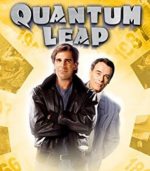
Whenever I see "AI" in a discussion like this, I can't help but think of the hologram named Al (as in "Al Franken") from the TV show Quantum Leap.
(Note that my first instance is capital "a", capital "eye". The second one is capital "a", lowercase "ell". That has sometimes been an issue with the font this software uses. Is it Arial?)
Chanakya
,

- Joined
- Apr 29, 2015
- Messages
- 5,810
It been a fairly long time since accounting companies have acted as the watchdogs they are supposed to be. And that is because their consultancy sides (which propose these kinds of schemes) rake in far more cash than the auditing sides can. Hence why Arthur Anderson's auditors were regularly silenced when they tried to pipe up about Enron being insolvent and only hiding their losses through illegal schemes the company's consultancy arm implemented (the surviving bit of AA at that, now called Accenture).
I don't know that that's generally the case. I've worked with audit firms (not as auditor), and have generally found both their reports, as well as their views when consulted (that is, not engaged as consultant, but when approached with queries from a regulatory perspective) to be reliable. [But of course, it could be the case that they'd covered their tracks well, I realize that as I type this! Still, while possible, absent evidence that's probably not the case, or at least that would appear to be reasonable to assume.]
I mean, I certainly don't want to be in the position of defending audit firms, the fact that I've professionally engaged with them doesn't mean I have any reason to defend them! Still, a broad brush tarring of all auditors as unrealiable, that seems ...unfair? On general principles, I mean to say?
As for consulting, absolutely, I agree with what you say, as far as the past. I mean, that's exactly what did happen with Enron and Arthur Andersen. But post that, I think strict guidelines were put in place to make sure that such conflict of interest isn't allowed any more. (Again, I don't actually know the precise nature of the guidelines, nor whether they're strictly followed, and again, I certainly don't have any reason to be the guy that's standing up for auditors. But, I'd imagine that after such a high profile bust, and after such highly visible fallouts of such in connection with their auditors, and the subsequent no-conflict-of-interest guidelines: I'd imagine that they're probably being followed, in general at least?)
Not for a minute am I suggesting that in Nvidia's case the auditing's sound. I've not even taken a peek at their Annual Report or earnings, nor do I have any idea of their accounting practices or business details. Just, should the depreciation thing he's described in the video, should that be fact --- and I guess it would be, else he wouldn't say it, it's easily enough verified should anyone want to check --- then that's something that should be a red flag for any auditor; and if it isn't, then they're liable to be held to account for it themselves, I should have thought. Them working with Nvidia to dishonestly line both their pockets might well be the case, but if so, then I don't know that that's typical, I'd imagine it would be an exceptional case of loose accounting and auditing.
Interesting video that touches on why people seem to accept anything an AI says.
It's probably a video that the overall subject will be interesting to many here as it's about "Why people are so confident when they are wrong"
The interesting point for this thread and AI is the chapter that starts at "How overconfidence is good for you" at 14:02
Jump to 14:02
It's probably a video that the overall subject will be interesting to many here as it's about "Why people are so confident when they are wrong"
The interesting point for this thread and AI is the chapter that starts at "How overconfidence is good for you" at 14:02
Jump to 14:02
NatalieSalat
Thinker
Bailee Madison (b. 1999) circa 2012 --- if she was playing Vicki in Small Wonder season four at the equivalent age in 1988:

Skeptical Greg
Agave Wine Connoisseur

???
Helen
Implicitly explicit

Word Salat?
Dr.Sid
Philosopher
Maybe we need a threat for "I did this (possibly cool thing) using AI". This thread is more about "it's useless, it's a bubble, it will kill us all" .. also "what the hell it even is" ..
Skeptical Greg
Agave Wine Connoisseur
There is a thread (threat?) for that in Community.Maybe we need a threat for "I did this (possibly cool thing) using AI". ....

