• Quick note - the problem with Youtube videos not embedding on the forum appears to have been fixed, thanks to ZiprHead. If you do still see problems let me know.

A Revolution Could Soon Be Under Way in Iran

smartcooky

Penultimate Amazing
Joined
Oct 26, 2012
Messages
29,009
Location
Nelson, New Zealand

Some of us are old enough to remember how the leftists' embrace of Islamists played out in Iran. I was 24, in the military, and fully understood the import and the impact of the Iranian revolution.

Leading up to 1979, leftist groups consisting of trade unions members, university students and left-wing progressives allied with Islamist factions to overthrow Mohammad Reza Pahlavim the Shah of Iran. This came to be known as the "unholy alliance" and with good reason. The groups were mainly drawn together due to a shared opposition to the Shah's rule, his pro-Western policies, and the misguided perception that Iran was under foreign domination. At the core of this alliance was anti-Western and anti-imperialist belief systems The leftists viewed the Shah as a puppet of the US government, and they saw Ayatollah Khomeini's position as compatible with their own. What they didn't realize is that the Islamists' reasons for their stance were vastly different from theirs - they did not realize (or if they did, they did not understand) that Khomeini's plan for the post-Shah government was a theocracy based on what Arabs know as "velayat-e faqih" meaning "Guardianship of the Islamic Jurist" . This is a Shi'a Islamic political theory, created by Khomeini, which requires that a qualified cleric should rule, resulting in a theocratic government where a Supreme Leader holds ultimate religious and political authority. In such a theocracy, there is no room for dissent, or trade unions, or education for women. These facts did not become clear to those leftists until it was too late. This was the "◊◊◊◊ Around" stage....

Then in 1979, came the "Find Out" stage - the Revolution took place, and its aftermath was utterly brutal. Once the Shah was overthrown, the Islamists ended the alliance almost immediately, and they turned on the leftists. Khomeini and his loyalists quickly consolidated power and systematically purged their former allies. The leftist leaders, trade unionists, members of the Tudeh Party, the Fedayeen and the People's Mujahedin of Iran - groups that had supported the Islamists cause, were rounded up, imprisoned, tortured, and executed. Women who refused to comply with Islamic laws regarding things such as only ever going out in public with a male family member, or refusing to cover their faces would, be summarily (and publicly) executed either by being shot or beheaded. The new Islamic Republic suppressed any and all dissent, being particlarly brutal on women, and banning all democratic and secular parties.

Then Khomeini and his loyal clerics established the Islamic Revolutionary Guard to enforce the theocratic government and crush any opposition. In the end, they established a system that was a leftist's worse nightmare... certainly far worse for them that was ever the case under the Shah.

Pre-1979, Iran was never a Muslim country in the first place - its history was based in Persian Zoroastrianism - and in many ways that made it a sort of natural ally to Israel. This is the reason why you see so many flags of the Imperial State of Iran (or Imperial State of Persia) at pro-Israel marches....

Israel-Iran-Flags.jpg


What happened in Iran in 1979 should be a huge red flag for everyone. The far left are ignoring this red flag. Like the far-right, they have embraced anti-Semitism (for different reasons of course) and the left in particular have taken the side of the Palestinians and their terrorist leaders, uncritically accepting their word on everything that is happening in Gaza - the hugely inflated casualty and death statistics, the bogus claims of genocide, the exaggerated claims of the levels children starving.

I sincerely hope the mullahs fall, and if they do, it will dramatically change the geopolitical picture in the Middle East. Iran has one of the highest GDPs and one of the largest economies in the Middle East. This size is due to its large population and many resources. While its GDP per capita is low (which is why a majority of its peole are dirt poor, its overall (gross) GDP is around US$4.5 billion. This allows Iran to do whjat it does better than anythong else other than Qatar - fund terrorism. A huge part of their GDP goes towards groups like Hamas, Hezbollah, the Palestinian Islamic Jihad group, and Ansar Allah (a Houthi group in Yemen), Iraqi Shia Militias, the Al-Ashtar Brigades and Saraya al-Mukhtar (Bahrain), the Fatemiyoun Division (Afghanistan) and the Zaynabiyoun Brigade (Pakistan) that are currently fighting in Syria. The fall of Iran would be a hammer blow for Islamists around the world, and would dramatically cut the money supply for terrorists in the Middle East.
 
Last edited:
Politics in the Middle East is like a vinyl record: 33 revolutions a minute. The Shah was hardly the first Iranian leader installed after insurrection (see T.E. Lawrence). The mullahs won't be the last.
 
Politics in the Middle East is like a vinyl record: 33 revolutions a minute. The Shah was hardly the first Iranian leader installed after insurrection (see T.E. Lawrence). The mullahs won't be the last.
Utter rubbish - you have no ◊◊◊◊◊◊◊ idea what you are talking about. Individual monarchs may have been deposed (and less often than English monarchs I must add) but Iran/Persia had an unbroken monarchy for over 2,500 years, at least as far back as the Achaemenid Empire (c. 550–330 BC).

1979 was the first time in its history that Imperial rule was overthrown, and a Republic put in its place.
 
Hmmm, why DID that happen again?

I seem to recall something about a semi popular leader being elected and nationalizing the oil industry to funnel the oil money to Iran rather than the foreign investors.
And that leader then being forcibly removed by a certain country to be replaced by the autocratic regime of the Shah.

What country did such a thing? And where could we draw a parallel at the moment?
 
Hmmm, why DID that happen again?

I seem to recall something about a semi popular leader being elected and nationalizing the oil industry to funnel the oil money to Iran rather than the foreign investors.
And that leader then being forcibly removed by a certain country to be replaced by the autocratic regime of the Shah.

What country did such a thing? And where could we draw a parallel at the moment?
Indeed!!

But none of that detracts from or negates my point here - that people played stupid games by allying with Islamists, and when the ◊◊◊◊ hit the fan, they ended up winning stupid prizes!!
 
Indeed!!

But none of that detracts from or negates my point here - that people played stupid games by allying with Islamists, and when the ◊◊◊◊ hit the fan, they ended up winning stupid prizes!!
You say that, but at that time there was no comparison to know what would happen.

Most of the middle east was still in the grip of arabic nationalist governments which paid mostly lip service to Islam.
The only nation truly under Islamic rule at the time was Saudi Arabia and even then that was firmly sub ordained to the Royal house of Saud.
Khomeini used the same tricks the Christian nationalist use in the US at the moment and thus was able to mobilize the less educated but religious and conservative part of the population that otherwise might have kept supporting the Shah.
And like the German conservatives earlier, the more liberal part of the revolutionists assumed they'd be able to control him and keep things going on the right path.

But every Islamist fundamentalist revolution since has been based on the Iranian example, so to claim they should have known is assuming time travel.
 
Much of the OP is perfectly true, although it is sprinkled with arrant nonsense:

  1. "what Arabs know as "velayat-e faqih"" - It is not "what Arabs know", as the words are Persian, and specifically Khomeinist.
  2. Also, this "Pre-1979, Iran was never a Muslim country in the first place - its history was based in Persian Zoroastrianism" is complete nonsense. Do you even know who Nader Shah was? Iran has been the focal point of Shia Islam for centuries. It was only really in the last hundred years that it secularized under Reza Shah.
If this is your understanding of Iran, then my guess is that this boastful sentence: "I was 24, in the military, and fully understood the import and the impact of the Iranian revolution." is Monday morning quarterbacking.

But anyway, we can certainly hope that there will be a secular democratic republic in Iran again, although frankly I doubt that the Iranians really want a return of the Shah's family.

I have serious doubts that secular Iranians are on the whole favourable to Israel, after all, secular Arab states have not been.
 
And when I say "secular democratic republic again", we should remember that that was largely extinguished in 1953 with the British-American coup to overthrow Mossadegh and install the Shah as an absolute monarch. This is probably why the Shah was largely seen as a puppet.

His regime was also pretty brutal, being propped by the rather nasty Savak organization and the torture chambers of the Evin Prison.

There were good reasons why it was unpopular.
 
You say that, but at that time there was no comparison to know what would happen.

Most of the middle east was still in the grip of arabic nationalist governments which paid mostly lip service to Islam.
The only nation truly under Islamic rule at the time was Saudi Arabia and even then that was firmly sub ordained to the Royal house of Saud.
Khomeini used the same tricks the Christian nationalist use in the US at the moment and thus was able to mobilize the less educated but religious and conservative part of the population that otherwise might have kept supporting the Shah.
And like the German conservatives earlier, the more liberal part of the revolutionists assumed they'd be able to control him and keep things going on the right path.

But every Islamist fundamentalist revolution since has been based on the Iranian example, so to claim they should have known is assuming time travel.
Who claimed "they should, have known"?
 
Same situation as Venezuela: any new government needs the tacit approval of the US (and in this case Israel) to be allowed to function, which undermines any popular legitimacy.

No one wants a Democratic Iran if it doesn't behave the way we want.
 
Utter rubbish - you have no ◊◊◊◊◊◊◊ idea what you are talking about. Individual monarchs may have been deposed (and less often than English monarchs I must add)
but Iran/Persia had an unbroken monarchy for over 2,500 years, at least as far back as the Achaemenid Empire (c. 550–330 BC).

1979 was the first time in its history that Imperial rule was overthrown, and a Republic put in its place.
Duuuuuuuuuuuuuuuuude, are you serious?!!??

An "unbroken monarchy"?

This is hilarious!

The Pahlavi monarchical reign consists of this:

Reza Shah - One-time military officer who kicked out the previous monarchy and....
Mohammad Reza Pahlavi, his son. And that's it!

The monarchy was broken several times, and Iran was in fact was under Caliphates for a few hundred years.

Looking into it, it seems you, smartcooky are promoting nationalist myths propagated by the Pahlavis.

Jesus, man! Will you do some actual reading from legitimate sources rather than just regurgitate whatever YouTube TikTok videos your algorithm throws up.

Maybe something like this....?

1767597522274.png
 
I travelled a lot in the 70s, and met Iranian uni students in many countries, and their fear of the Shah's savak was so deep that it was almost scary in itself. They knew that they were watched, they knew that anyone they met could be savak, and they knew what would happen to them if they somehow transgressed. And they never knew what would be considered a transgression. When the Shah fell, nearly everyone, not least Iranians in exile (secular or muslim), thought that things could only get better, and that it was the start of a secular and democratic Iran. Now we know that they got worse.
 
I travelled a lot in the 70s, and met Iranian uni students in many countries, and their fear of the Shah's savak was so deep that it was almost scary in itself. They knew that they were watched, they knew that anyone they met could be savak, and they knew what would happen to them if they somehow transgressed. And they never knew what would be considered a transgression. When the Shah fell, nearly everyone, not least Iranians in exile (secular or muslim), thought that things could only get better, and that it was the start of a secular and democratic Iran. Now we know that they got worse.
Yeah, things weren't great in Persia under the Shah, but at least women

- had the vote.
- could be teachers, doctors or lawyers.
- were free to wear whatever they wished.
- were not required to be subservient to their husbands.
- would not be flogged, stoned or even executed for adultery.
- weren't forced into marriage at the age of 9.
- had the right to divorce.
- had the right to custody of their own children.
- could be judges.

I don't know about here you live, but we call this freedom where I come from. ALL of that vanished under Khomeini.

How does that old saying go? Better the devil you know........
 
This is rather silly, smartcooky. Women clearly do have the right to vote in Iran, even now. But in both cases, democracy was something of a sham, both under the Shah and under the Islamic Republic.
1767606203416.png

Women can also have many of the jobs you say they cannot.

I actually work with a woman from Iran. She has variously said she hated the Islamic Republic and considers herself an atheist, but she also started saying she supported the regime when Iran and Israel were firing missiles at each other. She would excitedly show me obviously AI-generated images of buildings in Tel Aviv in raging fires and tell me that Tel Aviv had now been totally destroyed. I would give her a "Sure Jan" response.

Don't get me wrong, I hope to see the end of the Islamic Republic, but I don't think anyone wants the Pahlavis back.

They were NOT lovers of freedom at all.
 
Utter rubbish - you have no ◊◊◊◊◊◊◊ idea what you are talking about. Individual monarchs may have been deposed (and less often than English monarchs I must add) but Iran/Persia had an unbroken monarchy for over 2,500 years, at least as far back as the Achaemenid Empire (c. 550–330 BC).

1979 was the first time in its history that Imperial rule was overthrown, and a Republic put in its place.
Oh? OK, then. Tell us what happened in Iran in 1953, and how it relates to Venezuela.
 
Oh? OK, then. Tell us what happened in Iran in 1953, and how it relates to Venezuela.
Yes, yes yes, I know about 1953, and 1905, and 1921 and 1963.

None if those incidents broke the 2,500 year run of Imperial statehood Go back and ◊◊◊◊◊◊◊ well READ what I actually said...

"1979 was the first time in its history that Imperial rule was overthrown, AND A REPUBLIC PUT IN ITS PLACE"

Now pay attention, you might learn something.

Iran/Persia had an unbroken monarchy for over 2,500 years, at least as far back as the founding of the Achaemenid Empire (c. 550) by Cyrus the Great. Some have argued that the Median Dynasty preceded them, but there is some dispute about this (that is why I said "at least").


If you want to learn something, check this out of you local library

 
Last edited:
General comment: the same people here who are apologists for Hamas are apologists for the Islamic Republic. Surprise! Surprise!
 
In hindsight, yes, I hear that you vision becomes very sharp and clear there. But Iran was a repressive dictatorship, very harsh to women as well, and the people were suffering under the Shah. They had no idea that they were choosing an even worse devis.
This. They thought they were fighting for freedom and of course that oft chased goal: fair representation in governance. What they got was objectively worse by all measures. The lesson that we should all have learnt by now is that the leopards don't change their spots.
General comment: the same people here who are apologists for Hamas are apologists for the Islamic Republic. Surprise! Surprise!
I.e. No one.
 
Yes, yes yes, I know about 1953, and 1905, and 1921 and 1963.

None if those incidents broke the 2,500 year run of Imperial statehood Go back and ◊◊◊◊◊◊◊ well READ what I actually said...

"1979 was the first time in its history that Imperial rule was overthrown, AND A REPUBLIC PUT IN ITS PLACE"

Now pay attention, you might learn something.

Iran/Persia had an unbroken monarchy for over 2,500 years, at least as far back as the founding of the Achaemenid Empire (c. 550) by Cyrus the Great. Some have argued that the Median Dynasty preceded them, but there is some dispute about this (that is why I said "at least").


If you want to learn something, check this out of you local library

Perhaps if you actually read your own sources, you might not be so certain of your "facts".

I will leave that as an exercise. 😉
 
Yes, yes yes, I know about 1953, and 1905, and 1921 and 1963.

None if those incidents broke the 2,500 year run of Imperial statehood Go back and ◊◊◊◊◊◊◊ well READ what I actually said...

"1979 was the first time in its history that Imperial rule was overthrown, AND A REPUBLIC PUT IN ITS PLACE"

Now pay attention, you might learn something.

Iran/Persia had an unbroken monarchy for over 2,500 years, at least as far back as the founding of the Achaemenid Empire (c. 550) by Cyrus the Great. Some have argued that the Median Dynasty preceded them, but there is some dispute about this (that is why I said "at least").


If you want to learn something, check this out of you local library

Why are you getting upset?

Again, this is just nonsense. I am not even sure what your nonsense is supposed to even be promoting anyway.

You have made a series of weird claims in this thread, and it is not even clear what they are supposed to add up to.

You have said:


"Iran/Persia had an unbroken monarchy for over 2,500 years, at least as far back as the founding of the Achaemenid Empire" and...
"Pre-1979, Iran was never a Muslim country in the first place" - This is simply garbage.

Iran was under the goddamned Umayyad and Abbasid Caliphates for hundreds of years. Do you really think that counts as an Iranian monarchy? (Answer: No). Do you think that maybe the Caliphates were a bit Muslim (Answer: YES!!!).

Why are you persisting in showing off and looking silly?

Also, given that you are now stanning hard for the Pahlavis, for some insane reason, do you think that the list you provided earlier is a good one. Let's see:

Yeah, things weren't great in Persia under the Shah, but at least women

- had the vote.
- could be teachers, doctors or lawyers.
- were free to wear whatever they wished.
- were not required to be subservient to their husbands.
- would not be flogged, stoned or even executed for adultery.
- weren't forced into marriage at the age of 9.
- had the right to divorce.
- had the right to custody of their own children.
- could be judges.

I don't know about here you live, but we call this freedom where I come from.

By this criteria, Maduro and Chavez's regimes could be characterized as "FReeeedom!" and so could Putin's.

And yet you also have a hate boner for Starmer because the police arrested a woman calling for a hotel full of migrants to be burned down and you lost your ◊◊◊◊ over it.

But here is what the "Freedom" police of the Savak used to do:

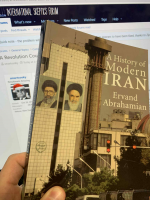
A turning point in SAVAK's reputation for ruthless brutality was reportedly an attack on a gendarmerie post in the Caspian village of Siahkal by a small band of armed Marxists in February 1971, although it is also reported to have tortured to death a Shia cleric, Ayatollah Muhammad Reza Sa'idi, in 1970.<a href="https://en.wikipedia.org/wiki/SAVAK#cite_note-24"><span>[</span>24<span>]</span></a><a href="https://en.wikipedia.org/wiki/SAVAK#cite_note-25"><span>[</span>25<span>]</span></a> According to Iranian political historian Ervand Abrahamian, after this attack SAVAK interrogators were sent abroad for "scientific training to prevent unwanted deaths from 'brute force.'"
Brute force was supplemented with the bastinado; sleep deprivation; extensive solitary confinement; glaring searchlights; standing in one place for hours on end; nail extractions; snakes (favored for use with women); electrical shocks with cattle prods, often into the rectum; cigarette burns; sitting on hot grills; acid dripped into nostrils; near-drownings; mock executions; and an electric chair with a large metal mask to muffle screams while amplifying them for the victim. This latter contraption was dubbed the Apollo—an allusion to the American spacecraft of the same name. Prisoners were also humiliated by being raped, urinated on, and forced to stand naked.<a href="https://en.wikipedia.org/wiki/SAVAK#cite_note-26"><span>[</span>26<span>]</span></a> Despite the new 'scientific' methods, the torture of choice remained the traditional bastinado used to beat soles of the feet. The "primary goal" of those using the bastinados "was to locate arms caches, safe houses and accomplices ..."<a href="https://en.wikipedia.org/wiki/SAVAK#cite_note-27"><span>[</span>27<span>]</span></a>

Abrahamian estimates that SAVAK (and other police and military) killed 368 guerrillas including the leadership of the major urban guerrilla organizations (Organization of Iranian People's Fedai Guerrillas, People's Mujahedin of Iran) such as Hamid Ashraf between 1971–1977 and executed up to 100 political prisoners between 1971 and 1979—the most violent era of the SAVAK's existence.<a href="https://en.wikipedia.org/wiki/SAVAK#cite_note-28"><span>[</span>28<span>]</span></a>

One well known writer was arrested, tortured for months, and finally placed before television cameras to 'confess' that his works paid too much attention to social problems and not enough to the great achievements of the White Revolution. By the end of 1975, twenty-two prominent poets, novelist, professors, theater directors, and film makers were in jail for criticizing the regime. And many others had been physically attacked for refusing to cooperate with the authorities.<a href="https://en.wikipedia.org/wiki/SAVAK#cite_note-29"><span>[</span>29<span>]</span></a>
The repression was softened thanks to publicity and scrutiny by "numerous international organizations and foreign newspapers." Jimmy Carter became president of the United States and he raised the issue of human rights in the Imperial State of Iran. Overnight prison conditions changed. Inmates dubbed this the dawn of "jimmykrasy".
 
Perhaps if you actually read your own sources, you might not be so certain of your "facts".
Ok...

First paragraph from the first source...
Iran, in its various known forms, beginning with the Median dynasty, was a monarchy (or composed of multiple smaller monarchies) from the 7th century BCE until 1979.

I will leave that as an exercise. 😉
Exercise completed!!

You failed!
 
Ok...

First paragraph from the first source...
Iran, in its various known forms, beginning with the Median dynasty, was a monarchy (or composed of multiple smaller monarchies) from the 7th century BCE until 1979.


Exercise completed!!

You failed!
Read on. Wasn't a continuous monarchy by any means.
 
Ok...

First paragraph from the first source...
Iran, in its various known forms, beginning with the Median dynasty, was a monarchy (or composed of multiple smaller monarchies) from the 7th century BCE until 1979.


Exercise completed!!

You failed!
You really should not uncritically quote Wikipedia articles, particularly when they do obviously contradict common sense.

You are claiming an unbroken monarchy for 2500 years, something that the previous Shah absurdly liked to claim as if he wasn’t just the nepo baby of someone who pulled off a coup.

But I have already pointed out that Iran was under Caliphates for much of that time and ruled from Damascus or Baghdad or Medina, so it is an empty and rather pointless boast.

And again, you have failed to acknowledge that it quite clearly was not predominantly Zoroastrian during this time as though only Khomeini brought in Islam in 1979, which is an astonishingly ignorant claim.
 
Ok...

First paragraph from the first source...
Iran, in its various known forms, beginning with the Median dynasty, was a monarchy (or composed of multiple smaller monarchies) from the 7th century BCE until 1979.


Exercise completed!!

You failed!
I think this link would be more useful https://en.wikipedia.org/wiki/List_of_monarchs_of_Iran
Yes, Iran has had a ruler, probably called a king for 1000s of years. But not all of them are related to each other. For example Mohammad Reza Shah who was deposed in 1979, his father claim to themonarchy was that he was the former PM! He was not related to previous monarchs. Lots of other exammples in the list.
 
So, Pahlavi is hoping to go back to Iran soon, but apparently does not want the US military involved.

But you see yourself as the father or the shepherd of this process.

I think that’s exactly what people expect me to be, because it’s what gives them solace, a sense of security, that there’s somebody who will have their back, who can help stabilize the situation. Somebody they can trust, somebody that they know. And I think my track record gives me this unique role to play. As I said, it’s their ask that I step in because they always had seen the absence of leadership, and the need to have an alternative be represented by somebody who encapsulates it.

With regime collapse there’s an understandable concern, if not fear. What if it gets worse? Because it was poorly managed both in Afghanistan and especially in Iraq, regime change has a very bad name. But regime change is not a bad concept. Just because you poorly manage it somewhere else doesn’t make it the wrong solution. The solution still remains regime change.And so if somebody like Donald Trump says, “I don’t want to have any boots on the ground, we don’t want to get sucked into another adventure,” our key message has always been, we don’t need a single boot of your military on the ground in Iran. Our boots on the ground are the Iranian people in the streets of Iran. Today, we’re not counting on a single penny of your tax dollars being spent on this project. But you can help us in many areas by repurposing the frozen assets that belong to the Iranian people to fund our campaigns, including labor strikes.

Link

I'm wondering if this is out of anxiety not to be seen as a stooge of the Americans, as his father was seen. The Wall Street Journal also points out to him the obvious...

My last question is about your father, the Shah. He wasn’t universally popular. And it’s fair to say he wasn’t an instinctive democrat. Would you concede that he made mistakes? How are you different from your father?

Of course mistakes were made. Nobody denies that. But when you look at the intent and you look at the circumstances of the time, you look at the fact that all of this happened during the Cold War, when we were constantly under pressure by communist forces, Marxist forces and Islamist forces, which pretty much led to the advent of this Islamic regime. When you look today, retrospectively, at where he was trying to take the nation, the level of appreciation of his intentions in Iran and his level of popularity is many times more than the hype of whatever popularity he might have had at the time. Why? Because when people look back at where the country was headed in terms of modernization, in terms of liberalization, they see the rights that women had, the fact that we didn’t have issues in Iran that would disenfranchise somebody who belonged to a religious minority, whether they were Jewish or Baha’i or what have you. But while I think that, I say, yes, perhaps the most relevant criticism could be that the level of political liberalization was not on par with the level of economic opening.

Pahlavi then politely concedes that his father was an unpopular autocrat.

I have a theory!!!

Could it be that Pahlavi and Machado both are asking Trump to distance themselves from them to prevent them being seen as illegitimate flunkies?

In some way it would make sense, of course. The problem with the theory is that Trump has too big a mouth for something like that to work. He would be taking credit for installing both of them if that's what he wanted.
 
External military and economic pressure without an occupation and transition has almost never led to a regime change for the better.
 

Back
Top Bottom