
I gave the figure in the ETA.


I gave the figure in the ETA
The answer is no, Darat does not have a timestamp.Got a timestamp? I don't want to listen to that moron spouting off for 20 mins.

Meet me in another thread:His pronunciation of duodenum is strange.

There she was, just a-walkin' down the street,His pronunciation of duodenum is strange.


I thought that on the two equinoxes it rose due east and set due west for everyone. On other days it's offset to the north or south depending on the date and the latitude. Is this not true?The sun doesn't rise in the east and set in the west.
It's a trick statement. The sun doesn't rise and set. We rotate around the sun.I thought that on the two equinoxes it rose due east and set due west for everyone. On other days it's offset to the north or south depending on the date and the latitude. Is this not true?
Rotating around the sun doesn't cause the apparent rising and setting of the sun. The spin on the earth on its axis does that.It's a trick statement. The sun doesn't rise and set. We rotate around the sun.
 www.theguardian.com

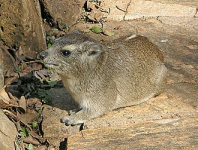
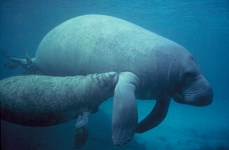
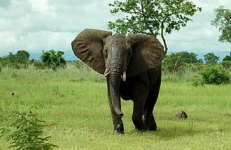


“Just a theory”What do these three animals have in common?
The hyrax:
View attachment 66535
The manatee:
View attachment 66536
The elephant:
View attachment 66537
These three very different animals are the only extant orders of the Grandorder Paenungulata, which diversified over 20 million years ago.
But of course, evolution is a myth, right?


Telomeres lengthen in microgravity, then contract to shorter than their usual length when returned to a 1g environment.

There is also speculation about fungi being able to gain energy from radiation:Along with the apparently radiotropic fungi, Zhdanova's surveys found 36 other species of ordinary, but distantly related, fungi growing around Chernobyl. Over the next two decades, her pioneering work on the radiotropic fungi she identified would reach far outside of Ukraine. It would add to knowledge of a potentially new foundation of life on Earth – one that thrives on radiation rather than sunlight. And it would lead scientists at Nasa to consider surrounding their astronauts in walls of fungi for a durable form of life support.
All of this stuff is not very recent, and I apologise if it has already been brought here, but I find it interesting enough to repeat!In 2007, Ekaterina Dadachova, a nuclear scientist at the Albert Einstein College of Medicine in New York, added to Zhdanova's work on Chernobyl's fungi, revealing that their growth wasn't just directional (radiotropic) but actually increased in the presence of radiation. Melanised fungi, just like those inside Chernobyl's reactor, grew 10% faster in the presence of radioactive Caesium compared to the same fungi cultured without radiation, she found. Dadachova and her team also found that the melanised fungi that were irradiated appeared to be using the energy to help drive its metabolism. In other words, they were using it to grow.

Well that doesn't sound good for manned space exploration.
Maybe it starts miniscule (fingers crossed)... but it's cumulative.
It's apparently the apparent lengths that chage.Well that doesn't sound good for manned space exploration.
Maybe it starts miniscule (fingers crossed)... but it's cumulative.
Badly written or typo? "...that thrives on radiation rather than sunlight..."Black mould thriving at radiation in Tchernobyl:
The mysterious black fungus from Chernobyl that may eat radiation
It appears that melanin can protect organisms from radiation, and this black mould is even attracted to radiation, and is now growing inside the reactor rooms, a behaviour termed 'radiotropism'.
There is also speculation about fungi being able to gain energy from radiation:
All of this stuff is not very recent, and I apologise if it has already been brought here, but I find it interesting enough to repeat!
It should probably have been 'other' rather than 'rather'.Badly written or typo? "...that thrives on radiation rather than sunlight..."

