• Quick note - the problem with Youtube videos not embedding on the forum appears to have been fixed, thanks to ZiprHead. If you do still see problems let me know.

Resonant core columns

leftysergeant

Penultimate Amazing
Joined
Jul 13, 2007
Messages
18,863
I have secveral times posited that the cores of the towers were ultimately broken by mechanical resonance, as opposed to thermite, explosives or simple crushing down. This has been met with utter denial and occassionally psychotic ranting by twoofers.

Engineers are sometimes skeptical.

This video shows me on what I base my theory:


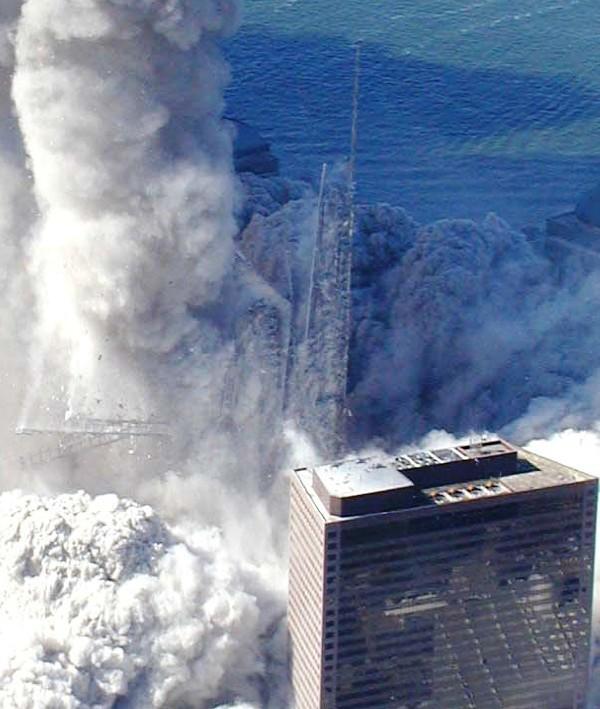
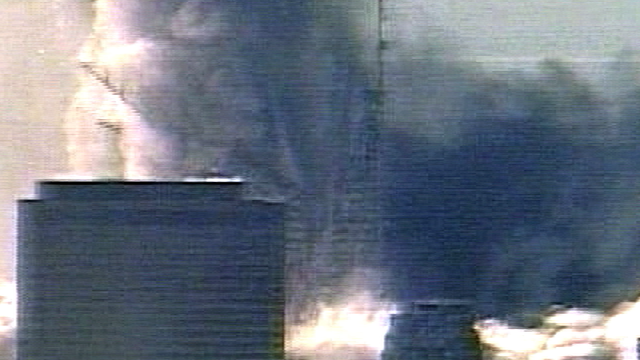
Clearly, the columns seen at 0:15 are moving in a random pattern, relative to each other. This, to my (non-engineer) eyes, seems to match other examples I have been shown of mechanical resonance, especially as relates to Galloping Gertie and why one attempt to make the T-34 cheaper didn't work.

ETA:Fixed it
 
Last edited:
I have secveral times psoited that the cores of the towers were ultimately broken by mechanical resonance, as opposed to thermite, explosives or simple crushing down. This has been met with utter denial and occassionally psychotic ranting by twoofers.

Engineers are sometimes skeptical.

This video shows me on what I base my theory:


Clearly, the columns seen at 0:15 are moving in a random pattern, relative to each other. This, to my (non-engineer) eyes, seems to match other examples I have been shown of mechanical resonance, especially as relates to Galloping Gertie and why one attempt to make the T-34 cheaper didn't work.

Video not available.

"psoited"?

"This video shows me on what I base my theory"?

A new thread and you do not proofread before you submit your first post?

MM
 
It's saying the video's not available... so I guess I'll comment directly on it when it's back up...

I'm skeptical that the collapse of the spires had much of anything to do with mechanical resonance. They were built to carry gravity loads to the ground, and were inherently unstable when they lost the lateral bracing of the core because the unbraced length of the spires was as high as 60 stories. They were gonna fail long before any of that could become a concern... It's not impossible to have it happen as the Tacoma Narrows Bridge Collapse shows, but we're talking of totally different circumstances between the two....


Like I say, the unbraced length from losing the floor bracing pretty much doomed it all before what you're suggesting could become a factor,
 
Last edited:
It had nothing to do with resonance. To put it in layperson terms, resonance results in a very large effective force when the applied force is low. This occurs when the natural frequency of the structure is about equal to the frequency of the applied force.

There was nothing that would cause this force other than wind.

I have, however, run the numbers on the now unbraced capacity of the columns. It is below the self-weight of the columns. What you're seeing in that video is elastic buckling.
 
I fixed the link. I am not much of a whiz with operating a computer, especially since I am out of coffee today.

It is obvious, from about 0:15 onward that the columns move repeatedly in different directions. This to me more ressembles mechanical resonance caused by the various forces attempting to move the columns, such as colliding floor slabs and trhe great rush of wind up the elevator shafts than it does the result of shearing due to strategicly-placed explosive charges.

Perhaps there is another, differently-named phenomenon or process that better describes this result. As I say, I am not an engineer, but I do have enough knowledge of explosives, storm damage and structural failures to know that it is nothing normally connected with CD, but does resemble the results of some rather mundane processes which in no way support an inside job.
 
There was nothing that would cause this force other than wind.

I have, however, run the numbers on the now unbraced capacity of the columns. It is below the self-weight of the columns. What you're seeing in that video is elastic buckling.

Okay, we are getting somewhere here. We seem to have started typing at about the same time.

As I stated, there was a bit of a wind going back up the center, and I should think it to have been considerable, else the smoke would have been pulled downward with the dust plumes.

Would it be safe to say that, even if it is not the phenomenon which I saw, that elastic buckling has more in common with mechanical resonance than with explosive shearing?
 
Lefty,

I am probably as much an amateur on this issue as you, if not worse, so consider this as a suggestion, not as anything authoritative.

Galloping Gertie did not collapse due to a resonance phenomenon, according to WP:
http://en.wikipedia.org/wiki/Galloping_Gertie#Resonance_hypothesis

What's necessary there is an amplification, and that means a mechanism that periodically feeds more energy into the system, which increases the amplitude of the mechanical system to a point where strain gets too big. "For resonance to occur, it is necessary to have also periodicity in the excitation force."
And that is where your theory fails (so far): You need to explain what force periodically excited these columns. They are of different height, so one would expect differing periods.

With only a few cycles of swing, I don't think there was any mechanism that fed resonance.

A much simpler explanation would be that these remaining core columns were attacked at the bottom by the ongoing collapse and the turbulences caused by it, and also progressively deteriorateed as they dangled, till they failed, without necessarily being in resonance with anything.
 
I have, however, run the numbers on the now unbraced capacity of the columns. It is below the self-weight of the columns. What you're seeing in that video is elastic buckling.

I quite agree that resonance is a non-starter.

Curious though. What do you mean by *unbraced* ?

Do you mean unbraced by the OOS trusses, or the core cross-bracing ?

There was plenty of lateral internal core bracing left...

665519550.gif

882307471.jpg

909507891.png

526291789.png


(Full width of core survived for sizeable height)
 
What's necessary there is an amplification, and that means a mechanism that periodically feeds more energy into the system, which increases the amplitude of the mechanical system to a point where strain gets too big. "For resonance to occur, it is necessary to have also periodicity in the excitation force."

The air pressure escaping up the core was increasing continuously as floor slabs failed, compressing more air.

With only a few cycles of swing, I don't think there was any mechanism that fed resonance.

There were only a couple oscillations that we observed. I am quite sure others occurred which we could not observe because of the obstructing dust plumes.

A much simpler explanation would be that these remaining core columns were attacked at the bottom by the ongoing collapse and the turbulences caused by it, and also progressively deteriorateed as they dangled, till they failed, without necessarily being in resonance with anything.

It is quite likely that several columns were detached from the rest and flapping in the breeze and the stream of solid debris beofre the collapse had progressed very far. The columns were not all damaged in the samme manner at the point of impact, and the rotation of the top of the south tower would imply that they did not all fail in a manner that left them an equal length. At least one appears to break out of the dust plumes in a way that suggests that it failed at a much hiogher point than did those seen standing after the dust plume had fallen away.
 
I quite agree that resonance is a non-starter.

Curious though. What do you mean by *unbraced* ?

Do you mean unbraced by the OOS trusses, or the core cross-bracing ?

There was plenty of lateral internal core bracing left...

[qimg]http://femr2.ucoz.com/_ph/6/2/665519550.gif[/qimg]
[qimg]http://femr2.ucoz.com/_ph/6/882307471.jpg[/qimg]
[qimg]http://femr2.ucoz.com/_ph/6/909507891.png[/qimg]
[qimg]http://femr2.ucoz.com/_ph/6/526291789.png[/qimg]

(Full width of core survived for sizeable height)

In engineering parlance, bracing against compression requires that the bracing elements have specific strength capacities (2% of the vertical downwards force) and a specific stiffness (which has units that are meaningless for this discussion). To achieve the specific stiffness requirement, a column generally needs to be leaning against a stiff element. This could be a "braced" frame (which is a vertical truss), a shear wall (a 20'-0" long concrete wall, for example) or a moment frame. Simple beam connections from column to column will not create this type of frame. Considering that the perimeter columns were the lateral system of the building (with the exception of the bottom 7 floors), it's easy to conclude that the core columns are unbraced without the perimeter columns.
 
The air pressure escaping up the core was increasing continuously as floor slabs failed, compressing more air.


There were only a couple oscillations that we observed. I am quite sure others occurred which we could not observe because of the obstructing dust plumes.


It is quite likely that several columns were detached from the rest and flapping in the breeze and the stream of solid debris beofre the collapse had progressed very far. The columns were not all damaged in the samme manner at the point of impact, and the rotation of the top of the south tower would imply that they did not all fail in a manner that left them an equal length. At least one appears to break out of the dust plumes in a way that suggests that it failed at a much hiogher point than did those seen standing after the dust plume had fallen away.

I've looked at the effect of the upper block working as a dynamic hammer on the lower core columns. There was some additional force due to the vertical vibration mode being in-phase with the impact of the upper block, but there was no resonance type effects as I recall.

The equations necessary to do this are fairly elementary, and can be found here (the book I have for reference).
 
Okay, there would, of neccessity, have been elastic buckling, as my googling of that term seems to reveal, but whether it would apply all the way down the core is another matter. Elastic buckling seems to me to apply mostly to unsupported columns of greater than feasible length. I do not, however, see how that would apply to the seemingly random oscillation of the columns when we first see them. Any other process that might be going on here?
 
Okay, there would, of neccessity, have been elastic buckling, as my googling of that term seems to reveal, but whether it would apply all the way down the core is another matter. Elastic buckling seems to me to apply mostly to unsupported columns of greater than feasible length. I do not, however, see how that would apply to the seemingly random oscillation of the columns when we first see them. Any other process that might be going on here?

The horizontal oscillation you're seeing is because the columns have very little lateral stiffness. Small forces (such as the air moving around it from the collap) are causing it to displace. If they were braced (as femr2 claims) one would expect to see very little sway in them. This sway is really prima facia evidence of large unbraced lengths or, if the connections between the columns are sufficient of creating a lateral system, a completely inefficient lateral stiffness. Which would then result in failure by elastic buckling ;)
 
If they were braced (as femr2 claims)
Am not sure how to read that.

I posted a couple of images showing the extent of the core remnant for WTC 1.

They show the full width of the core survived for a significant height. It wasn't the full depth of the core, but certainly 2 columns deep (or more).

There were a couple of what have been termed *spires*, that were flapping about, and reach significantly higher elevations.

I wasn't suggesting the tallest remnants were braced, but I would suggest that there is still significant lateral bracing of the lower section (around 30? floors).

The motion of the lower section will be traced soon, but appears to be a kind of rhombus-like motion, with the west side of the lower core moving westwards with very little vertical drop, followed by almost vertical descent.

I suggest the expected behaviour between the *spires* and the full width section would differ. Does your buckling viepoint also apply to the indicated lower section, or just the tall almost singluar column *spires* ?

It's perhaps something to discuss on another thread, as I find the *resonance theory* pretty silly. I note that leftysergeant has also been stating his theory as fact off-board. Can you imagine the reaction if, say, *I* was to propose such a *theory* ?
 
Try another approach to identify the phenomenon I am looking at. Elastic buckling, as I understand it, does not allow the deformed element to spring back when the weight is released.

The oscillating columns are spring back into position, surpassing that point, then coming back like a pendulum. Occasionally, one element lets go of the rest of the structure and falls. That has to set up some sort of reaction in the remaining columns, like losing one out of several leaves of a leaf spring assembly.
 
Try another approach to identify the phenomenon I am looking at. Elastic buckling, as I understand it, does not allow the deformed element to spring back when the weight is released.

The oscillating columns are spring back into position, surpassing that point, then coming back like a pendulum. Occasionally, one element lets go of the rest of the structure and falls. That has to set up some sort of reaction in the remaining columns, like losing one out of several leaves of a leaf spring assembly.

There is still some movement of stuff at the foot of the building going on, and there is wind blowing up high.

You don't need resonance for buckling to occur not on the first or second swing but the first. Just any progression of the unfolding collapse might do the columns in.
 
Am not sure how to read that.

I posted a couple of images showing the extent of the core remnant for WTC 1.

They show the full width of the core survived for a significant height. It wasn't the full depth of the core, but certainly 2 columns deep (or more).

There were a couple of what have been termed *spires*, that were flapping about, and reach significantly higher elevations.

I wasn't suggesting the tallest remnants were braced, but I would suggest that there is still significant lateral bracing of the lower section (around 30? floors).


You stated this: "There was plenty of lateral internal core bracing left..." Are you withdrawing that statement now?

The motion of the lower section will be traced soon, but appears to be a kind of rhombus-like motion, with the west side of the lower core moving westwards with very little vertical drop, followed by almost vertical descent.

I suggest the expected behaviour between the *spires* and the full width section would differ. Does your buckling viepoint also apply to the indicated lower section, or just the tall almost singluar column *spires* ?

If you're seeing a rhombus like motion, then the connections between the elements that make up the spire are pinned. This means that the lateral system is simply the cantilevered columns. These columns may be braced near the base, but the height above the base is cantilevered.

It's perhaps something to discuss on another thread, as I find the *resonance theory* pretty silly. I note that leftysergeant has also been stating his theory as fact off-board. Can you imagine the reaction if, say, *I* was to propose such a *theory* ?

There would be an immense number of ad-hom attacks against you and the mods would look the other way unless it got too obvious. I'm all too aware of the hypocrisy in this sub-forum.
 
While it is possible that the ringing from the 'hammer' blow of the initial collapse caused some connections to core columns to break ( along the lines of deck plate bolts snapping when a battleship gun is fired ), that is the closest thing to a resonant frequency oscillation in the columns (its not close at all).

In a situation in which several columns are unbraced they will exhbit differing swaying directions, frequencies and amplitudes as minor differences in the forces on them take on greater significance. To illustrate this simply buy four 2X4's 10 feet long each, and stand them vertical on a common horizontal surface(no wind). Now release them all at the same time and it is unlikely that they will all fall in exactly the same direction. Though this is not a buckling situation it does illustrate that minor differences affect the outcome.
 
Try another approach to identify the phenomenon I am looking at. Elastic buckling, as I understand it, does not allow the deformed element to spring back when the weight is released.

The oscillating columns are spring back into position, surpassing that point, then coming back like a pendulum. Occasionally, one element lets go of the rest of the structure and falls. That has to set up some sort of reaction in the remaining columns, like losing one out of several leaves of a leaf spring assembly.

Newtons Bit is correct, as usual. Even if there is energy recovery from elastic strain after connections fail or members fracture, this still isn't a "resonance" problem. Resonance refers specifically to sinusoidal motion, and that requires a quasiperiodic forcing function. We don't have one in this problem.

The phenomenon you're thinking of is sometimes called "snap through." But it's not periodic. Every element that fails is going to experience a gradual deformation until a fracture somewhere relieves the load. This is not an oscillation. It completes at most one cycle. If multiple loads and failures high in the structure contribute to cracking lower down, a kind of jackhammer effect, this still isn't resonance because it happens entirely in plastic strain or crack propagation, not elastic behavior at all.

Resonance, in contrast, is about matching impedances such that small inputs accumulate over many cycles. This is what we saw at Tacoma Narrows, for instance; also the Mythbusters did a show on this once.
 
Last edited:
There is a third alternate which may explain the video clip "oscillations".

We see several long and slender columns which have significant mass per unit length plus relatively low section moduli relative to the length. Any impact near the base of such a column could impart a sideways impetus at the point of impact.

That impetus would not simply be carried up to the top of the column as if the column was a rigid entity. Rather the impetus at the base and nearby would tend to move sideways and ahead of the movement further up the column. The inertia of the top column section would resist sideways acceleration and therefore sideways movement.

After the bottom bit hit by the impetus rebounds it could then be moving in reverse direction to the top bit.

And such a motion could take more than one cycle to finalise - or the column snap.

...someone younger than me and more in practice may care to look at the maths. :rolleyes:
 

Back
Top Bottom