
Doctor Evil
Master Poster

- Joined
- Mar 24, 2008
- Messages
- 2,014
Warning - long political rant ahead, and on the middle-east to boot. You have been warned!
I am quite apprehensive starting this thread, as I fully expect the ensuing discussion wont be worth the effort of of writing it. But the ideas have been running through my head for a few weeks now. So here it is:
A monument to diplomatic incompetence
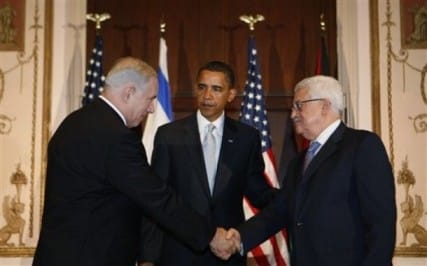
On Sep. 23, a three way meeting was held between president Obama, and Palestinian Authority president Abbas and Israeli prime minister Netanyahu. The meeting was a bizarre spectacle. Both Abbas and Netanyahu looked as if they wish to be elsewhere. Furthermore, the message of delivered by president Obama was the diplomatic equivalent of a teacher admonishing a couple of unruly students.
The fact that such a meeting was held was presented as an achievement of the administration middle-east policy. Below I would argue that this is ludicrous, and in fact, the administration middle-east policy until not was not only based on wrong premises, it was also implemented incompetently. It is fair to say that when president Obama admonished Abbas and Netanyahu, he has forgotten someone. He should have also admonished himself.
To understand the depth of the failure of the administration initial middle-east approach, we should take a step back, and examine some events which more than a year ago, before the US, and Israeli, elections. In a period of several months, ending September 2008, a series of meetings where held between Abbas and Olmert. (Which was the Israeli PM at the time.) The meetings were held every few weeks, with the goal of reaching a final peace deal between the Israelis and Palestinians.
At the time, it was impossible to asses whether the talks were serious. The sides managed to avoid leaks to the press, and almost unprecedented event! However, the talks have ended in Sep. 2008, and in the previous months leaders from both sides have spoken more freely about the content of the talks. It appears that the talks were very serious, reaching a stage when Olmert have given Abbas a final peace offer including: A territory of size of the West bank (some via territorial exchange) and some form of internalization of Jerusalem. The only point where Olmert has not shown flexibility was the question of refugees. Massive return to Israel was out of the question. (IMO, This will be the position of any future Israeli PM.) Abbas has rejected the offer, saying that "the gaps have been to wide".
Before continuing please note that there were no special precondition for the many meetings between Olmert and Abbas. For instance, settlement construction continued. Also, that fact that such meetings took place, every few weeks, did not seem as a special achievement. Substance was deemed more important than appearance.
The failure of the talks between Abbas and Olmert, and the following war in Gaza, have made things difficult for the new US administration. There are a few issues that make it difficult to restart a meaningful diplomatic effort to resolve the I/P conflict. Specifically:
* The Gaza strip is ruled by Hamas, which is not interested in a final peace agreement. Thus Abbas only speaks for a fraction of his people, and his ability to deliver is limited. (Not to mention that his term should end this January. Hamas will probably use that to claim that Abbas has no political mandate if Palestinian unity talks to not succeed until then.)
* On the Israeli side, the recent elections have strengthened the right, leading to a government lead by Netanyahu. It is fair to assume that Netanyahu does not believe that the Palestinian will deliver peace in return to Israeli concessions. He would prefer to avoid having a final peace talks.
And, even if the previous points are somehow circumvented ...
* It is very unlikely that future Israeli PM will match the offer that Olmert gave to Abbas, even under intense US pressure. This is definitely true for Netanyahu. But Abbas already have rejected that offer, so why would he accept a worse offer in the future?
I would refer to the last point as the main issue. No agreement will be reached unless it is addressed. If the US administration believes that this would change just because they are involved in the talk, they are mistaken.
This was the situation waiting for the Obama administration as they took the rains of office. One of their campaign promises was to be actively working on middle-east peace, and indeed they have tried to deliver. But, I will argue that their initial attempt was both clumsy and clueless. The diplomatic initiative started with Obama's speech in Cairo, which is not the subject of this thread. Then the administration have determined that they want to generate some concession from the sides as "confidence building measures" meant to give a positive message before talks start. This is where things fell apart.
The administration has misread the situation on many levels. The first issue is with the idea of using confidence building measures as a prelude to negotiations. This sounds good in principle, and in fact was the basis of the whole step by step approach of the Oslo process. It could have worked back then, but unfortunately it did not. At this time the idea is doomed to failure. Will a year long halt in settlement construction convince the Palestinians that Israel is interested in peace? Likewise, why would the opening of an Israeli consulate in Qatar have more influence on Israeli public opinion than the rockets coming out of the Gaza strip?
Another obstacle for the confidence building measures is the perception on both sides that in all probability final peace talks are bound to fail. This is a direct result of the failure of the last round of talks only a year ago. As a result, both leaders view such concessions not as a starting point for peace, but as a 'free gift' to the other side, which is dressed in some diplomatic language.
The previous paragraphs touched on some basic reasons why confidence building steps were unlikely to work at this time. However, the US administration did more than just pursuing the an initial goal which was unlikely to advance their long term goal. They also acted like a bunch of incompetent novices.
Their initial target seemed reasonable enough, namely Israeli settlements in the West Bank. Construction in Israeli settlements (rightly) seen by Palestinians, and by many in the world, as anti-peace. Moreover, settlements are also seen as obstacle to peace by most US Jews, and, even by large sections of Israeli public. Getting an Israeli government to halt constructions for a few months should be easy. No one could mess that step up. Right?
This administration did just that. There are several reasons for that. They all have one thing in common, namely, elementary missteps of the Obama administration.
Initially, it seemed that the Israeli PM not only Netanyahu knew he would be placed under pressure, he was taking steps to at least partially comply. His government minimised the number of permissions given to new construction in settlements. He also consciously continued the policy of easing the movement of Palestinians in the West Bank by removing road blocks. (The process was started during the previous government.) Before his first trip to Washington, there were leaks to the press that he will be willing to compromise on settlement construction for half a year or so. However, the US administration was not interested in that concession, or in haggling over it. The administration wanted more, much more. It wanted a complete stop of construction, including in Jerusalem.
The administration demands were problematic on several levels. One had to do with an understanding between the Israeli government and the Bush administration. This had to do with construction in some specific settlements which are close to the green line. (That is near the 67 border.) The understanding was that the US would not oppose construction there as it was expected that these settlements would become part of Israel in a final peace deal, and the Palestinian would be compensated with land which is now part of Israel. (Such territorial exchanges came up in prior peace talks - they are not a deal breaker.) When confronted with that, the current administration flatly denied the existence of such understandings. However, some of the people involved, such as Eliot Abrahams from the US side and Dov Weissglass from the Israeli side confirmed that these understandings existed.
This was a problematic step. Obviously the US administration can change its policy. However, this usually involves some form of political compensation. If the administration wanted to cancel the understanding it should have approached the Israeli government and offered something in return. By denying it existed it have instead painted itself as someone who can not be trusted, at least as long as the agreements are not in writing. This is not the impression one should give a side which is expected to give you concessions. It was counter productive.
Another problem with the administration demand to a complete stop of construction had to do with Jerusalem. This was the most serious mistake. Why? It is simple. Jerusalem is perceived as a separate topic, one which is part of the issues which will be dealt in the final peace talks. This is how it was approached in previous talks. This is also how it is perceived by most of the Israeli public.
By demanding an actual halt for construction in Jerusalem the administration was affecting final status peace talks. This was most likely unintentional, but it does not matter. Even if the Obama administration was not aware of the possible implications, both the Palestinian and Israeli sides where. The result was that Netanyahu could not have given that concession. Definitely not as a prelude to talks. Moreover, the issue of Jerusalem allowed him to appear (in Israel) as more reasonable than Obama. So Netanyahu said no to a halt in Jerusalem.
It is possible that the administration was counting on the Israeli public to react and replace the government with more convenient one. This has happened before. For instance, the Shamir government fell because it was perceived as uninterested in peace. If that was the intention of the administration, then they miscalculated. One reason is that the Israeli public do not think that peace is likely. Again, final peace talks have failed a mere 12 months ago. The Israeli public knows that. Obama's rhetorical ability will not help here. After all, we are not talking about peace between the US and Israel. The second reason for the lack of response from the Israeli public is the demand to halt construction in east Jerusalem, which I just covered. As a result, the Netanyahu government gets high marks from the Israeli public. It seems reasonable and flexible. As for the Obama administration, it has failed to reach the Israeli public. Some polls even showed that only 4% of Israelis consider Obama to be pro-Israel. These are unprecedented numbers.
An interesting aspect of the diplomatic maneuvering had to do with the Palestinian and Arab response to the administration new policy. The administration might have expected a cooperative response, after all, most of the pressure was placed on the Israeli government. However, this is not how things transpired. The most notable was the meeting between Obama and the Saudi king, in which the Saudi have flatly refused to make any positive steps toward Israel, even in return to a freeze in settlement construction. The expected concessions from the Israeli side were perceived as things which should be naturally given to the Palestinians. Not as something which should be exchanged with other concessions. This was yet another lesson for the Obama administration. In the middle-east nothing is for free. If you want to exchange positive steps between the sides, you broker a deal between the sides, instead of declaring what you think both sides should do.
In addition, once the Obama administration have demanded that settlement construction should stop, the Palestinians could not demand less. As a result, settlement construction is now a Palestinian precondition for talks. It was not a precondition 12 months ago. Nothing has changed since, except the US administration.
So many diplomatic missteps, and this thread is getting long. Lets cut to the end. Last weeks meeting was a sign that the Obama administration have finally realize that their initial strategy is failing. They are trying to change course and start final peace talks without preconditions. However, their previous steps have made the task harder, by creating preconditions for talks. The Palestinians still demand settlement freeze as a precondition for talks, while the Israelis would not give such a freeze in east Jerusalem. In fact, Abbas did not want to go the last weeks meeting, but could not have refused a public invitation. He have paid some political price just for attending. Attending final peace talks would exact more political price from both Netanyahu and Abbas, and would weaken their status, making it harder for them to compromise. This political price was manufactured by the administration. That is abysmal political maneuvering.
Finally, beneath all this the failure of the last round of peace talks is still lurking. Make no mistake, both Netanyahu and Abbas are aware of that, and do not believe that the next round of talks can succeed. Is the Obama administration aware of this? Do they have a strategy to make sure that an agreement is reached this time? Their abysmal record so far is not filling me with confidence, but with trepidation.
I am quite apprehensive starting this thread, as I fully expect the ensuing discussion wont be worth the effort of of writing it. But the ideas have been running through my head for a few weeks now. So here it is:
A monument to diplomatic incompetence
On Sep. 23, a three way meeting was held between president Obama, and Palestinian Authority president Abbas and Israeli prime minister Netanyahu. The meeting was a bizarre spectacle. Both Abbas and Netanyahu looked as if they wish to be elsewhere. Furthermore, the message of delivered by president Obama was the diplomatic equivalent of a teacher admonishing a couple of unruly students.
The fact that such a meeting was held was presented as an achievement of the administration middle-east policy. Below I would argue that this is ludicrous, and in fact, the administration middle-east policy until not was not only based on wrong premises, it was also implemented incompetently. It is fair to say that when president Obama admonished Abbas and Netanyahu, he has forgotten someone. He should have also admonished himself.
To understand the depth of the failure of the administration initial middle-east approach, we should take a step back, and examine some events which more than a year ago, before the US, and Israeli, elections. In a period of several months, ending September 2008, a series of meetings where held between Abbas and Olmert. (Which was the Israeli PM at the time.) The meetings were held every few weeks, with the goal of reaching a final peace deal between the Israelis and Palestinians.
At the time, it was impossible to asses whether the talks were serious. The sides managed to avoid leaks to the press, and almost unprecedented event! However, the talks have ended in Sep. 2008, and in the previous months leaders from both sides have spoken more freely about the content of the talks. It appears that the talks were very serious, reaching a stage when Olmert have given Abbas a final peace offer including: A territory of size of the West bank (some via territorial exchange) and some form of internalization of Jerusalem. The only point where Olmert has not shown flexibility was the question of refugees. Massive return to Israel was out of the question. (IMO, This will be the position of any future Israeli PM.) Abbas has rejected the offer, saying that "the gaps have been to wide".
Before continuing please note that there were no special precondition for the many meetings between Olmert and Abbas. For instance, settlement construction continued. Also, that fact that such meetings took place, every few weeks, did not seem as a special achievement. Substance was deemed more important than appearance.
The failure of the talks between Abbas and Olmert, and the following war in Gaza, have made things difficult for the new US administration. There are a few issues that make it difficult to restart a meaningful diplomatic effort to resolve the I/P conflict. Specifically:
* The Gaza strip is ruled by Hamas, which is not interested in a final peace agreement. Thus Abbas only speaks for a fraction of his people, and his ability to deliver is limited. (Not to mention that his term should end this January. Hamas will probably use that to claim that Abbas has no political mandate if Palestinian unity talks to not succeed until then.)
* On the Israeli side, the recent elections have strengthened the right, leading to a government lead by Netanyahu. It is fair to assume that Netanyahu does not believe that the Palestinian will deliver peace in return to Israeli concessions. He would prefer to avoid having a final peace talks.
And, even if the previous points are somehow circumvented ...
* It is very unlikely that future Israeli PM will match the offer that Olmert gave to Abbas, even under intense US pressure. This is definitely true for Netanyahu. But Abbas already have rejected that offer, so why would he accept a worse offer in the future?
I would refer to the last point as the main issue. No agreement will be reached unless it is addressed. If the US administration believes that this would change just because they are involved in the talk, they are mistaken.
This was the situation waiting for the Obama administration as they took the rains of office. One of their campaign promises was to be actively working on middle-east peace, and indeed they have tried to deliver. But, I will argue that their initial attempt was both clumsy and clueless. The diplomatic initiative started with Obama's speech in Cairo, which is not the subject of this thread. Then the administration have determined that they want to generate some concession from the sides as "confidence building measures" meant to give a positive message before talks start. This is where things fell apart.
The administration has misread the situation on many levels. The first issue is with the idea of using confidence building measures as a prelude to negotiations. This sounds good in principle, and in fact was the basis of the whole step by step approach of the Oslo process. It could have worked back then, but unfortunately it did not. At this time the idea is doomed to failure. Will a year long halt in settlement construction convince the Palestinians that Israel is interested in peace? Likewise, why would the opening of an Israeli consulate in Qatar have more influence on Israeli public opinion than the rockets coming out of the Gaza strip?
Another obstacle for the confidence building measures is the perception on both sides that in all probability final peace talks are bound to fail. This is a direct result of the failure of the last round of talks only a year ago. As a result, both leaders view such concessions not as a starting point for peace, but as a 'free gift' to the other side, which is dressed in some diplomatic language.
The previous paragraphs touched on some basic reasons why confidence building steps were unlikely to work at this time. However, the US administration did more than just pursuing the an initial goal which was unlikely to advance their long term goal. They also acted like a bunch of incompetent novices.
Their initial target seemed reasonable enough, namely Israeli settlements in the West Bank. Construction in Israeli settlements (rightly) seen by Palestinians, and by many in the world, as anti-peace. Moreover, settlements are also seen as obstacle to peace by most US Jews, and, even by large sections of Israeli public. Getting an Israeli government to halt constructions for a few months should be easy. No one could mess that step up. Right?
This administration did just that. There are several reasons for that. They all have one thing in common, namely, elementary missteps of the Obama administration.
Initially, it seemed that the Israeli PM not only Netanyahu knew he would be placed under pressure, he was taking steps to at least partially comply. His government minimised the number of permissions given to new construction in settlements. He also consciously continued the policy of easing the movement of Palestinians in the West Bank by removing road blocks. (The process was started during the previous government.) Before his first trip to Washington, there were leaks to the press that he will be willing to compromise on settlement construction for half a year or so. However, the US administration was not interested in that concession, or in haggling over it. The administration wanted more, much more. It wanted a complete stop of construction, including in Jerusalem.
The administration demands were problematic on several levels. One had to do with an understanding between the Israeli government and the Bush administration. This had to do with construction in some specific settlements which are close to the green line. (That is near the 67 border.) The understanding was that the US would not oppose construction there as it was expected that these settlements would become part of Israel in a final peace deal, and the Palestinian would be compensated with land which is now part of Israel. (Such territorial exchanges came up in prior peace talks - they are not a deal breaker.) When confronted with that, the current administration flatly denied the existence of such understandings. However, some of the people involved, such as Eliot Abrahams from the US side and Dov Weissglass from the Israeli side confirmed that these understandings existed.
This was a problematic step. Obviously the US administration can change its policy. However, this usually involves some form of political compensation. If the administration wanted to cancel the understanding it should have approached the Israeli government and offered something in return. By denying it existed it have instead painted itself as someone who can not be trusted, at least as long as the agreements are not in writing. This is not the impression one should give a side which is expected to give you concessions. It was counter productive.
Another problem with the administration demand to a complete stop of construction had to do with Jerusalem. This was the most serious mistake. Why? It is simple. Jerusalem is perceived as a separate topic, one which is part of the issues which will be dealt in the final peace talks. This is how it was approached in previous talks. This is also how it is perceived by most of the Israeli public.
By demanding an actual halt for construction in Jerusalem the administration was affecting final status peace talks. This was most likely unintentional, but it does not matter. Even if the Obama administration was not aware of the possible implications, both the Palestinian and Israeli sides where. The result was that Netanyahu could not have given that concession. Definitely not as a prelude to talks. Moreover, the issue of Jerusalem allowed him to appear (in Israel) as more reasonable than Obama. So Netanyahu said no to a halt in Jerusalem.
It is possible that the administration was counting on the Israeli public to react and replace the government with more convenient one. This has happened before. For instance, the Shamir government fell because it was perceived as uninterested in peace. If that was the intention of the administration, then they miscalculated. One reason is that the Israeli public do not think that peace is likely. Again, final peace talks have failed a mere 12 months ago. The Israeli public knows that. Obama's rhetorical ability will not help here. After all, we are not talking about peace between the US and Israel. The second reason for the lack of response from the Israeli public is the demand to halt construction in east Jerusalem, which I just covered. As a result, the Netanyahu government gets high marks from the Israeli public. It seems reasonable and flexible. As for the Obama administration, it has failed to reach the Israeli public. Some polls even showed that only 4% of Israelis consider Obama to be pro-Israel. These are unprecedented numbers.
An interesting aspect of the diplomatic maneuvering had to do with the Palestinian and Arab response to the administration new policy. The administration might have expected a cooperative response, after all, most of the pressure was placed on the Israeli government. However, this is not how things transpired. The most notable was the meeting between Obama and the Saudi king, in which the Saudi have flatly refused to make any positive steps toward Israel, even in return to a freeze in settlement construction. The expected concessions from the Israeli side were perceived as things which should be naturally given to the Palestinians. Not as something which should be exchanged with other concessions. This was yet another lesson for the Obama administration. In the middle-east nothing is for free. If you want to exchange positive steps between the sides, you broker a deal between the sides, instead of declaring what you think both sides should do.
In addition, once the Obama administration have demanded that settlement construction should stop, the Palestinians could not demand less. As a result, settlement construction is now a Palestinian precondition for talks. It was not a precondition 12 months ago. Nothing has changed since, except the US administration.
So many diplomatic missteps, and this thread is getting long. Lets cut to the end. Last weeks meeting was a sign that the Obama administration have finally realize that their initial strategy is failing. They are trying to change course and start final peace talks without preconditions. However, their previous steps have made the task harder, by creating preconditions for talks. The Palestinians still demand settlement freeze as a precondition for talks, while the Israelis would not give such a freeze in east Jerusalem. In fact, Abbas did not want to go the last weeks meeting, but could not have refused a public invitation. He have paid some political price just for attending. Attending final peace talks would exact more political price from both Netanyahu and Abbas, and would weaken their status, making it harder for them to compromise. This political price was manufactured by the administration. That is abysmal political maneuvering.
Finally, beneath all this the failure of the last round of peace talks is still lurking. Make no mistake, both Netanyahu and Abbas are aware of that, and do not believe that the next round of talks can succeed. Is the Obama administration aware of this? Do they have a strategy to make sure that an agreement is reached this time? Their abysmal record so far is not filling me with confidence, but with trepidation.


